Nutrushes
Scleria species
Cyperaceae (Sedges)
John and George today worked along the Haney Creek Trail near Jensen Beach, a species-rich oasis of wet pine woods, ponds, and scrub. A dog-walkers mecca it is, and we encountered a jolly Border Collie who, being an eco-friendly pooch, retrieves pinecones.
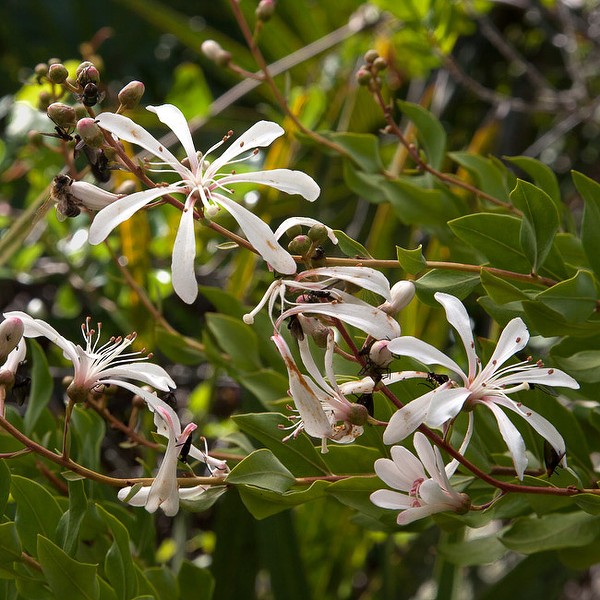
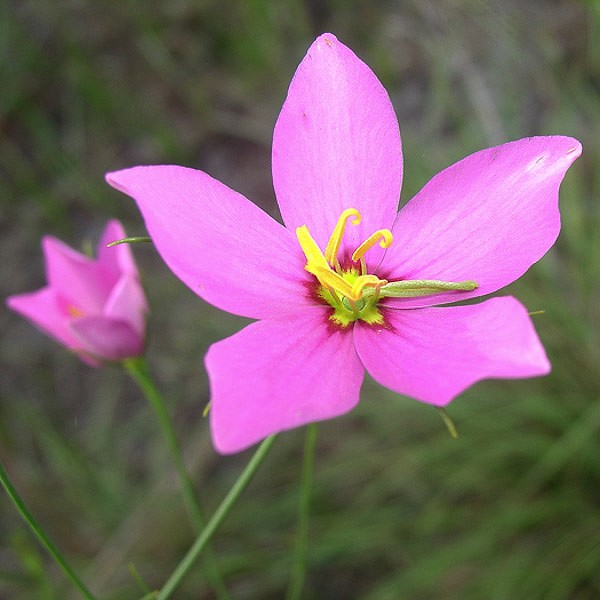
Tarflower was in bloom today. Photo by John Bradford.
There are big Sweetbay Magnolias, Dahoon Hollies with red berries, and Tarflowers abloom, all very nice, and now cast your big white eyeballs downward, and little white eyeballs in the grass return the stare. The white of your eye is the sclera. The white eyeball sedge is Scleria.
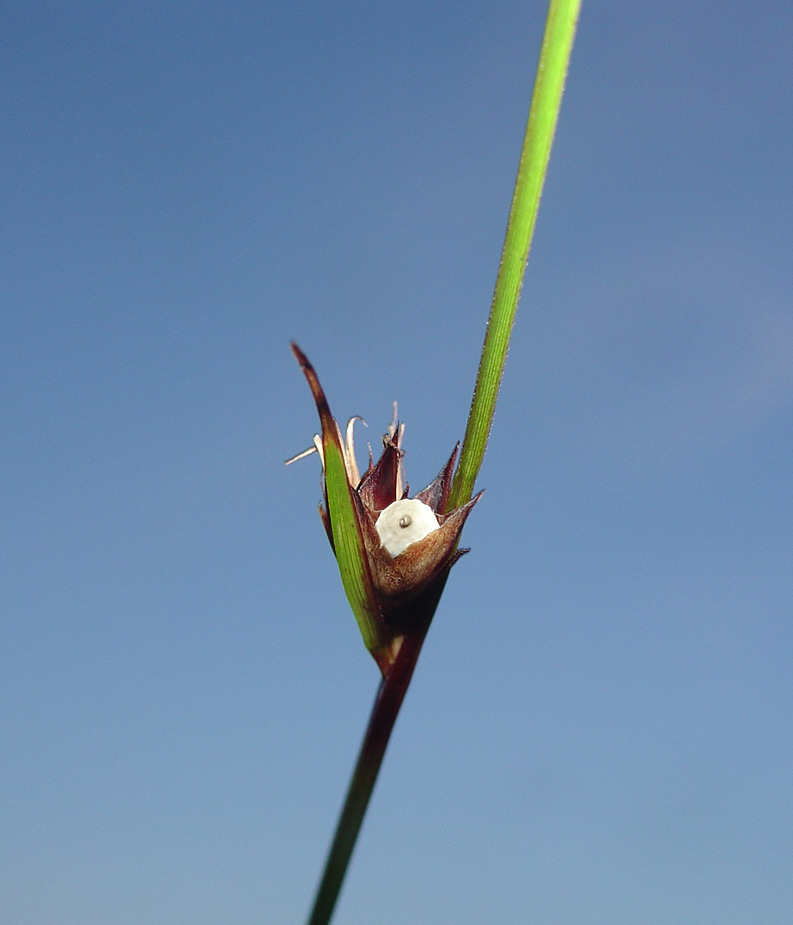
Peekaboo! (Scleria baldwinii by JB)
Scleria is a successful genus of some 250 species peeping from undergrowth worldwide. Several species live natively in Florida, and we have some uninvited exotics, too many species for individual attention. Interested readers, if they exist, check our website floridagrasses.org.
Sedges normally make tiny seedlike fruits, called achenes, which we’ll loosely call seeds; these are brown in thousands of sedge species. Yet one genus has adopted bright white. What’s up with that?
Fruits and seeds are all about dispersal. Duh. So the main point of the glossy eyeball seeds is most likely to catch the eye. A plant in the grassy layer is competing with many other seed-makers for creatures to ingest and disperse the seeds. Scleria seeds are displayed prominently and stand out visually—easily spotted from afar. Several seed-eating and ground-feeding birds eat Scleria seeds. One example is the Bobwhite. The tough cover (sclera is Greek for “hard”) probably helps the seed pass through the bird unscathed.
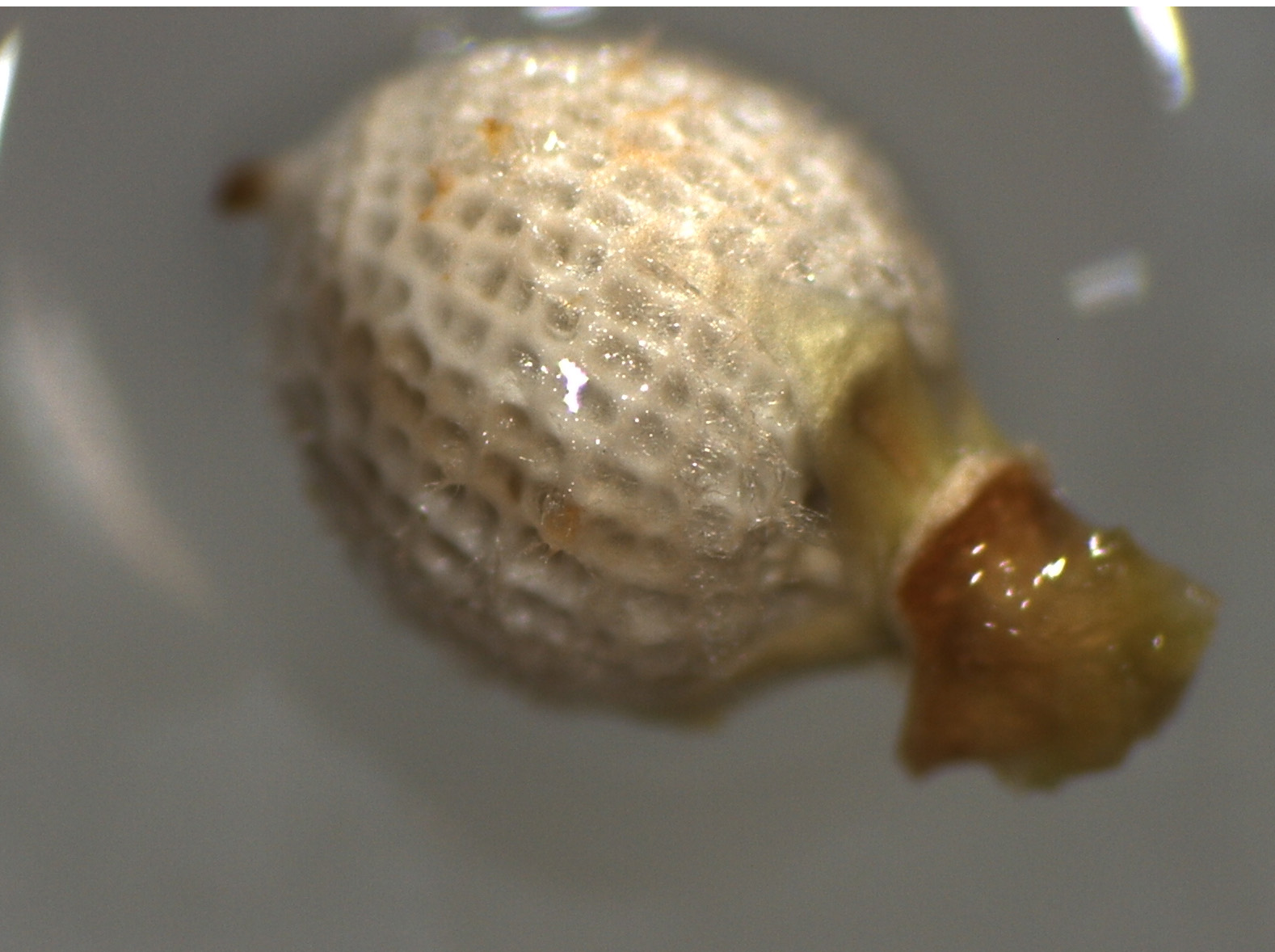
This species (S. reticularis) has a waffle pattern.
Part of the in-flight obstacle course is the gizzard, where some birds collect grit to grind their daily bread. A Weaver Bird roadkilled in Africa had Scleria seeds apparently serving as gizzard stones according to Mike Bingham of the Zambian Ornithological Society. Bingham noted also that some of the Scleria seeds seem to have been gathered not directly from the sedge plant, but from the ground where the white color may help with selection. Bird feed suppliers sell small white Proso Millet seeds for ground-feeding birds. The millet and Scleria are similar.
To add to the mysteries, the seeds of different Scleria species have varied surface textures: smooth, or pock-marked, waffle, or bumpy, or ribbed like a pumpkin. Go figure.
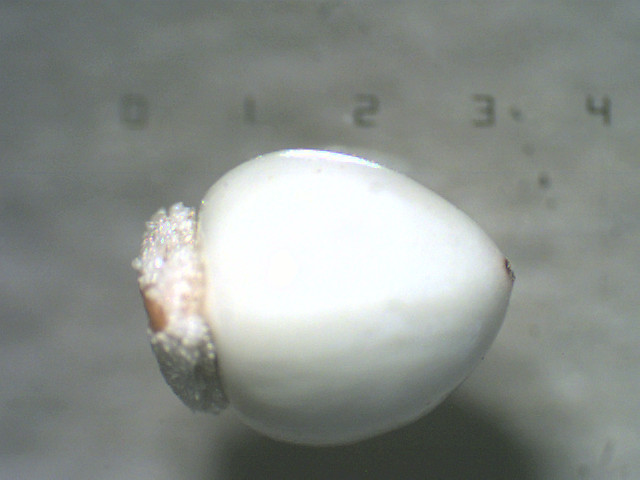
Scleria triglomerata, dispersed by ants. The “hypogynium” is the handy dandy ant handle at the seed base, at the left.
It is not just bird distribution, by the way. One of our largest local Sclerias, S. triglomerata, has a handle called a hypogynium on the seed. (Many additional Scleria species do too.) Ants use the hypogynium to drag the achenes to their nests, and probably eat the hypogynium away which could promote germination, as occurs in other ant-dispersed seeds. An ant nest is a natural garden, with tilled soil, compost, and armed guards with an attitude.

 John Bradford
 George Rogers
 George Rogers
 Dee Staley
 Treasure Coast Natives