Lobelia paludosa
(M. de L’Obel was a Flemish herbalist. Paludosa means swampy.)
Campanulaceae (Lobeliaceae)
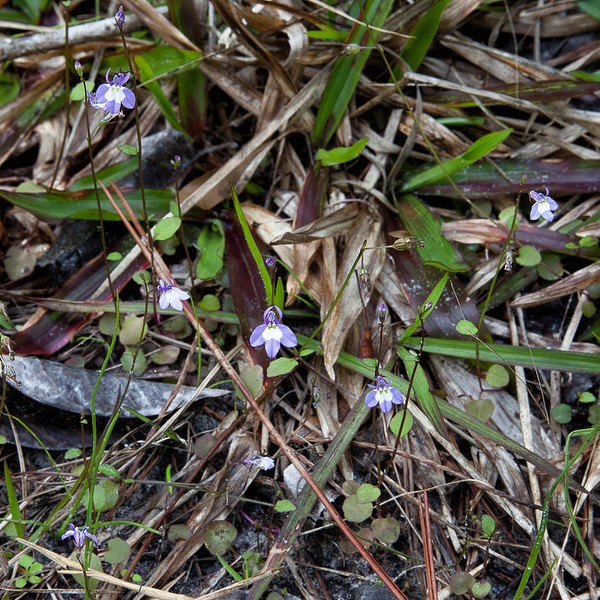
Oh so pretty, White Lobelia is wetland wildflower worth soggy sneakers. Those curvaceously symmetrical white flowers look like the work of a marble sculptor…or maybe a plumber, read on. This is one of many Florida lobelias, mostly north of our region. Lobelia overall has 400 species almost worldwide. Gardeners love lobelias as commercial ornamentals. Native plant enthusiasts know them as diversely colored wildflowers, especially in wet habitats. Smokers may know them too: Lobelia inflata, Indian Tobacco, and some additional Lobelia species (as well as some non-lobelias) give forth the alkaloid lobeline used to wean smokers off of nicotine and for other historical medicinal “benefits.” (Warning…alkaloids are dangerous. Do not eat, smoke, or otherwise ingest the wildflowers. Lobeline has morbid toxic effects, including potentially death.)
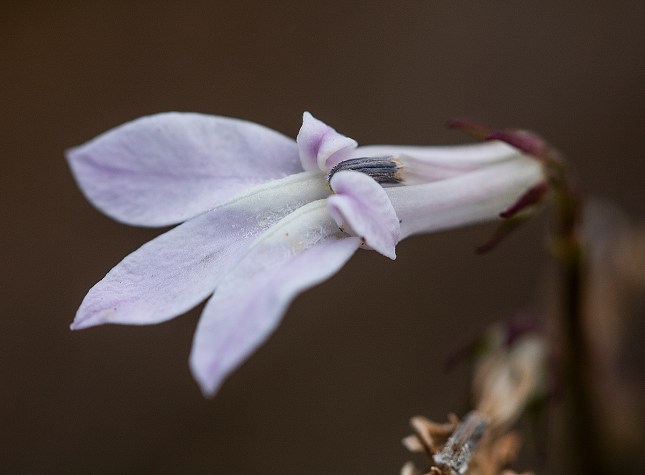
See the slit? The black unit is the tip of the stamen tube.
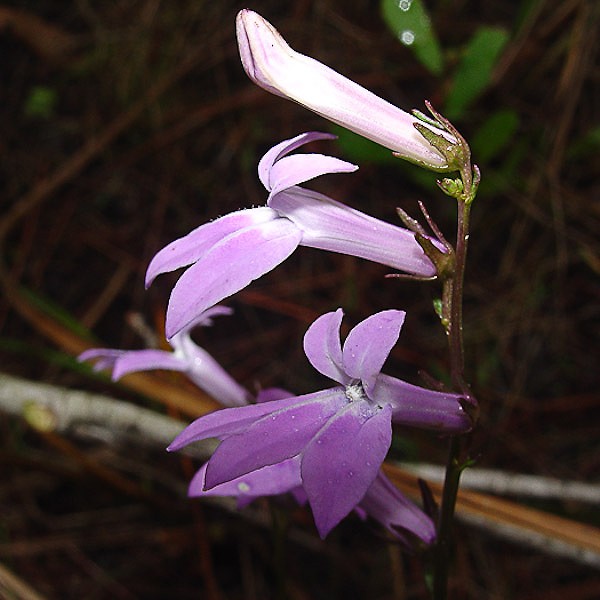
You can always recognize a Lobelia by a slit running the length of the flower tube. More on that in a moment.
Lobelias have a crafty means of pollination that protects pollen from the elements and from pollen thieves, dispensing it gingerly onto the floral visitor only as needed. To understand the pollen dispenser we must understand the flower.
It is bilaterally symmetrical with a tube made of petals. The top of the petal tube has that weird slit you already know about. On either side of the slit the top petals are curled back seemingly to guide the visitor to the business parts of the flower near the slit. Now for the business parts:
The stamens are joined edge to edge to form a hollow stamen tube inside the petal tube. The stamen tube bends upward and can rise forth through the slit. The outer tip of the stamen tube is made of five anthers likewise joined edge to edge, releasing their pollen to the inside of the stamen tube.
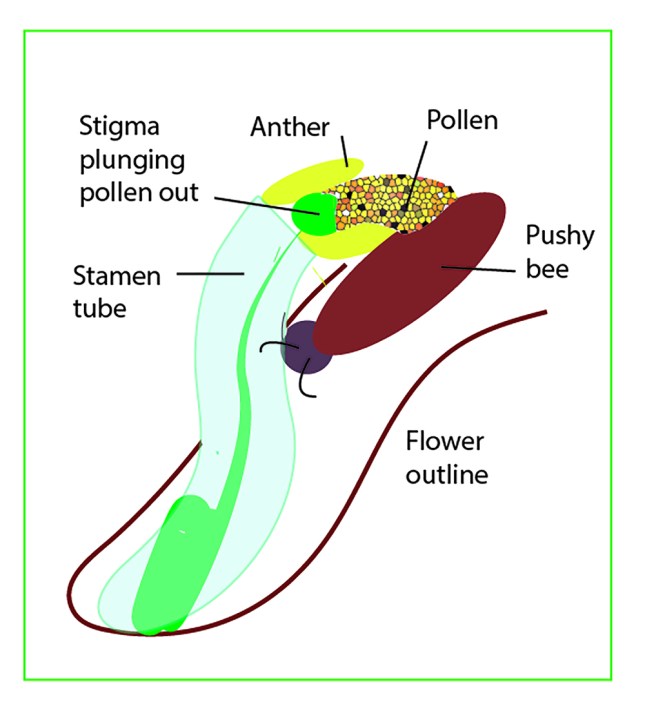
You with me? The anthers form a tube with loose pollen inside toward the outer end.
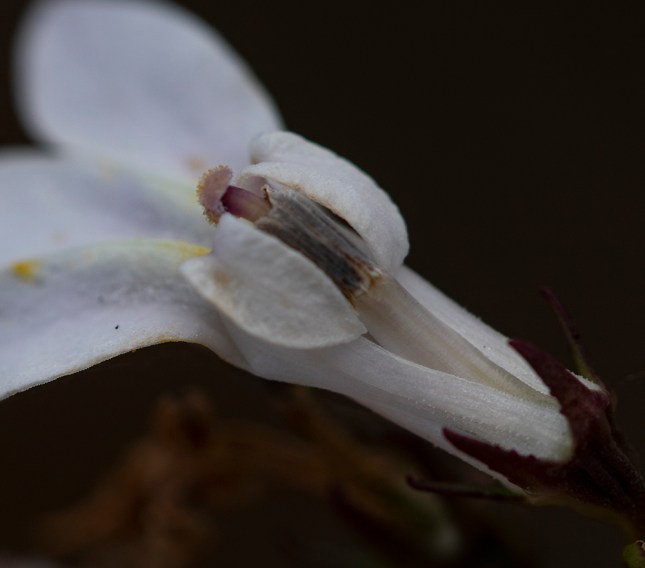
Slit and tube poking up through it. This flower is in the post-plunger female phase. The stigma has popped to the left out of the end of the stamen tube. No more dispensing pollen…now it time to receive some from a different flower.
Now comes the female component…the style rises through the stamen tube with a broad stigma at its tip. The rising stigma acts like a plunger pushing pollen out the end of the stamen tube.
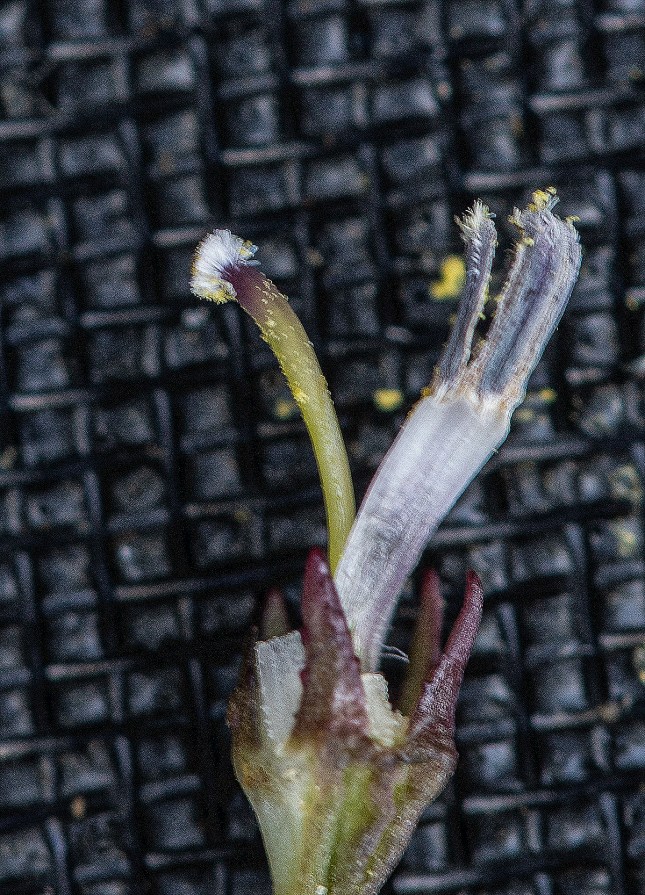
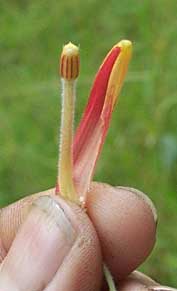
The anther tube (right) sliced open and the style and stigma bent up for visibility (left).
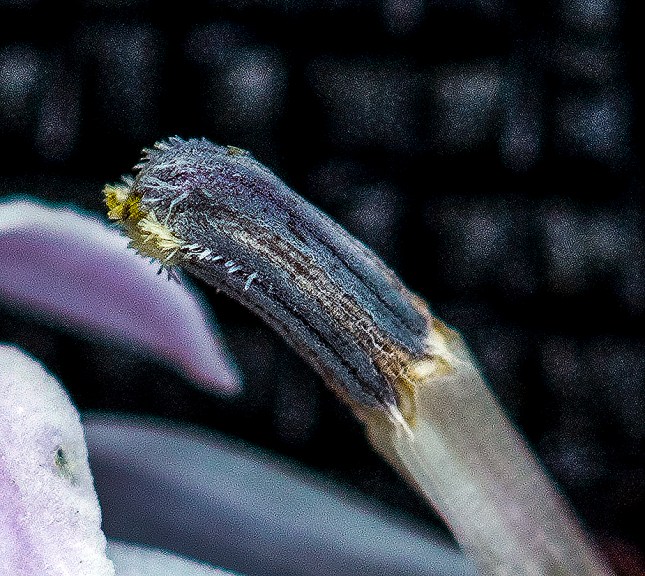
Tip of the stamen tube isolated. A little bit of yellow pollen visible to the left.
At this point the stigma is not receptive to pollination. That comes later after it has pushed all the way out of the stamen tube. Back up a moment and consider the stigma in its plunger phase still inside the anther tube:
A bee comes along and probes the flower for nectar. The tip of the stamen tube dispenses a dose of pollen onto the bee, like toothpaste dispensed out from the tip of its tube onto a toothbrush. (See the diagram above.) Although I can’t prove it, it seems the bee pushing on the tip of the stamen tube and also maybe on the tube more basally helps squeeze the pollen out by narrowing the tube and/or by forcing the tube to shorten a little while the style-stigma plunger inside stays firm. Think of wearing a loose long sleeve shirt with the cuff exactly at your wrist. If you push on the shirtsleeve it will kink, fold, or narrow a bit so a bit of your wrist becomes exposed. This can be simulated with the tip of your finger posing as a pushy bee. Pollen release “on demand.”

 John Bradford
 George Rogers
 George Rogers
 Dee Staley
 Treasure Coast Natives