Momordica charantia
(“Momordica” comes from Latin for bitten because the seeds look chewed. Charantia is perhaps an old name for this anciently cultivated species?)
Cucurbitaceae, the Gourd Family
Friday. Cool. Sunny. Breezy. Time to relax and enjoy the Kiplinger Natural Area. Or cyber-enjoy it thanks to John’s evolving photo-study. CLICK
A weedy alien vine in Kiplinger has quite a history. Part of the reason it surfaced as interesting today is a patch by the entrance to a subterranean Gopher Tortoise burrow. Gopher’s like tasty fruits, such as, well, Gopher-Apple, so today’s “apple” looks like gopher fare to me. Now I have no evidence that Bilbo Baggins Tortoise put the seeds by his front door of his dugout bungalow. But the alternative explanation, chance, is no fun, and being an election year, you can choose the truth you like. I chose the tortoise deposited the seeds in the dooryard.
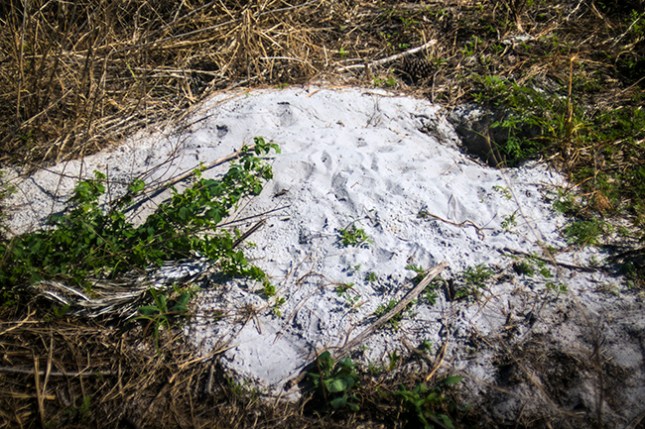
Momordica vine to the left. Tortoise hobbit hole to the right.
Living in the Caribbean, I came to know it as Cerasee as a valued medicinal tea. The plant generates nearly every category of plant chemical WMDs, from alkaloids to steroids. That ties in with ancient and sundry medicinal uses from its original Africa spreading to to India, Tropical Asia and beyond. Med-apps are far too many to list, although they feature treating diabetes, plus such contradictory extra benefits as aphrodisia and induction of vomiting, hopefully not on the same evening.
Drug-loaded species attract research attention, in this case in multiple connections including for antibiotics, anti-cancer compounds, and steroidal precursors. Bitter principles in the fruit confer pest resistance, raising the eyebrows of agriculturists wondering if such defense may be bred or engineered into more vulnerable crops.
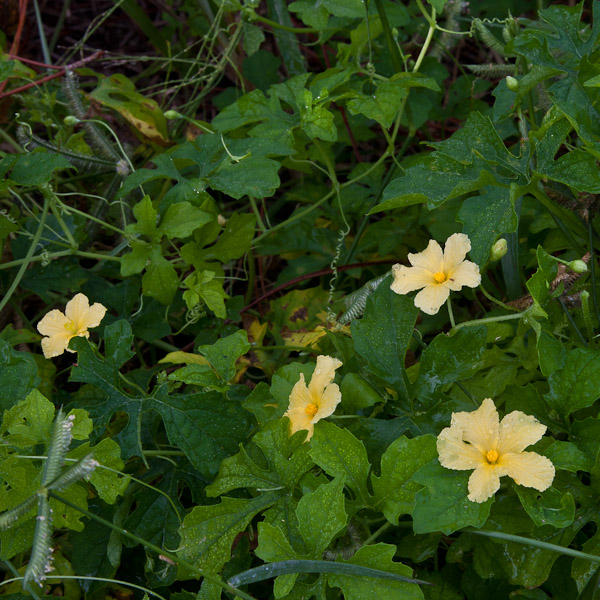
The flowers. Todays plant pictures by John Bradford.
So obviously, do not harvest and consume it. Rule of this blog: never eat wild plants.
Cerasee has been a food in the Old World for hundreds or thousands (?) of years. That may seem odd, given the toxins, but then again, as with many anciently cultivated species, folks long ago developed domesticated strains. The Bitter Melon Karala from India is an example, and there are several edible Asian cultivars. The cultivated fruits vary in shape, flavor, and colors from near white or greenish to orange or red. They range from a couple inches long as in Florida, to about 18 inches in one or more cultivar(s). According to research dating to 2004, evidence indicates a single domestication event followed by diversification and dispersal. All of the cultivated strains differ genetically together from the wild(ish) species.
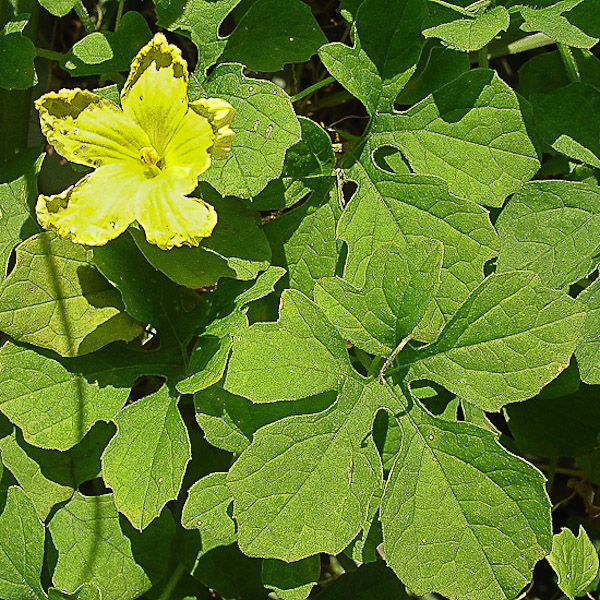
Remember, the Balsam-Pear encountered growing wild in Florida is not one of the garden types. How did it get here? Probably from Africa during the slave trade. Once on this side of the sea, the red-coated seeds allowed secondary dispersal by animals. And by people too.
The bitterness of the fruit rind protects the seeds until they are ripe. Then the noxious fruit opens to reveal the seeds rendered tasty and attractive by a red coating called an aril.
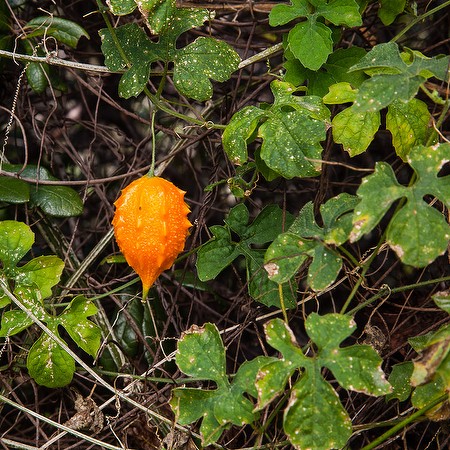
The orange pod with its bitter rind.
The flowers are unisexual, both sexes on the same vine. Apparently because the male flowers on the vine can pollinate the females on the same vine, the male flowers mature about two weeks before the females to encourage crossing with other vines before the opportunity for the extreme inbreeding of self-pollination.
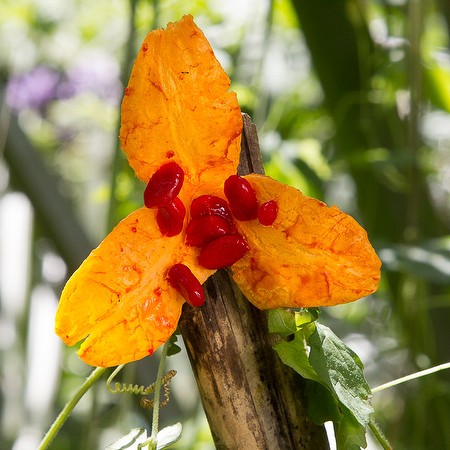
The fruit opens to reveal bird-dispersed (and tortoise-dispersed?) seeds with a fleshy red coating (the aril).
So then, back to the tortoise. They have, I think, a lifespan similar to a human so they need Medicare pharmacy benefits too. Maybe the tortoise in Kiplinger needed a little tonic tea, or maybe even a little turtle aphrodisia, bringing a few seeds to his sandy Hobbit-tat.
 John Bradford
 George Rogers
 George Rogers
 Dee Staley
 Treasure Coast Natives