RSS

Author Archives: George Rogers

Unknown's avatar

About George Rogers

Florida botanist

Lark Daisy and the Nanobots

Centratherum punctatum

(Centatherum possibly comes from Latin for “central prickle,” referring it seems to the flower head of a related species.  Authors differ on interpreting this name.  Punctatum means spotted, referring to the foliage.)

Asteraceae, The Aster Family

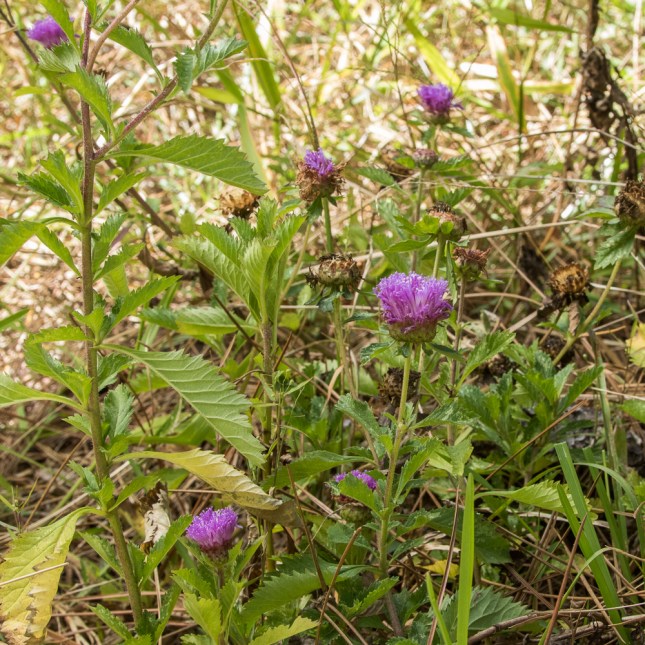
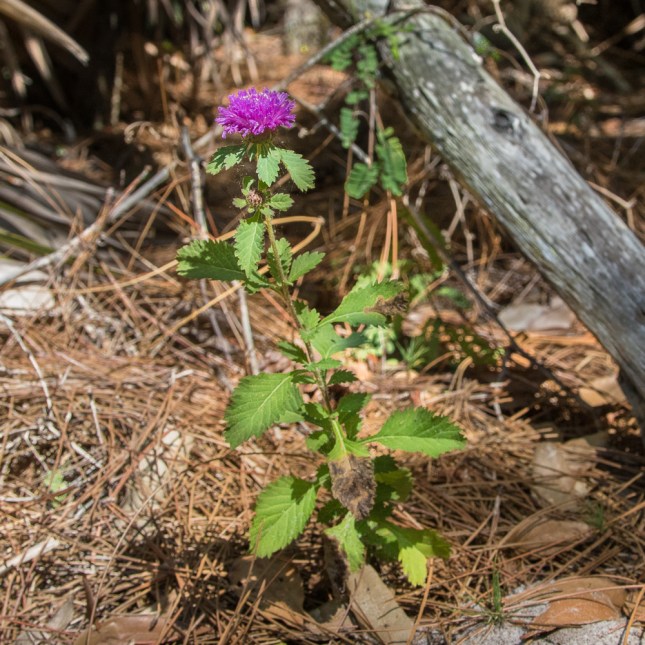
In Halpatioke Park, where John and I traipsed today, is a secret meadow sporting luscious regal purple wild flowers proud in the dappled sun.   The meadow looks more like a garden than a woodland.   It is a rogue garden.

Centratherum punctatum 2

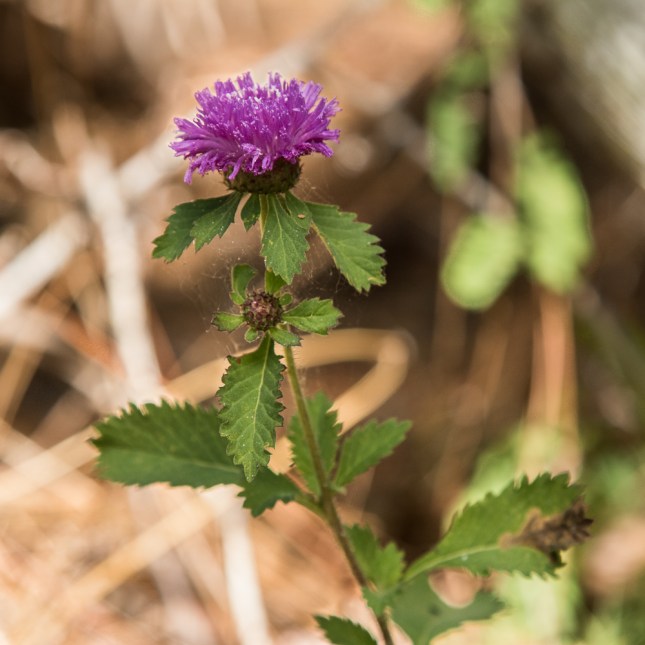
Today’s photos by John Bradford.

We are accustomed to non-native plants.   Of the roughly 4000 species growing wild in Florida, well over 1000 are visitors.   It is not just melaleuca and Brazilian Pepper.   This blog is not a soap box, so ranting shall be not.  Suffice it to say that it jolts even the long-standing jaundiced eye to see garden flowers intruding in the woods.    Just ain’t right!  And I say that ruefully as director of a college horticulture program.  Yes, we have skeletons in the potting shed. That’s for a different blog.

We’ve got the uninvited purple posies so we might as well own them.  And, even if in the wrong place, at least pretty.  So say hello to Lark Daisy, a side-steppin’ garden flower distributed from South America to Africa, Hawaii, and Australia.

Centratherum punctatum 3

The fragrant leaves inspired the commercial cultivar name ‘Pineapple Sangria’  familiar to some gardeners.  As with many tropical weeds creeping northward in Florida, I’ll bet it likes Global Warming.

Anybody who has looked up a lot of plants over decades knows that every species on earth has a history of medical uses against something.   What’s more interesting is when a species enters modern medical literature with research-based applications against specific ailments.  Even then, however, you have to wonder if our modern plant-drug enthusiasms still often overlie old fashioned wishful thinking.   In 1818 they wishfully favored plants for treating the ailments of the day:  childbirth problems, dropsy, hemorrhoids, respiratory ailments, skin lesions, and wounds.

In 2018  we like plants with emerging potential against cancers, HIV,  inflammation, and malaria.  Modern times!  More specific, more scientific, yet still often across the Grand Canyon from efficacy.  But not always, just as traditional plant uses sometimes worked.*

Centratherum punctatum 5

Lark Daisy has invaded pharmacology.   Almost 60 compounds enhance its fragrant leaf oil.  Its extracts kill the malarial parasite handily, but oh rats, the stronger the detriment to the parasite, the more toxic the drugs are to human cells.  Lark Daisy drugs inhibit reverse transcriptase, the Achilles heel enzyme of the HIV virus.   You guessed it—again, the good antiviral compounds kill people cells.   But look on the bright side, killing human cells selectively has interest against cancer, and our plant inhibits proliferation of certain lab cancer cell cultures, not that that is rare in plant drug screenings.

If you’d like something more unusual and hi-tech, consider this:  how about Lark Daisy chemical derivatives on silver nanoparticles  to suppress inflammation.  Over my head, and an investment opportunity!

For all of these potentialities, of course the hard part is the step from the test tube to safe effective clinical applications.   Don’t hold your breath.

————————————————————————————

*Yes, I am aware of several examples of traditional plant uses with effective benefits, and I am also aware that a large percentage of pharmaceuticals are rooted in the plant world.  No e-mails on this topic necessary.
 
4 Comments

Posted by on March 9, 2018 in Lark Daisy, Uncategorized


Tags: ,

Drymary, West Indian Chickweed

Drymaria cordata

(Drymos is Greek for forest.  Cordata means heart-shaped.)

Caryophyllaceae (The Carnation Family)

It was Halpatioke Park near Stuart, Florida, today for John and me.    We could talk about the dazzling Cardinal Airplants, or the gnarly Live Oaks overhanging the river, but nawww, how about a crummy little turf weed that sticks in your cuff?   So much more exciting!

Drymaria Jupiter Golf Club

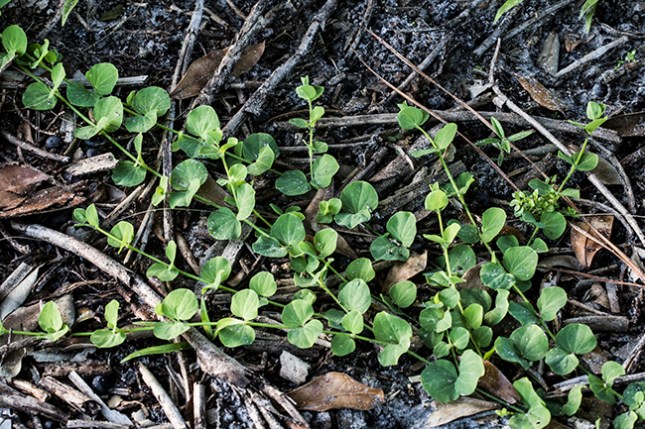
Drymary sprawling

Drymary is an around-the-world weed.   Native to Florida?   Hard to be sure, some informed observers say yes, others deny.     There are no Florida collections of it before around 1900, but then again,  easy to ignore.    The stems mostly creep forth, loving moisture, happy in sol or sombra.   Sometimes they tower vertically to 8 inches, especially at flowering time.    It must reach up to deposit its seedheads on a passing possum.

Drymaria leaves

I like weeds because we step on them daily, but if we stop,  look,  think, and Google they offer as much good botany as tropical tourism.

People like to eat this weed.  Why!?  Go to Publix and buy tofu jerky instead.   Some folks think plants come in two varieties…edible and inedible.  That’s not very nuanced, sort of like saying boys sort into good boys  and bad boys.     Fact is, most wild plants have chemical defenses against herbivory.   So before you get out the Asian Sesame Dressing,  here is a discouraging word, “The flower, fruit, seed and root have given very weak positive reactions for the presence of haemolytic saponin.”   Does the “very weak” comfort your apprehensions?  Do you feel lucky?

Drymary flower cropped

So then, if you don’t eat it, what’s Drymary good for?  How about smoking it?   The plant has a pleasant fragrance, and yes, it has been smoked.    I might have puffed some except for two things—a trip to the gas station for medical marijuana rolling papers.  And, well, there’s this, “Topical application must be done with caution as prolonged treatment causes burning.”

Drymaria cordata stem hairs

Stem with glandular hairs

So the best enjoyment of Drymary is nonconsumptive.  The stems have a coat of stiff hairs tipped with glistening droplets.  Maybe that is where the fragrance resides.  In any case, why all those sticky hairs?    Probably protection, maybe from ground-dwelling pests, and/or sun-baking.   Obvious possibilities, but there is more.

When your pants cuff  drags through the meadow the seed-heads snap off along with a short stem fragment.    The seed head itself has hairs, and the stem fragment acts like Velcro.    So, maybe then  possession of a protective hairy stem was pressed into service secondarily as a dispersal aid.  This is the one Drymaria species, out of almost 50, spread all around the globe.

Drymary stuck to shirt

My shirt with Velcro-stuck seed heads.

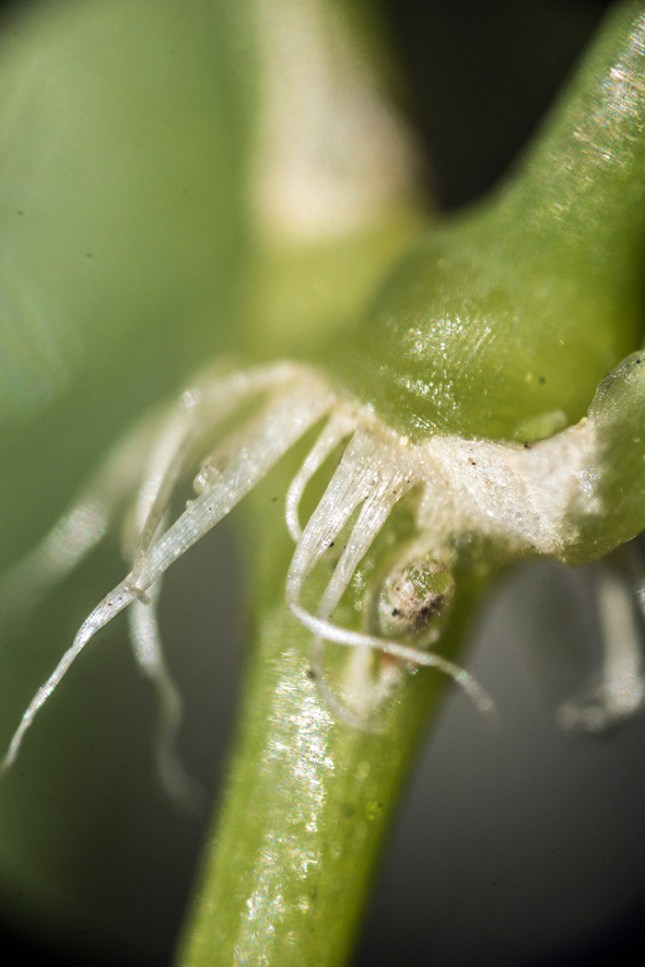
There’s another oddity.  Between the two opposed plate-shaped flat leaves, immediately below their bases, is a set of twisty-pointy Halloween fingers.  (Vocabularious readers may recognize these as stipules.)    We then ask in unison, what do those fingers contribute to the well being of the weed?

Drymaria cordata stipule

Funky fingers immediately below the leaf pairs.  What good are they?

My first idea favored preventing  soil buggies from climbing  to make pests of themselves.  Okay barricades maybe, but I went outside, plopped down on my sixpack abs, got the Velcro heads on my shirt, and saw something more interesting:

drymary drop 1

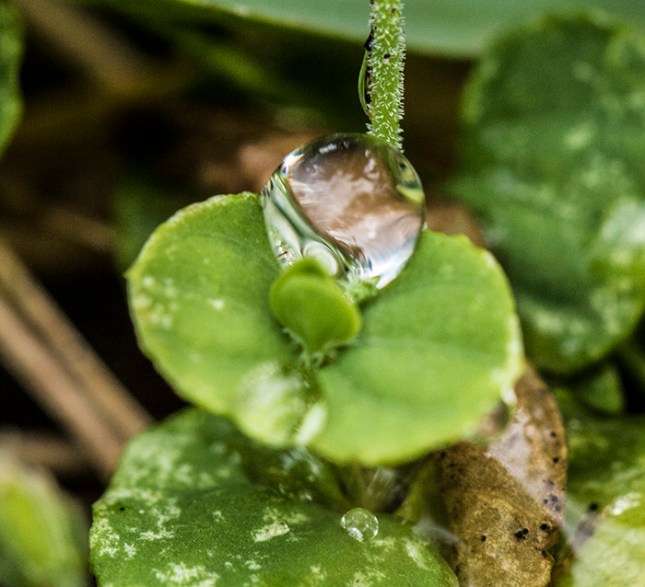
Little gem on the paired leaves just above the fingers.

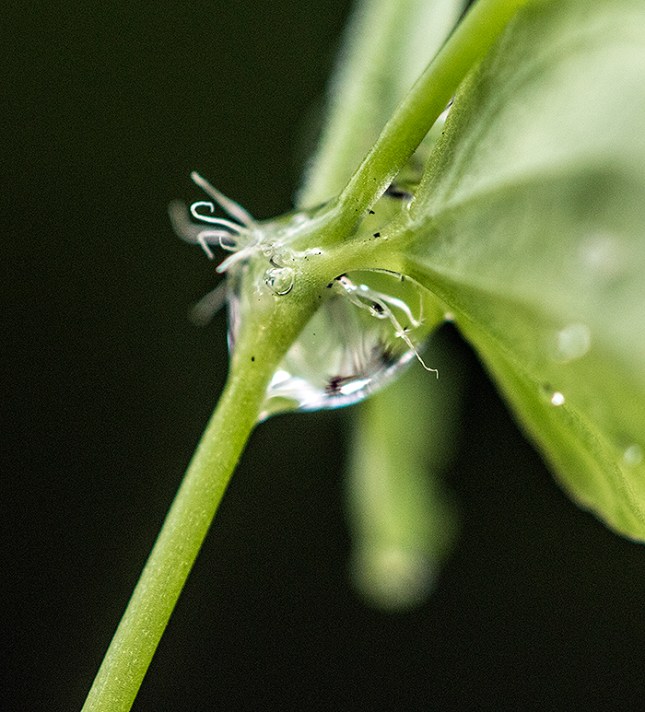
The paired leaves collect water on their top surfaces, capturing beautiful glistening drops in the angle where the two leaves meet immediately above the fingers.   Do the fingers have something to do with holding the water a little longer, or influencing its drainage and distribution?   Maybe they help support the drop before it slithers down between the leaf bases, or more likely (and observed), as the drop falls between the bases, it can catch in the fingers.   Could the snag help the plant retain moisture?   I don’t know, but pretty to contemplate, if you like sprawling on the ground with fire ants and curious neighbors.  Your choice.

Drymary water on stipule

Droplet clinging to the fingers, or vice versa.

 
14 Comments

Posted by on March 2, 2018 in Drymary, Uncategorized


Tags: , , , ,

Leaves With White Veins

Today John and I started a new old project….to update and upgrade the photos in the old Palm Beach State College Guide to South Florida Weeds.

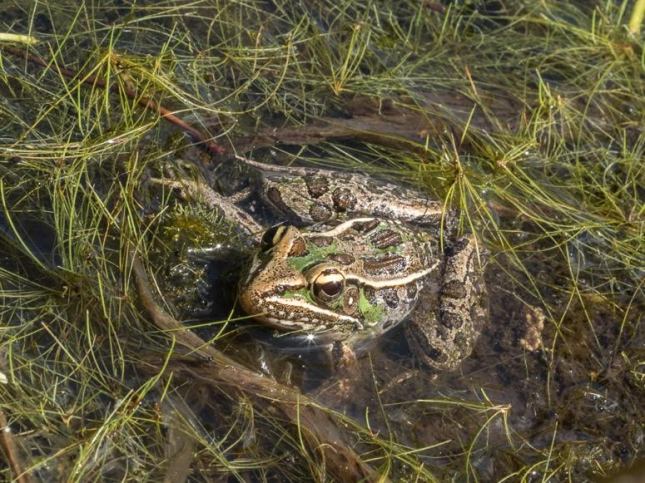
We soon met a Southern Leopard Frog happy to duck amphibian decline.

frog2

Portrait today by John Bradford.

The frog’s fancy-pants pattern brought to mind the patterned leaves encountered sporadically in weeds and other plants.  Setting aside variegation caused by mutations and by viruses, what I’m thinking of now are species with white veins.

In houseplants

In orchids

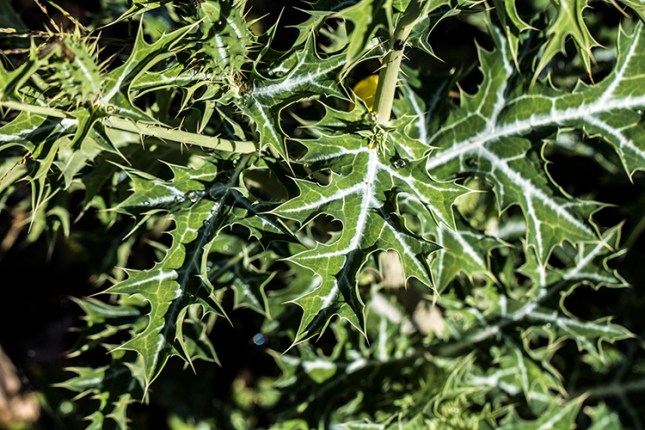
And so forth and what-have-you.  Compare this Milk Thistle to the similar but unrelated Mexican Poppy below:

Why would unrelated plant species do the same odd thing?  Gotta be an adaptive benefit.    The proposed benefit I like, not original with me, is that maybe leaves with white veins are mimicking the streakings and vein discolorations of senescent, nutrient-deficient, or infected leaves.  Such leaves presumably offer poor nutrition to pests and may be unpromising nurseries for buggy eggs.   Go bother a different “healthy” plant!   Of course  this is pure speculation.

deficiency

Sick leaf.

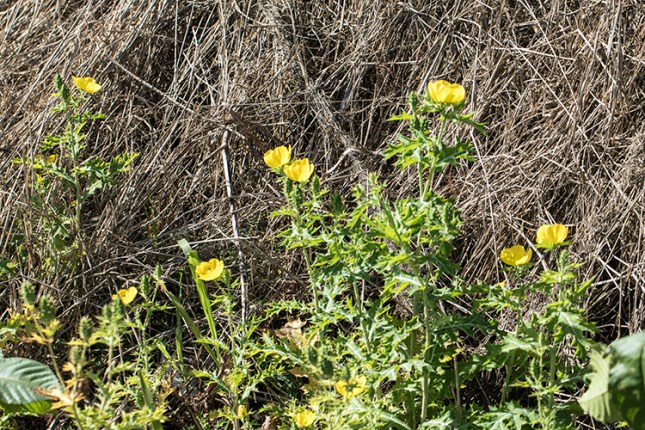
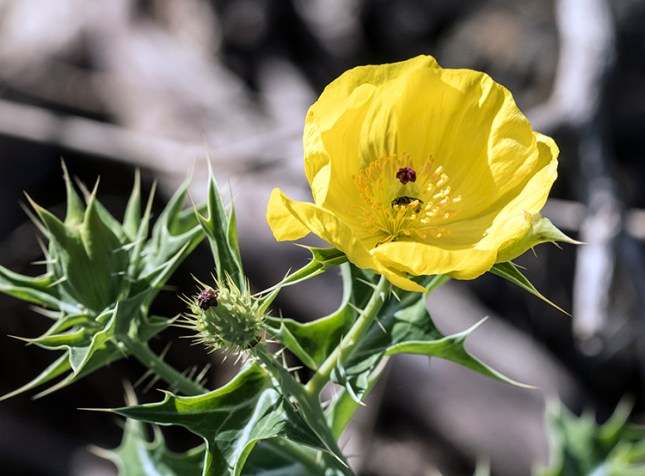
The most striking local white-veiner is the Mexican Poppy, Argemone mexicana, which is arguably native here.     This prickly beauty has spread itself around the world in agricultural seed, and maybe sometimes as a garden flower or oil-producing and medicinal plant.

Argemone mexicana plants Feb.

Mexican Poppy

The traditional medicinal uses are many, and are the ancient roots of its name, probably from Greek argemos for cataract, as in the eye.  But beware, in India over-exposure to its many toxins has caused plant-induced dropsy (aka heart failure).   The seeds give up oil for lamps and for lubrication.

Argemone mexicana foliage

White veins, as promised.

Being a poppy, does Mexican Poppy have psychotropic effects, as in opium poppies?    Probably,  to a limited and poorly documented point, but to be repetitive and uber-emphatic the yellow sap is dangerously toxic, laden with alkaloids, and AT LEAST damaging to the heart it seems.  So forget it.

For a weed taking over the world, MP sure is fussy about appearances in South Florida.  I can’t recall encountering it in a wild area.   The species likes agriculture.   The bristly capsule drops seeds all over the ground.   They lie dormant then in the seedbank until cows or plows rouse them to sprout, often in unison.  You know, fields of poppies.

Aregemone mexicana Pt Mayaka FEb

 
1 Comment

Posted by on February 23, 2018 in Mexican Poppy, Uncategorized


Yellow-Eyed Grass  Has a Mysterious Friend

Xyris ambigua and related species

Xyridaceae


Today was the perfect day in South Florida, temperature pure paradise, fragrant breeze, puffy white clouds.   Just the kind of day sez John and me for the swamp.  So off we went to the Hungryland Slough with boardwalk in the Corbett Wildlife Management Area just west of North Palm Beach, FL.

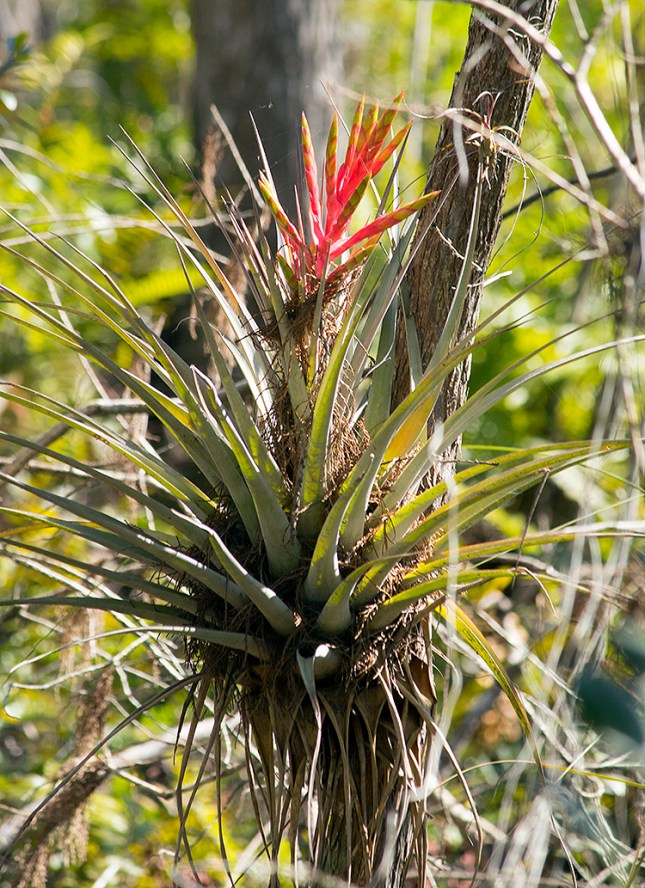
It was hopping happening place.   The Tillandsia “airplants” were in their glory.

Tillandsia fasciculata Corbett Feb.

Cardinal-Airplant today

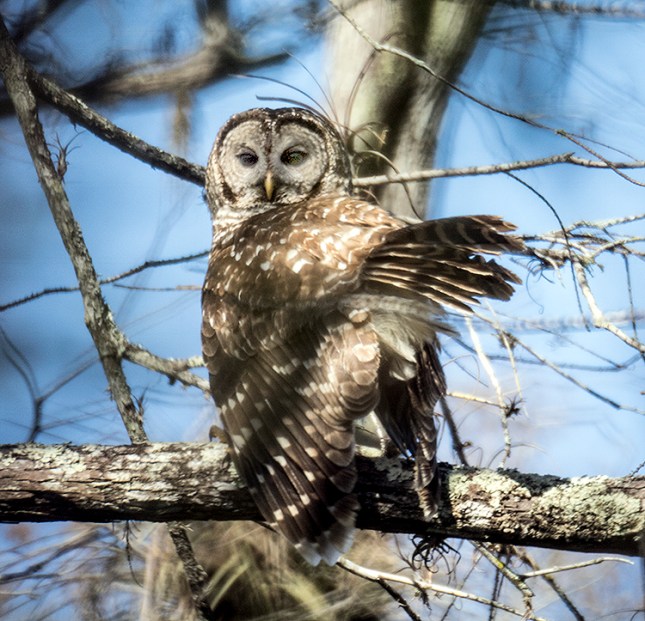
A resident barred owl looked down upon the intruders.

owl2

Slightly annoyed barred owl today.

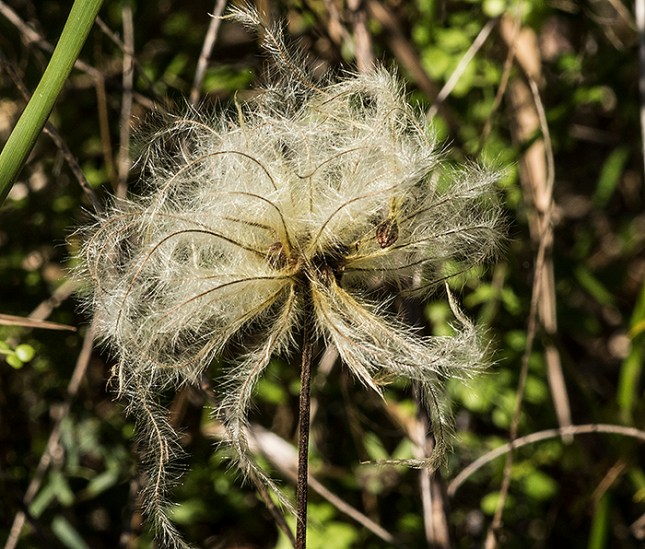
The Pine-Hyacinth (Clematis baldwinii) displayed its Einstein-hair fruits.

Clematis baldwinii fruits

Clematis fruits today

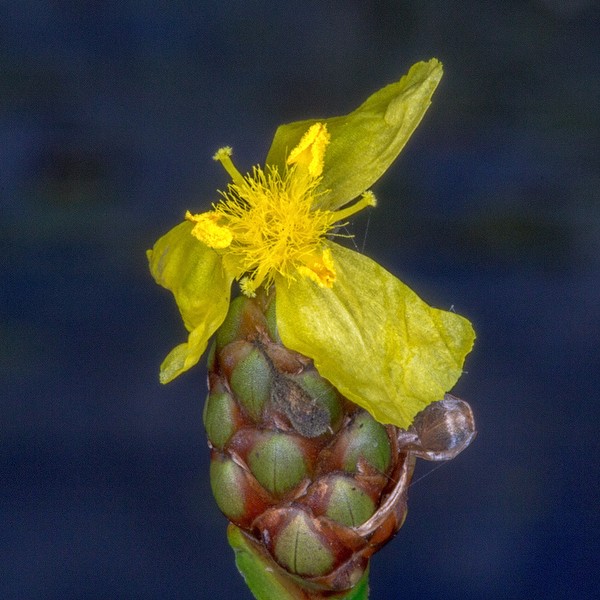
And  yellow-eyed-grasses,  species of Xyris,  rose in varied life-stages in the wet soil.

Xyris ambigua 8

Xyris ambigua by John Bradford.

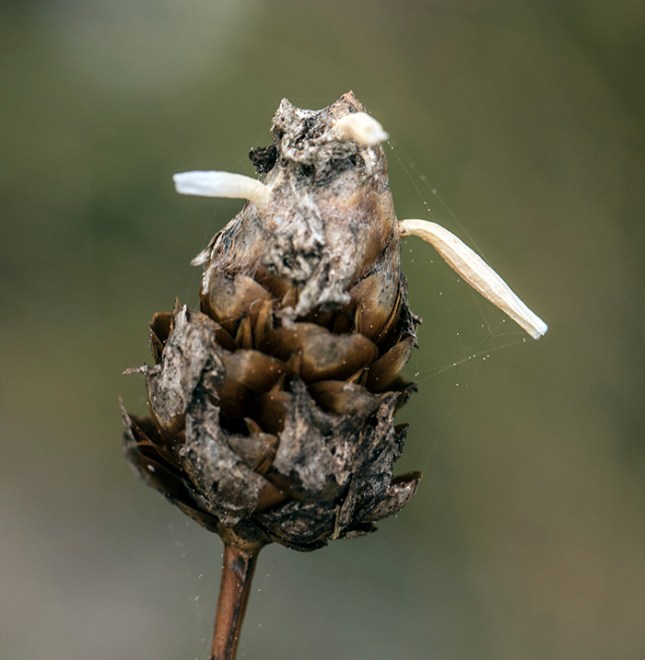
Spend time around Xyris,  and you may spot something weird:  little white “cigarettes” jutting out perpendicularly, woven basally with fine threads to the plant’s seed-heads.  Very mysterious, off-white, fluted, stiff, and protruding, not to mention the silky web defining that basal attachment.   Inside cowers a little chestnut brown larva.

Xyris ambigua cocoons

Xyris seed head with pupal cases from Coleoophora xyridella.

These are the pupal cases of a moth that existed undiscovered to science until 2005.  (And we think everything has been found.) How did entomologists and botanists overlook these little white cigarettes for hundreds of years?   I suppose because the Xyris moth is extremely similar to a different moth of the same genus that lives exclusively on rushes.  Now there’s an argument for entomologists to learn plants, and for botanists to learn insects!

Here is the 2005 description.  Look at page 10.   CLICK

This is another view of the moth.  FLUTTER HERE

Coleophora xyridella is not rare around our stomping grounds, and I’ll bet other local naturalists won’t have much trouble spotting its cigarettes.  As the moth’s describer J. F. Landry noted, the moth is not well studied.   Among the things not known are its preferences with respect to different Xyris species, if it eats the seeds, or for that matter any other details of the relationship.    For starters, I’d like to know if the moth uses the non-native introduced Xyris jupicai.  Interestingly, that is a South American species, and in 2005 Dr. Landry described also a South American species of Coleophora.  The plot thickens.

 
4 Comments

Posted by on February 16, 2018 in Uncategorized, Xyris moth


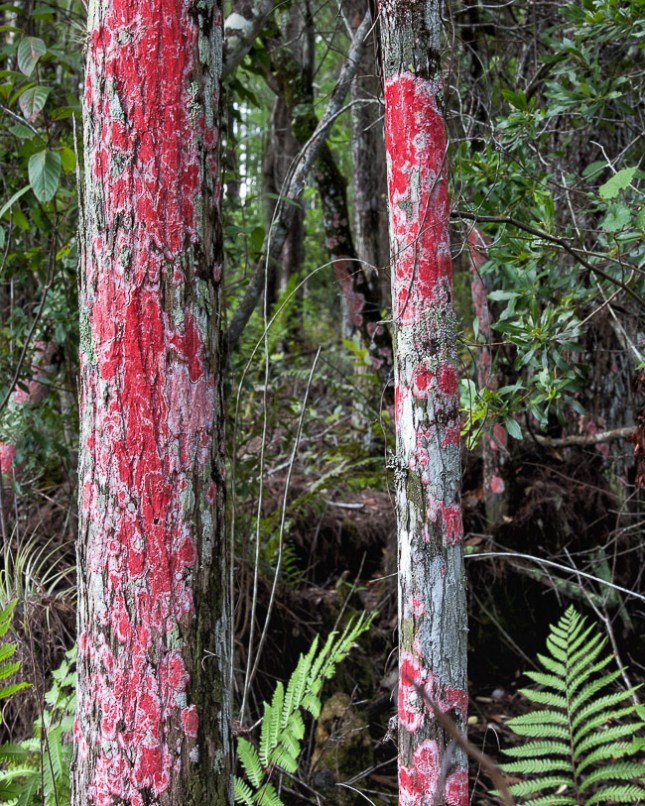
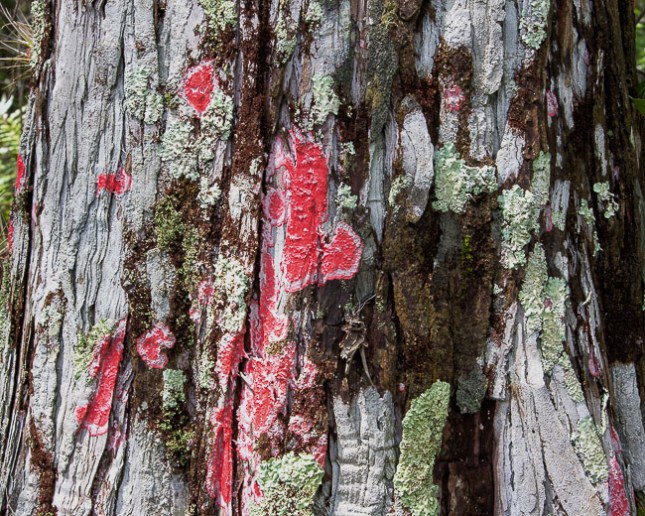
Red Lichen, Christmas Lichen, Christmas Wreath Lichen

Herpothallon rubrocincta (better known as Cryptothecia rubrocincta)

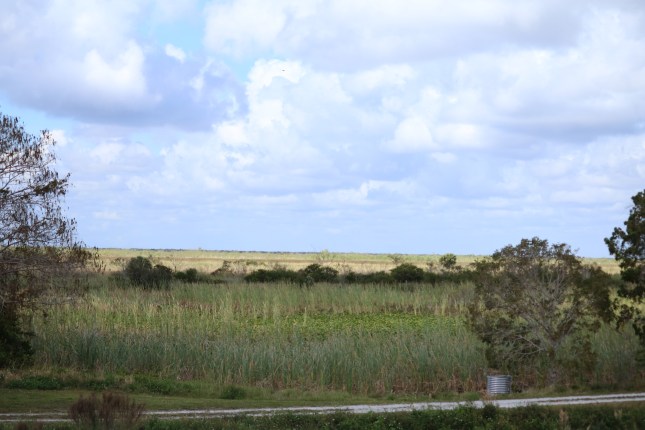
John and I drove to the fringe of the Everglades today, to the huge Arthur R. Marshall Loxahatchee National Wildlife Refuge near Boca Raton, where they are celebrating Everglades Day tomorrow (2/10/18). CLICK

Marshall 1

The theme of the upcoming event is “colors of the Everglades.”  Based on today, the feature color should be red:  as in a vermilion flycatcher showing off its vermilion, Virginia creeper and poison ivy bloody winter leaves,  well named cardinal airplant, northern needleleaf with its red inflorescence,  scarlet young  peppervine, and what seems to be an escaped epiphytic cactus glowing reddish in the cypress swamp.

The selected red item in today’s spotlight is the spectacular lichen sometimes called Christmas (Wreath) Lichen.   It makes me want a Dunkin Donuts strawberry frosted donut.

Red Lichen 2

Red lichen loves wet woods and swamps.  Photo by John Bradford.

Now it could be time for a windy monologue on what lichens are all about.  I don’t feel like doing that;  that is all over the Internet already.  So now suffice it to say that a lichen results from the symbiotic relationship of a fungus (or more than one, as probably in the present case) and an alga (or a blue-green “alga”). CLICK for Wikipedia

Red Lichen 1

By JB

Why would a humble lichen be so magnificent?   If a lichen is beautiful in the woods and nobody sees it, is it still lovely?   Botanists agree that the red is probably sunscreen, as is the red in the young growth of many ferns and seedplants, such as that peppervine mentioned above.  The red pigment from the lichen, chiodectonic acid, increases in concentration when the fungus experiences UV exposure.   You might say the lichen gets a sun-tan when exposed, as I might on a tropical vacation.

IMG_9065

Peppervine, red when young

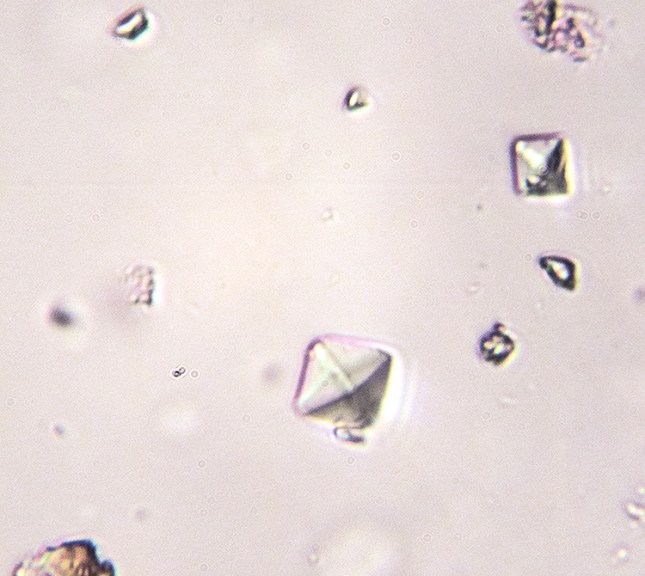
This species has a second oddity, shared with other lichens and with mammalian urine sometimes:  calcium oxalate crystals.    You can discuss how and why that happens with your urologist.  But why would a lichen make bladder crystals? It has no kidneys. CLICK to see canine bladderstones.

Calcium oxalate from Cryptothecia - Copy

From a bladder, or from a red lichen? You guess. (From red lichen.)

Nobody really knows  why or how the lichen gets its crystals, given its tree trunk lifestyle, having no roots in the ground.  The calcium apparently arrives in rain,  stemwash, and dust.   Could a lichen living on pixie dust accumulate so much excess calcium it needs to sequester the mineral as hunky crystals?   Possible but seems unlikely.   More fun ideas have been put forward:

With the help of these corrosive crystals, lichens are known to degrade limestone monuments.  It has been suggested that the crystals help lichens on rocks dissolve nutrients from their substrates, or in the case of a lichen on a treetrunk, help the fungus release nutrients from windblown minerals and from particles in stemwash.

A more mundane yet plausible explanation is to shield the delicate algae held below the crystal layer, especially from drying.  This notion has the support of the mutual positions of the crystals and algae.

Red lichens seem to be playground bullies.  I get the impression that they win upon glacial collisions with different species,  little seems to start growing on the red lichen surface,   and research suggests the lichen can suppress Tillandsia airplants.

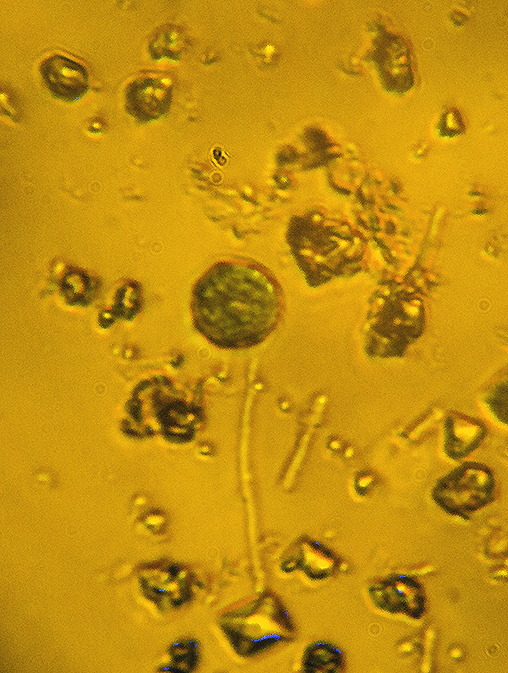
Trentepohlia from Cryptothecia

Microscope view of the green alga partner,  in center,  liberated from the fungus (seen as fine strands).  A crystal or two photobombed the shot.


9 Comments

Posted by on February 9, 2018 in Christmas Lichen, Uncategorized


Primrose-Leaf Violet

Viola  primulifolia

Violaceae

John and I went today to a favorite site, Kiplinger Natural Area in Stuart, Florida, to see what’s shaking on Groundhog Day.   Shaking were many small, near-the-ground wildflowers, each with a subterranean quirk:


Bluethreads (Burmannia biflora) thrives on symbiotic fungi underground.

Burmannia biflora 4

Bluethreads today in Kiplinger.  Except for seed and fruit, today’s photos by John Bradford.


Innocence (Houstonia procumbens), like a peanut, forms its fruits underground.

Houstonia procumbens 7

Innocence


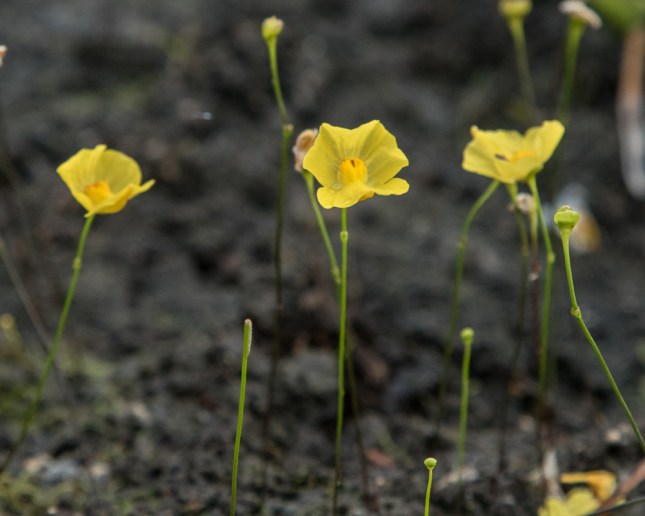
Zigzag Bladderwort (Utricularia subulata) eats its prey underground.

Utricularia subulata 9

Utricularia gibba  Bladderwort


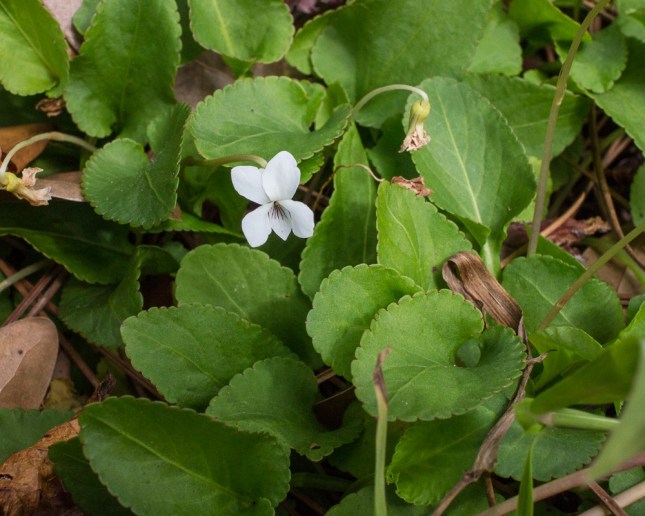
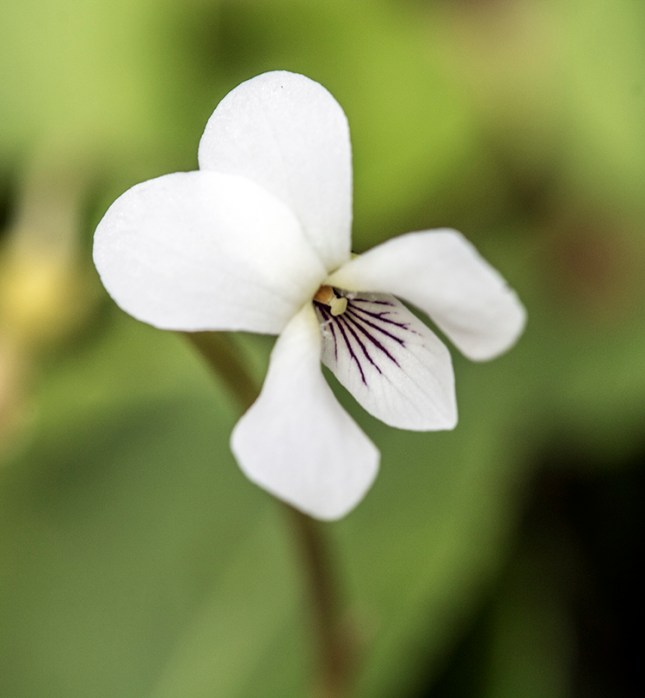
But today is about a species spread all over North America, but not seen much around here:   Primrose-Leaf Violet thinks Feb. 2 is springtime, flowering and fruiting in moist nooks and sunny crannies.  There’s little in the world prettier than a violet, and this one is a stunner if you don’t mind tiny,  having bleached-white flowers decorated with purple nectar guides.

Viola primulifolia 4

Viola primulifolia flower2

Actually, not all its flowers are lookers.  Like most violets, today’s  has “cleistogamous” (kleist-OG-ah-mus) flowers, that is, small, hidden, self-fertilizing, and never opening…yet making fruits and seeds.  In other words, a plan B in case the main flowers don’t achieve proper pollination, and a system for cloning the mother plant.

Viola primulifolia cleistogamous

Cleistogamous flower never opens but does make seeds.

Cloning may not sound important, but keep reading:.   Although unproven so far as I can find, many botanists regard the Primrose-Leaf Violet as an historical hybrid between two other species.    If that is correct, at the time of origin the new hybrid may have had a reproductive problem.  With whom does a lonely hybrid exchange pollen?  And worse, hybrid plants often have partial or full sterility.  You know, like a mule.  Cleistogamous flowers remove those problems to let it go forth and multiply immediately.  Then over time fertility conceivably improved.

Viola primulifolia capsule 2

Another violet oddity is ant dispersal.     Having hungry ants haul your seeds back to the pre-fertilized pre-tilled ant hill is handy, unless the ants eat the seeds.     But no worries.  Some violets have toxic seeds, which might protect them from ant bites.  But are the ants thus disincentivized?   No.  The seeds gift the insects with a separate food package called an elaiosome (ee-LIE-oh-some) affixed to the seed, attractive and acceptable to eat.   Some seeds do not germinate until the elaiosome is nipped.

The photo below is a seed from the fruit capsule,  apparently  immature*.   The elaiosome seems to be forming on the left end, although my interpretation is a little speculative.   Ask an ant.

Viola primulafolia seed

Immature (?) seed. I think the elaiosome is on the left.


*Technical note.   Wish I knew why the violets have odd not-fully developed seeds in ripe capsules.  Maybe leftover duds after fully developed seeds dispersed?    Or abortive unpollinated ovules?  Or, maybe the results of some level of hybrid sterility?
 
3 Comments

Posted by on February 2, 2018 in Primrose-Leaf Violet, Uncategorized


Scrub Palmetto,  Peter Pan of the Florida Scrub

Sabal etonia

(Sabal comes from an old common name.  Etonia refers to the Eton Scrub area.)

Arecaceae (Palm Family)

Today John and I gave a damsel in distress a jump start, and then passed through Prosperity Oaks Natural Area, an obscure live oak hammock lost beyond redemption in the suburban sprawl of Palm Beach Gardens, Florida.    The area is home to large (by local contemporary standards) gnarly old live oaks and all their epiphytes, and the dank understory.    In the latter, down deep in the shade flourishes a curiosity, Scrub Palmetto.

Sabal etonia 4

Today’s photos by John Bradford.

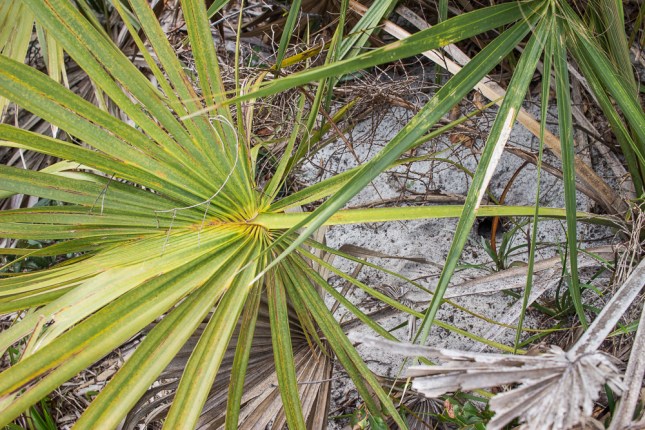
What’s curious is the shaded habitat.    This little palm according to most life experience and plant manuals is a sun-lover usually in open scrub on white sand in the sun-baked company of saw palmetto, low scrubby oak species, Florida Rosemary, and Sand Pine.     So, wazzup  deep down in the dark?   Scrub Palmetto is presumably water-limited and slow growing, so maybe deep shade really is no special problem, conceivably  even beneficially protective.    After all, a lot of palms are shade-tolerant, and those broad leaves could collect light.

Were the little palmettos on the site back if and when it was open scrub before the oaks rose up and took over?  How long would that take?   Seems unlikely.  Or have the Scrub Palmettos wandered in unbothered by the Live Oak canopy?   I’ll put my money on that.

Either way, these dwarf palms are adapted to severe tough times, usually keeping their stems and growing tips subterranean,  protecting the key points from  mayhem, such as death by fire.

In an evolutionary sense, Scrub Palmetto is a local spinoff from its big ancestor, Sabal Palm the palmetto all over Florida, the state tree.   Sabal Palm, aka Cabbage Palm, is widespread,  variable, and  a full-sized tree.   Scrub Palmetto is limited to the Florida Peninsula,  uniform, and three feet tall.

Sabal etonia 4 (1)

Despite its ultimate stature,  Sabal Palm begins life underground, starting with what’s called “saxophone growth.”   Hidden safely during the formative years, its stem grows downward, exposing merely leaves aboveground but not the critical stem tip,  before eventually rising like nuclear blast survivors into the hot aboveground radiation.

Now let’s speculatively evolve Scrub Palmetto.  What if some variants of Sabal Palm in especially perilous extreme habitats never proceed beyond the exposed-leaves stage, keeping the stem tip buried permanently, and remaining small forever?    That is, living life juvenilized.   It may be that in a stretched historical sense, Scrub Palmetto is essentially a “Sabal Palm” locked in forever as a pre-teen.

 
5 Comments

Posted by on January 26, 2018 in Uncategorized


Gumbo Limbo, Frankincense, and Myrrh

Bursera simaruba

(Burser is a personal name.  Simaruba reflects similarity to a different genus.)

Burseraceae


Today John needed photos of MacArthur Beach State Park on Singer Island, Florida.   Aren’t many places I’d rather go!    So many wonders to behold, right in the city:

The Danzigergracht anchored off the beach—waiting to come or go from the Port of Palm Beach.

spliethoff

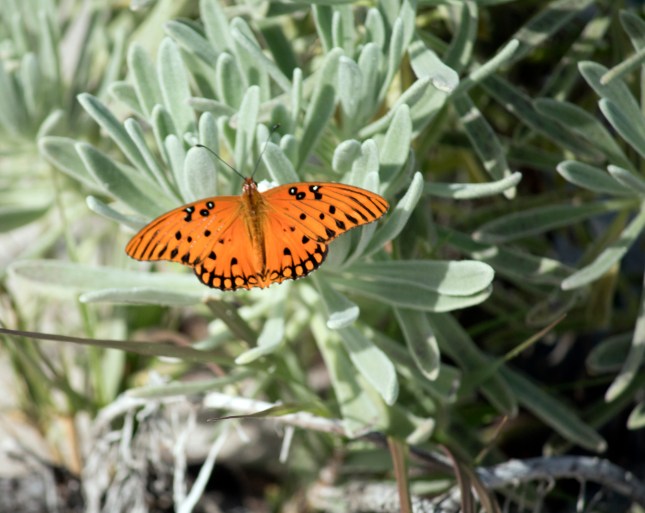
Gulf Fritillary on Sea-Lavender today. How can a butterfly flutter around in beachside gale?

Butterfly on sea lavender

Limber Caper pod.

IMG_8160

And the good old Gumbo-Limbo tree.  If there’s one local tree everyone knows, this is it, and thus food for my conviction that the botany of everyday plants is more interesting and less pretentious than rare selections we don’t often see (but usually can if we want to drive for miles and listen to botanical priests).

Bursera simaruba 1

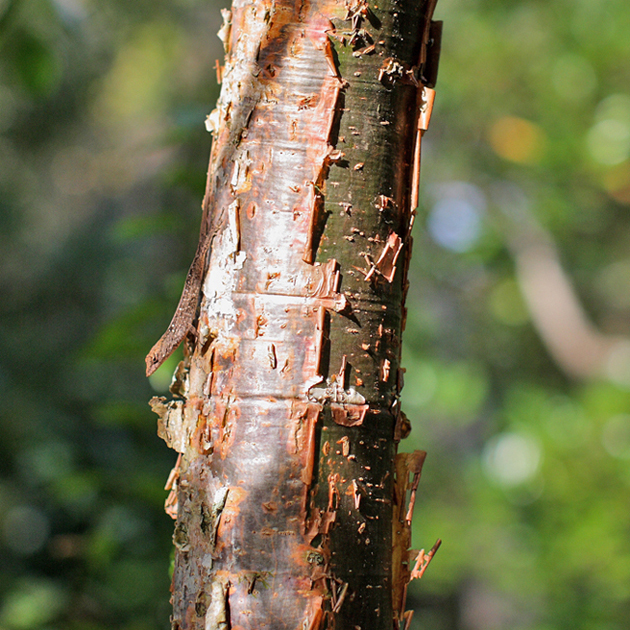
Gumbo Limbo peeling bark by John Bradford

Any 5th grader could tell us about the colorful peeling Gumbo Limbo bark, you know, tourist-tree and all that.    Why have such bark?    Notions, which are not mutually exclusive, include “molting” from fast growth (doesn’t strike me as a likely explanation); or shedding pesky algae, liverworts, lichens, mosses,  fungi, bacteria, or insects;   or providing a thin surface for stem gas exchange; or allowing photosynthetic activity in the stem itself.  The photosynthetic role comes up scattered in literature on this and close relatives, and, after all, the result of the peeling is continued re-exposure of green bark.  The green portion of he bark is loaded with chloroplasts.

Bursera simaruba 2

GL as it looks today, by JB

What I like best about Gumbo Limbo is the subtle fragrance of the resin.   No surprise, given that Frankincense and Myrrh are likewise members of the  Burseraceae Family.  F and M are native to the Old World.  In the New World species of Bursera have a similar history making life smell better.

IMG_3106

Frankincense tree, in Oman, courtesy of Pat Bowman

The resin in some Bursera species is sufficiently pressurized to shoot herbivorous insects in a “squirt gun defense,” reportedly squirting as far as six feet and lasting multiple seconds.

Bursera simaruba 7

GL flowers by JB.  Not taken today.  The flowers come in varied mixes of male, female, and combo.   Almost all individuals make some fruits.

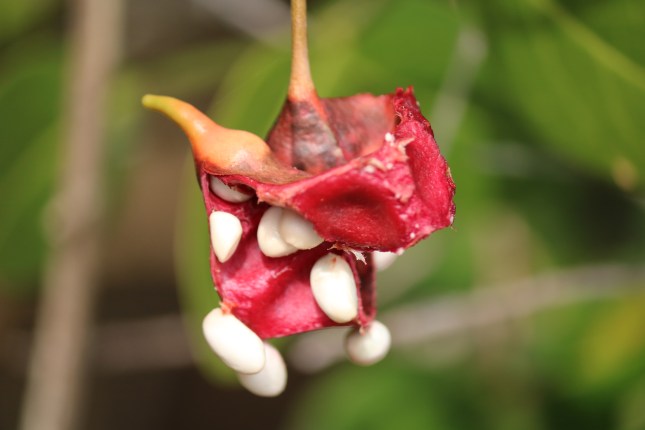
The fruits look like clusters of small grapes.  Each has a three-parted cover that falls away to leave behind a single sharp-edged, hard, reddish seed attractive to birds. Oddly the seeds don’t seem to offer much food value, but rather serve as grinding stones in bird crops, according to tree biologist Peter Tomlinson.

IMG_8136.JPG

 
10 Comments

Posted by on January 19, 2018 in Gumbo Limbo, Uncategorized


Nitella, Green Plant Forerunner?   Boosted By Weed Killer?

Characeae (A family of algae)

Halpatioke lake

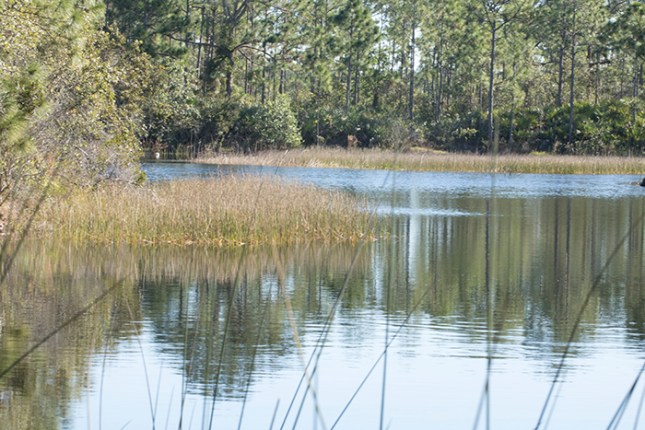
Halpatioke Park, a lake.  What lurks below?

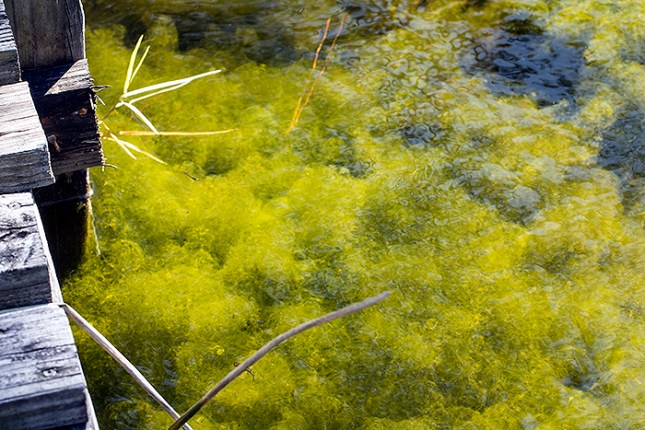
John and I have been enjoying Halpatioke Park near Stuart, Florida, getting ready for a group field trip in January, and possibly my Palm Beach State College native plants class.  Wonderful how many habitats can mosaic just one park, from marshes to riverbank, pinewoods, scrub, and more.    Sparkling lakes are embedded  in the forest, postcard pretty, feeling remote like a vacation destination.   Some have a surprising resident… in billowing green overwhelming masses…Nitella Algae.

Nitella mass

Plenty of Nitella.

Most of us see algae as green pond scum, never giving it much thought except in the fish tank, or as biofuel, or as a dietary supplement,  or tangling fishooks.    But this alga  and its similar cousin Chara are old players in the history of botany.   They are branched, like a “normal” plant, and have complex reproductive organs that look, without delving into cellular details, like something you’d expect on a land plant rather than on a pond scum.

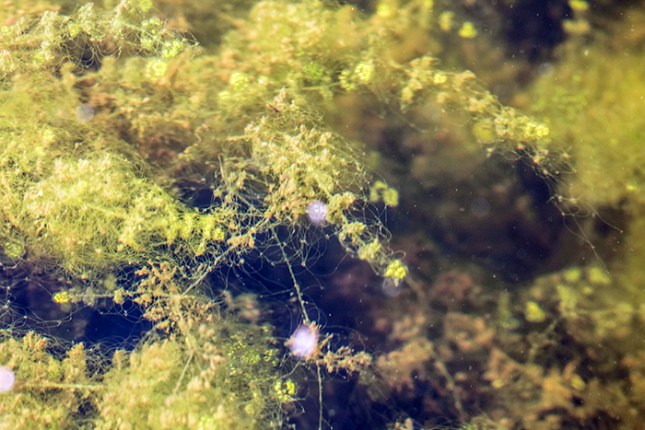
Nitella mass close

Nitella mass in the lake,.

Aha!  You figured it out already:  land plants evolved from Green Algae.  Land plants have stems and branches.  So does Nitella.   Land plants have complex reproductive structures.  So does Nitella.

(All true of Chara as well.  Chara differs by  being stiffer, by having a rough stem, and by a characteristic stink.)

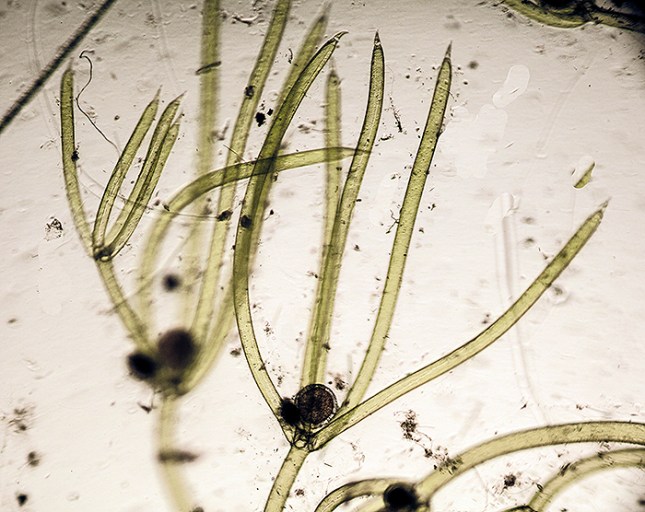
Nitella branches

Branches, as seen under a microscope.

When I was a student, textbooks suspected Nitella and Chara or more precisely their closely related predecessors to be ancestors to the land plants roughly 500 million years ago.   The ostensible ancestorship has been an area of speculation for years, and then came DNA analysis to spoil the fun.   Apparently Nitella and Chara lose their ancestral status.

Similar branchy structures with threadlike stems or leaf segments occur in several unrelated aquatic plants.  Such architecture helps keep any shallow plant attached to the mud, wafting in the waves, exchanging gases, and taking in the sun.   The earliest land plants, by contrast, were probably not branchy, but rather sprawled on the wet mud.

Very oddly for Green Algae,  Nitella and Chara make sperms and eggs inside protective sacs, as do unrelated marine algae.  The sperm and egg sacs are not clues to evolutionary ancestry, but rather mere demonstrations that protecting the family jewels matters when you’re near shore battered by waves and surviving fluctuating water levels.

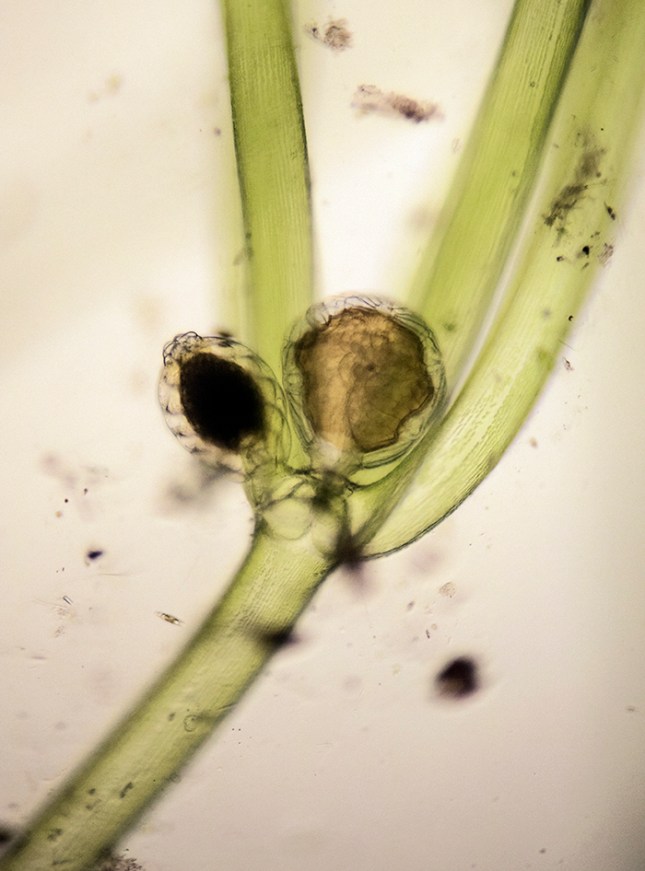
Nitella egg and sperm

Egg making sac on the left. Sperm-making organ on the right.

In short, Nitella is adapted to occupy shallow lake shores, but why so much of it in the Halpatioke lakes!?   Are great green clouds of Nitella natural?   Maybe not.  One ecological study showed nutrient pollution to spur Nitella growth, at least temporarily, while suppressing its sexual reproduction.  Most lakes in South Florida have nutrient pollution, even nice secluded ones in Halpatioke Park, given pastureland all around,  the adjacent St. Lucie River,  fertilizer nutrients in the rain and groundwater.

And to end a little ironically,  the very weed killer spewed on an industrial scale to suppress unwanted plant life may contribute to the overgrowth in aquatic habitats.  Glyphosate, aka  Round-Up,  herbicide is a source of aquatic phosphorus pollution.  It can fertilize the enemy.

 
5 Comments

Posted by on January 5, 2018 in Nitella, Uncategorized


Knotted Spikerush All Over The Place (Yet We Scarcely Know It)

Eleocharis interstincta

(Eleocharis translates loosely as beautiful marsh-dweller.   Interstincta means speckled.  The basal leaf sheath is dotted with dark purple.)

Cyperaceae (Sedges)


Today’s botany time with John was in Savannas State Park near Jensen Beach, Florida preparing a friendly grass, sedge, and rush public workshop for the morning of January 13.  Join us!   CLICK for a link. 

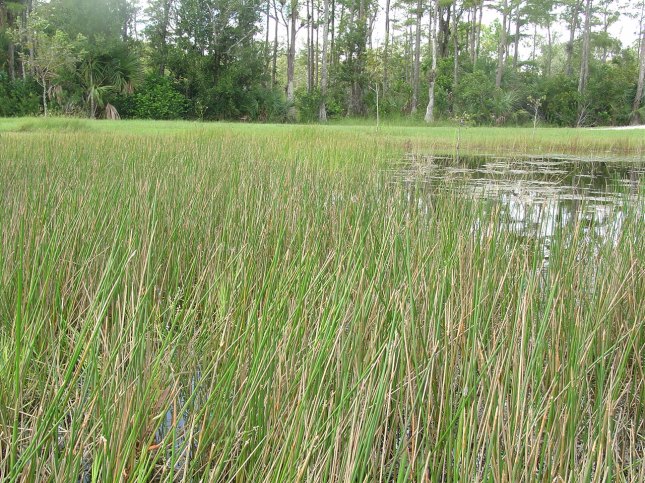
Most of the park is beautiful, low, and marshy….and in this morning’s cool fog, mysterious.   The perfect encounter for emergent aquatics, which have their own peculiar ecology, such as by forming massive rhizomatous monoculture populations spreading until they engage in a slow-motion collision with opposing spreading species.  Knotted Spikerush  is one of the most abundant and conspicuous emergent species of open shallow water in South Florida, lining shores and blanketing acres giant marshland lawns.     But the species remains oddly under-studied.
E. interstincta 2

Knotted Spikerush, monoculture.  Today’s non-microscopic photos a mix by John Bradford and by me.  I’ve forgotten who took which.

Has it expanded like Cattails as a result of nutrient pollution?  Unclear.    Limited research fails to show much effect from varied nutritional levels, although there is room for far more data.
Eleocharis interstincta short stem

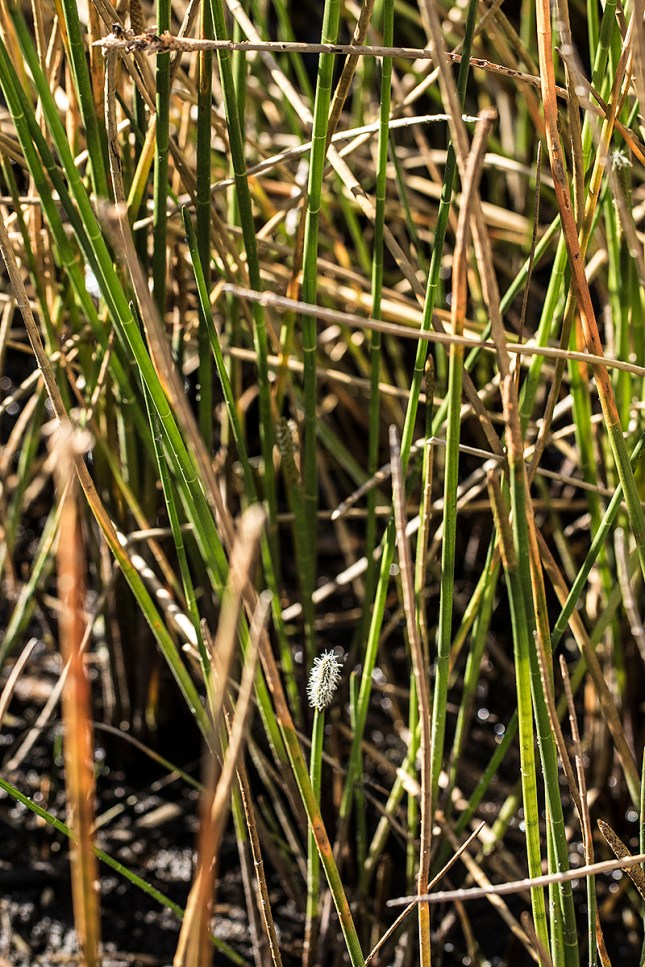
Short stalk with flower cluster, surrounded by tall stalks.  Not much wind down here!

A Spikerush oddity has bugged me for decades:  the flowering stems exist  in two distinct heights.  Tipped with a flower cluster, most are around a yard tall.    Others are mere inches tall, mixed with and “at the knees” of the taller stems.  Why stunted stalks?  To take advantage of two different pollinators?  This is almost certainly a predominantly wind-pollinated species, with those tall stems waving in the breeze.    But the shorties are tucked down far below the windy heights, maybe supplementing wind pollination by attracting insects  down in the shadows.  There are hints of plausibility:  the flower heads are showy white, and those on the similar Eleocharis elegans are fragrant.  (Fragrance in E. interstincta is subtle, or at a time I’ve not sniffed, or absent.)
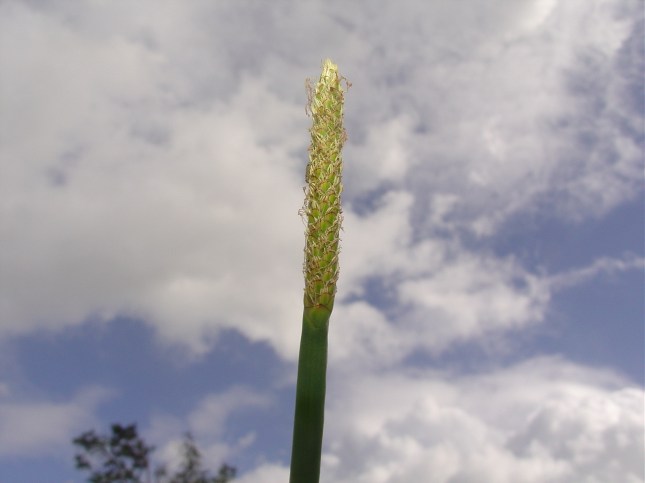
E. interstincta inflorescence 2

Flower cluster at stem tip.

A likely alternative explanation for the height disparity might relate to fluctuating water levels, where the short spikes hold forth during the drier months, and the tall ones in the high-water season. This week during late December short stems are in full bloom, as in the photo above taken this week,  whereas the tall ones are instead forming or dispersing fruits.   Seasonality is consistent with insect visitors, but I’ll place my money on fluctuating water levels until I catch bugs in the act.

Now another mystery to ponder.  The stem tops cook under the tropical sun, but the lower regions, rhizomes, and roots lie smothering under water and mud.  How do emergent marsh plants ventilate the basement?    Many have pressurized air exchange.  The exposed tops pump fresh air down where the sun don’t shine, like mechanical pumps aerating a mineshaft.

Most marsh plants have open channels and/or porous ventilation tissue called aerenchyma leading from their airy tops to their suffocating roots.     In Eleocharis interstincta and some related species the stems are hollow except for thin partitions making the stem resemble a miniature bamboo.
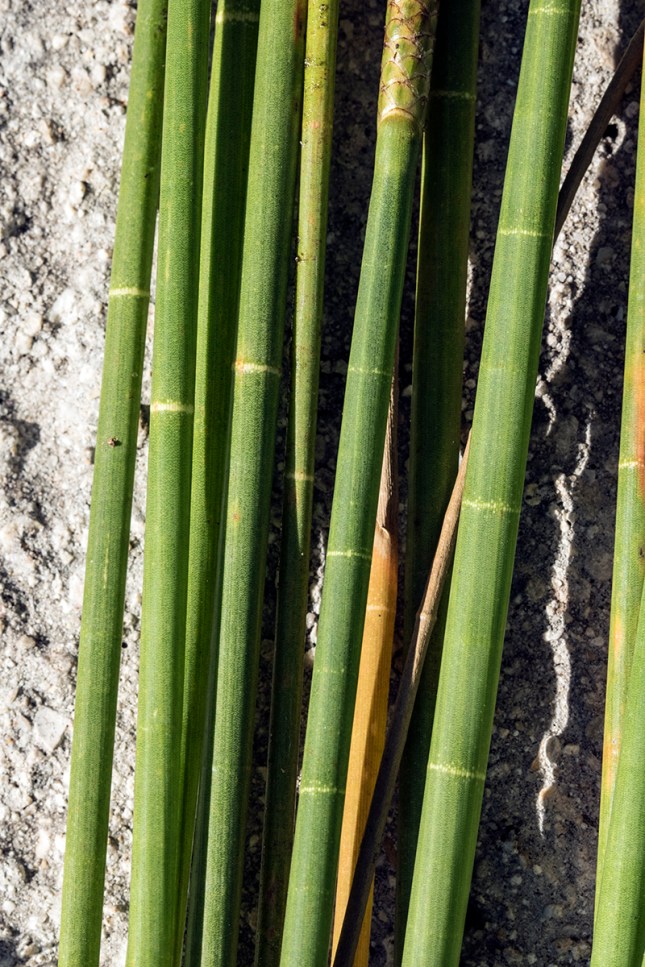
Eleocharis interstincta partitions

The stem partitions have a bamboo look.

The disks are made of loosely packed cells permeable to pressurized gases, as I’ve tested by blowing through to make bubbles.    Additionally, as visible in the electron microscope image below, channels around the stem periphery may facilitate air movement.
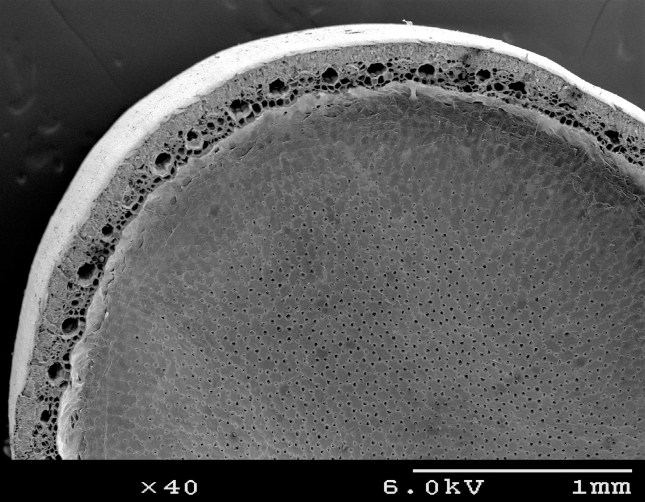
Eleocharis interstincta 3_preview

Porous stem partition surface, scanning electron microscope image, courtesy of Dr. Robert Wise.

Having open tissue helps, but you need to force fresh air down deep, and to let exhaust escape.   Studying an array of emergents, plant physiologists have identified three main systems to force airflow.

  1. Wind blowing across broken stems lowers their internal pressure, this drawing in air from other stems less exposed to wind. Probably unimportant with today’s species.
  2. Engineers move gases with a “Knudsen pump*” that works by having a hot chamber connected by tubes to a cold chamber. The hot chamber expands the gases within, generating pressure, just like car tires have higher pressures when hot.   The cold chamber, by contrast, has diminished pressure, allowing gases to flow from the hot high pressure end to the chilly low pressure end, and then escape. In a spike rush, the warm chamber is the hollow stem portion up in the sun.   The cold chamber is the portion down in the cold water.    Knudsen pressure pushes warmed air down to the cool lower regions where it vents out.
  3. The inside of the hollow stem is humid due to submersion in water and because all stems contain water. Because the water vapor accounts for much of the gas inside the hollow stem, other gases are more concentrated outside.  As those outside gases move inward to even out their concentrations they add to the internal stem pressure.

Our local Knotted Spikerush has never been studied pressure-wise.  But it bubbles from the submerged base.
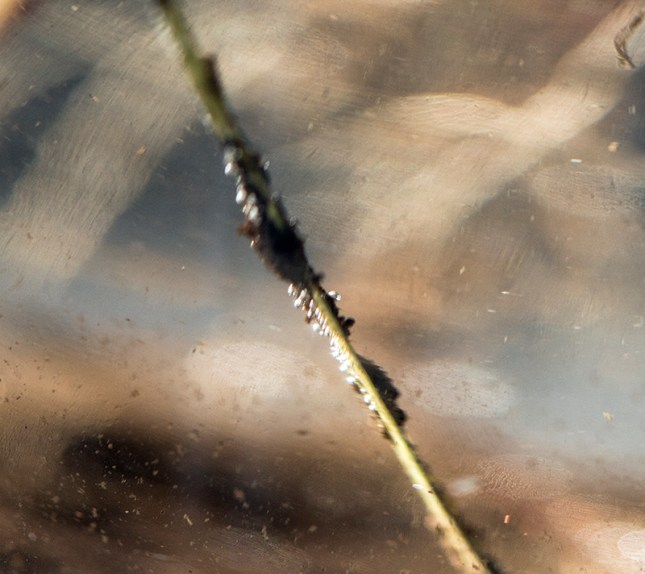
Eleocharis bubbles2

Bubbling underwater root on a clump with the top up in hot sun.

Bubbling is not definitive proof of pressure from the top,  but there is an even better indicator:  detailed quantitative study of the pressures and gases in the related E. sphacelataCLICK HERE.

Emissions from marsh plant roots appeared in the blog last week where manganese oxide stained the root paths at the hands of oxygen-using soil bacteria.  Oxygen released in the root zone supports favorable microbes and diminishes toxicity.

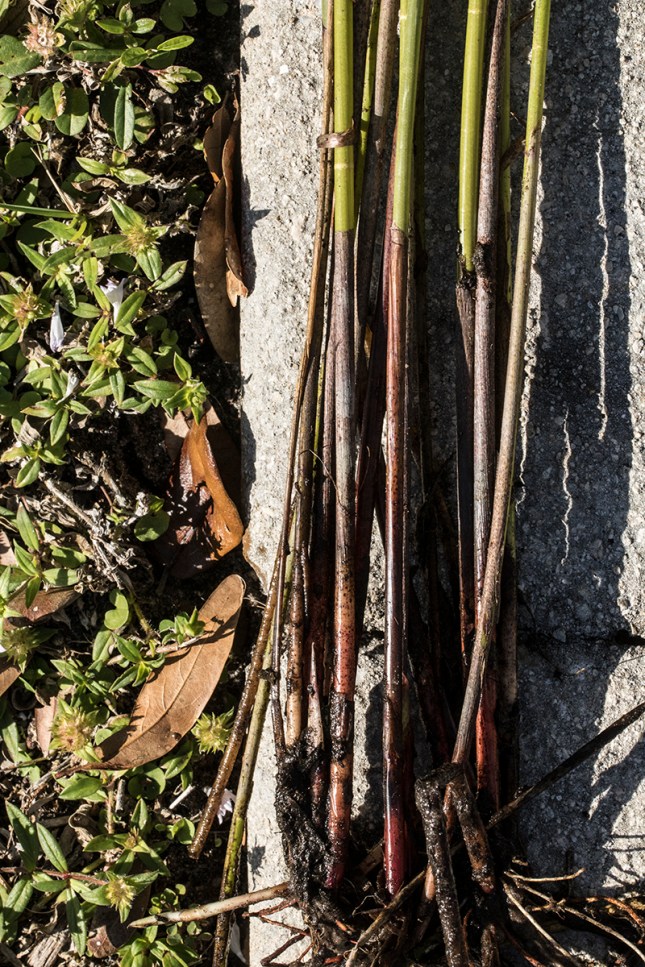
A tight-fitting sleeve rising as high as a foot wraps around the base of the stem and around the region where the stem base, rhizomes, and roots come together.   Perhaps the sleve prevents gases from escaping prematurely, although I’m just guessing.  Interestingly, in the much-studied marsh grass  Phragmites the basal sheath helps generate the gas pressure.
Eleocharis interstincta sheath

Knotted Spikerush purple leaf sheaths. Do they prevent gases from escaping prematurely?

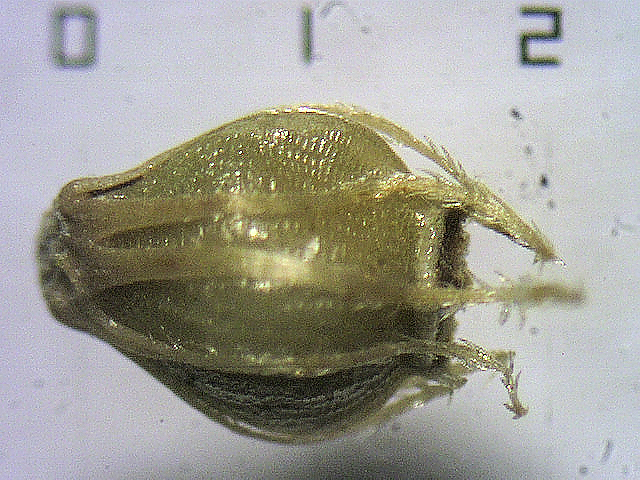
After pollination, the small flowers disappear behind little scales where the fruits mature.  Like many marsh plants, the fruits are oddly attractive, having a beak on top, bristles rising up around the fruit, and a decoratively sculptured surface.  Such sculpturing is common, maybe even characteristic, of the fruits or seeds of unrelated marshland plants, so there must be something “good” about it.    Botanists speculate the waffle sculpturing may help the fruits (or seeds) cling to mud on the legs and bodies of animals, wading birds for instance, thus helping with dispersal. That might help explain the spotty geographic distribution of the species.
E. interstincta achene

Fruit, with sculptured surface,  surrounded by barbed bristles.   Built to cling!

*For the sake of technical correctness, I feel duty-bound to note that in an actual engineered Knudsen pump,   the gas molecules are more concentrated in the cold end, so there is a movement of molecules back toward the warm end.  How it works overall will depend on the inlets, outlets, and venting.

 
2 Comments

Posted by on December 29, 2017 in Knotted Spikerush, Uncategorized