Herpothallon rubrocincta (better known as Cryptothecia rubrocincta)
John and I drove to the fringe of the Everglades today, to the huge Arthur R. Marshall Loxahatchee National Wildlife Refuge near Boca Raton, where they are celebrating Everglades Day tomorrow (2/10/18). CLICK
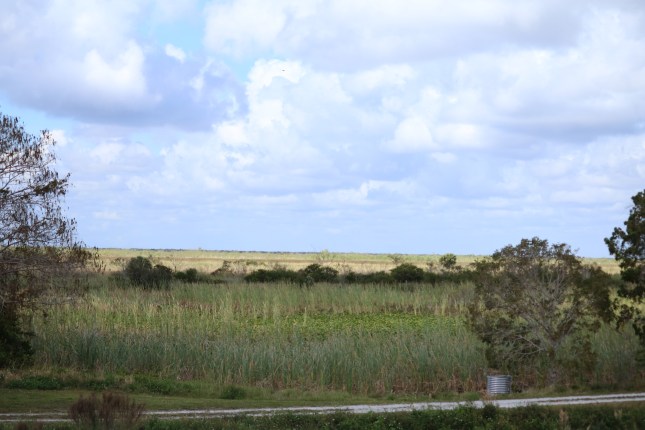
The theme of the upcoming event is “colors of the Everglades.” Based on today, the feature color should be red: as in a vermilion flycatcher showing off its vermilion, Virginia creeper and poison ivy bloody winter leaves, well named cardinal airplant, northern needleleaf with its red inflorescence, scarlet young peppervine, and what seems to be an escaped epiphytic cactus glowing reddish in the cypress swamp.
The selected red item in today’s spotlight is the spectacular lichen sometimes called Christmas (Wreath) Lichen. It makes me want a Dunkin Donuts strawberry frosted donut.
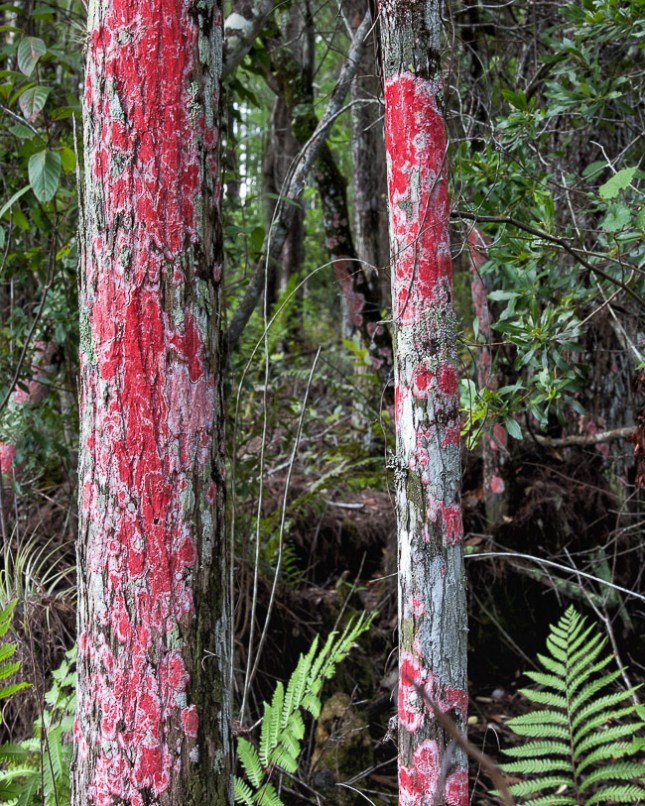
Red lichen loves wet woods and swamps. Photo by John Bradford.
Now it could be time for a windy monologue on what lichens are all about. I don’t feel like doing that; that is all over the Internet already. So now suffice it to say that a lichen results from the symbiotic relationship of a fungus (or more than one, as probably in the present case) and an alga (or a blue-green “alga”). CLICK for Wikipedia
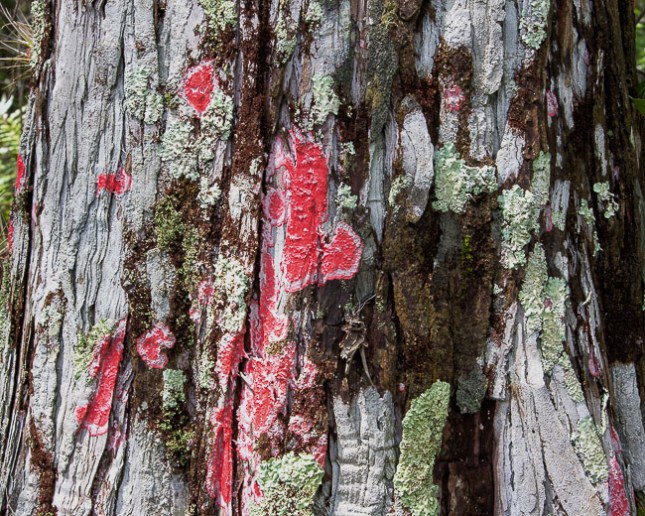
By JB
Why would a humble lichen be so magnificent? If a lichen is beautiful in the woods and nobody sees it, is it still lovely? Botanists agree that the red is probably sunscreen, as is the red in the young growth of many ferns and seedplants, such as that peppervine mentioned above. The red pigment from the lichen, chiodectonic acid, increases in concentration when the fungus experiences UV exposure. You might say the lichen gets a sun-tan when exposed, as I might on a tropical vacation.
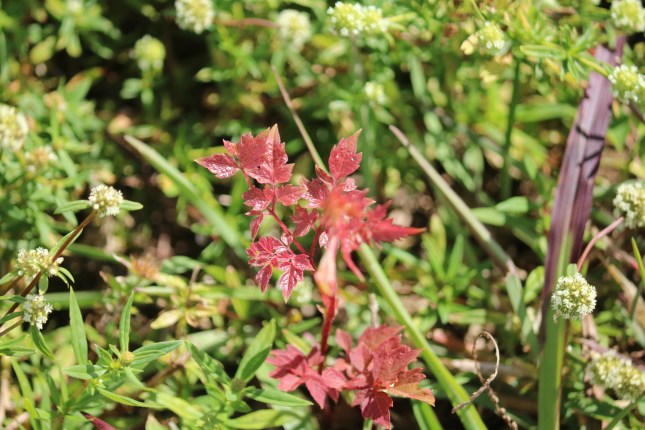
Peppervine, red when young
This species has a second oddity, shared with other lichens and with mammalian urine sometimes: calcium oxalate crystals. You can discuss how and why that happens with your urologist. But why would a lichen make bladder crystals? It has no kidneys. CLICK to see canine bladderstones.
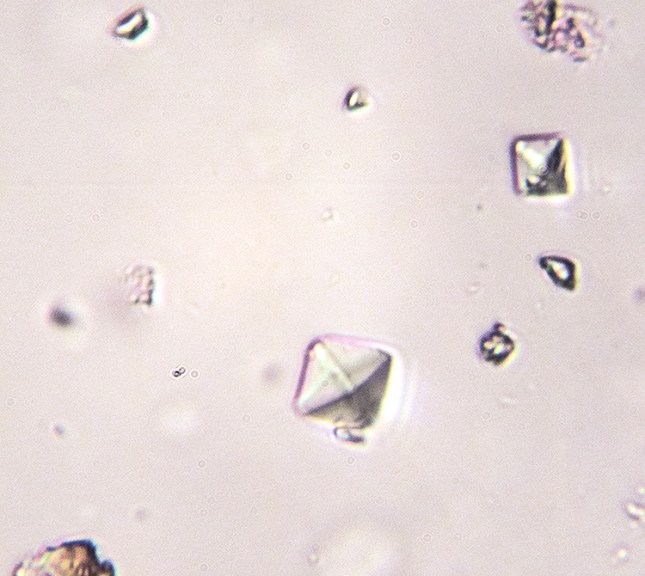
From a bladder, or from a red lichen? You guess. (From red lichen.)
Nobody really knows why or how the lichen gets its crystals, given its tree trunk lifestyle, having no roots in the ground. The calcium apparently arrives in rain, stemwash, and dust. Could a lichen living on pixie dust accumulate so much excess calcium it needs to sequester the mineral as hunky crystals? Possible but seems unlikely. More fun ideas have been put forward:
With the help of these corrosive crystals, lichens are known to degrade limestone monuments. It has been suggested that the crystals help lichens on rocks dissolve nutrients from their substrates, or in the case of a lichen on a treetrunk, help the fungus release nutrients from windblown minerals and from particles in stemwash.
A more mundane yet plausible explanation is to shield the delicate algae held below the crystal layer, especially from drying. This notion has the support of the mutual positions of the crystals and algae.
Red lichens seem to be playground bullies. I get the impression that they win upon glacial collisions with different species, little seems to start growing on the red lichen surface, and research suggests the lichen can suppress Tillandsia airplants.
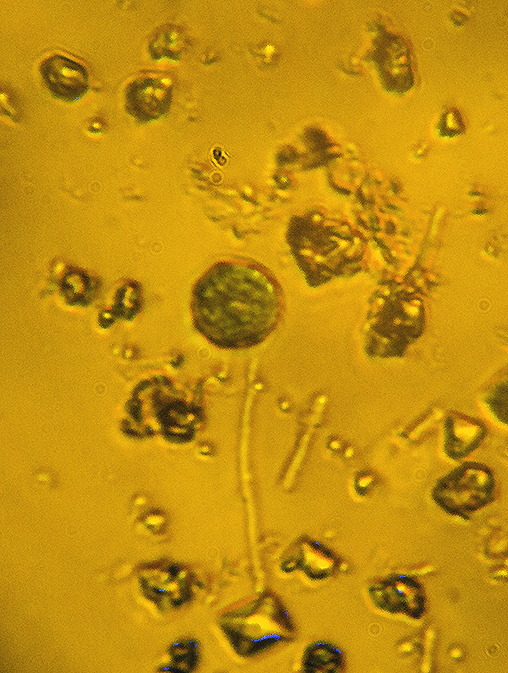
Microscope view of the green alga partner, in center, liberated from the fungus (seen as fine strands). A crystal or two photobombed the shot.
 John Bradford
 George Rogers
 George Rogers
 Dee Staley
 Treasure Coast Natives