RSS

Author Archives: George Rogers

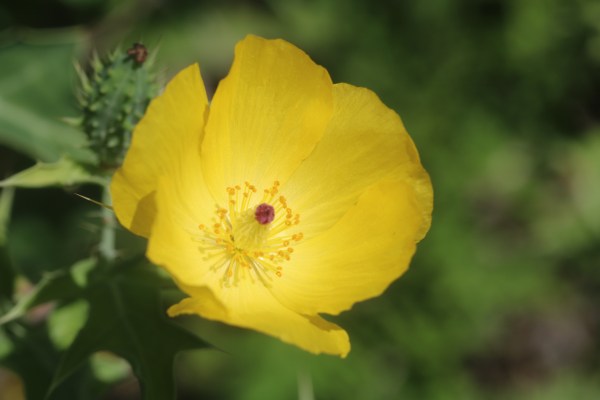
Mexican Poppy has a “little surprise” up its sleeve


Argemone mexicana
Papaveraceae (Poppy Family)

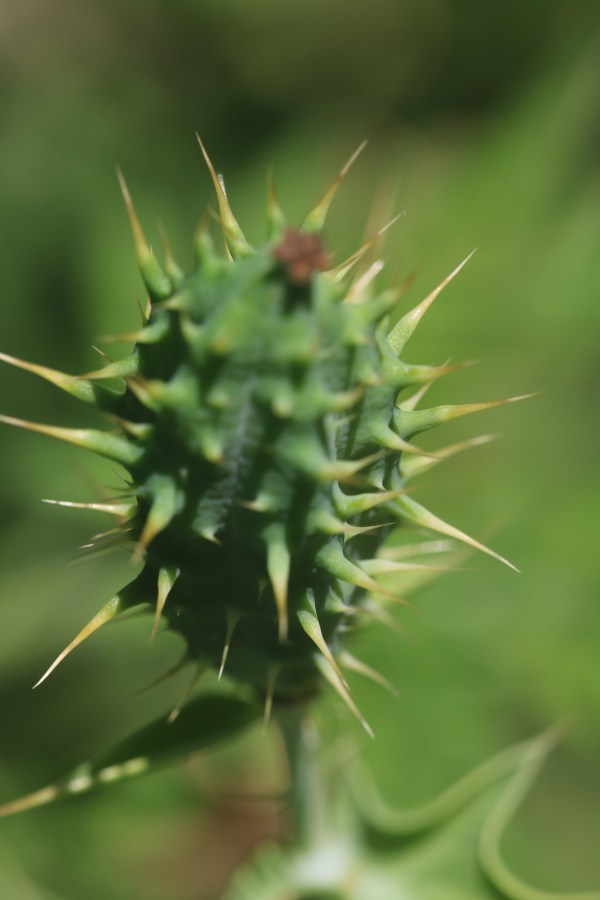
From a botanical standpoint, there are green gems sprouted along RR tracks from seeds ridin’ the rails from faraway places. The parents of todays’ trackside Mexican Poppy were probably weeds in an agricultural field along the route. This stunning prickly yellow species has made a prior appearance in the blog, but today’s angle is different. (https://treasurecoastnatives.wordpress.com/?s=poppy)


An old tropical disease, mostly in India, also South Africa, is called epidemic dropsy. Dropsy is an old-fashioned term for edema linked to heart failure and related events. Edema is usually sporadic and spotty in populations relating to age and to additional factors, so when it sweeps through a region like the flu, that’ll raise some medical eyebrows. That has occurred lots of times, causing lots of deaths, even in the “2000’s.” As recently as the 1930s, the cause remained unknown, As explained in the article we’re about to examine, there were then three theories: 1. “Contagion” (i.e. germs), 2. Bad rice. 3. Mustard seed cooking oil. Drs. R.B. Lal and S.C. Roy in the 1931 British Medical Journal narrowed the cause down to the almost-correct mustard seed oil theory, but with a big piece of the puzzle still missing. in

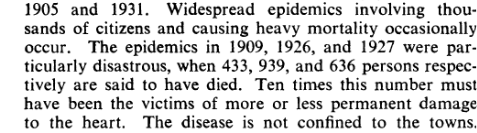
What is interesting is how they did it, raising the questions of were they heroes, or rat-finks, or some of both? First off, the two doctors shared an historical account of the disease around Calcutta. I call your attention to the “permanent damage to the heart” part. That sounds like something to avoid. Stay tuned on that.

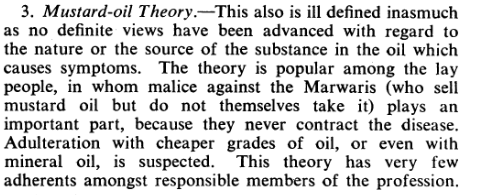
The three theories then got an overview. Apparently at that time, “respectable members of the profession” had negative vibes about the mustard oil notion.

But the doctors listened to citizen science and showed those respected colleagues the path to truth by means of an experiment. And here is the kicker: The experiments took place on 12 healthy young volunteers “willing to take the risk.”

HUH? How informed was their informed consent? Did they read the fine print above about the reaper and the heart damage? I wonder how they were “volunteered.”

Glad to hear groups B and D were so cheerful! I’d be cheerful too if excluded from groups A and C. The docs never mentioned what happened to the un-cheerful group A and C volunteers. I wonder if they lived long enough to hear the rest of the story. Which is as follows:


For the rest of the story we have to know that today’s species has long been cultivated around the warm world for “argemone seed oil.” That’s good if the argemone oil is used for lubrication, fuel, and industry. Thanks to those non-food applications, Mexican Poppy has become an abundant worldwide agricultural weed. Just don’t let argemone seed oil get into the mustard seed oil, either from weedy seedy cropfield mixing, or more often, as a cheap adulterant to expensive mustard seed cooking oil.

(By the way, in more recent times argemone oil has been tried “externally” in massage oil, but guess what, it can enter transdermally, so your exotic massage then can have a very unhappy ending.)

 
Leave a comment

Posted by on April 12, 2025 in Uncategorized


Pigeon-Plum, The most versatile tree in town

Pigeon-Plum, The most versatile tree in town

Coccoloba diversifolia
Polygonaceae


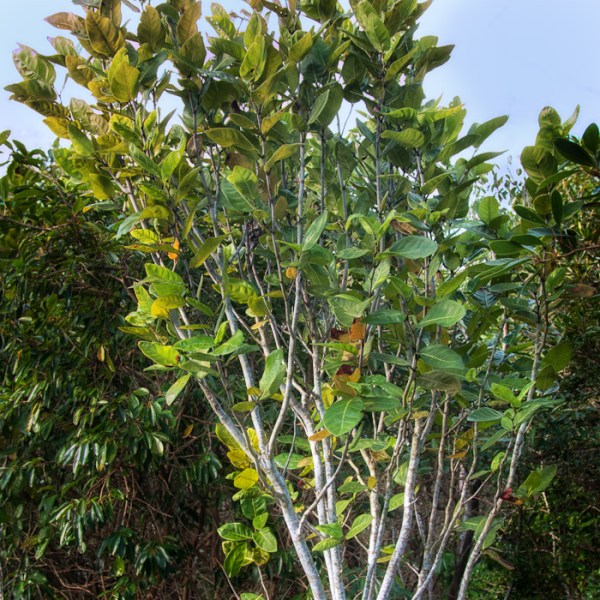
Quick…name five native trees to PB County! Bet you forgot Pigeon-Plum! It’s kind of modest after all, not that common locally, smallish, with unshowy flowers and weird bumpy fruits on female individuals. Modest…yet talented!

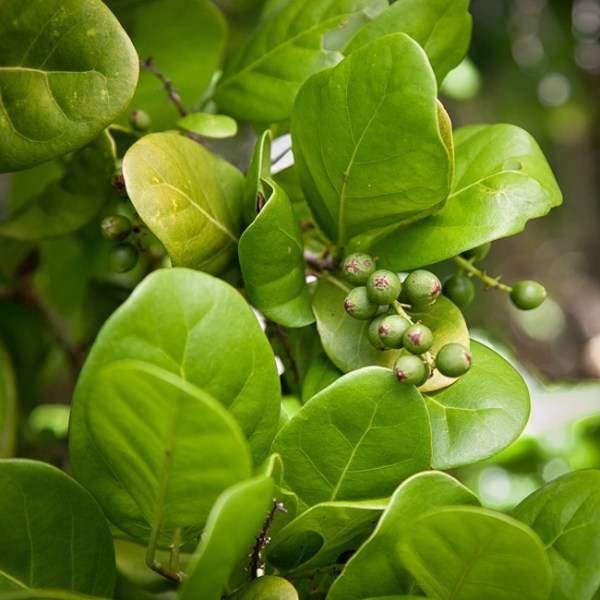
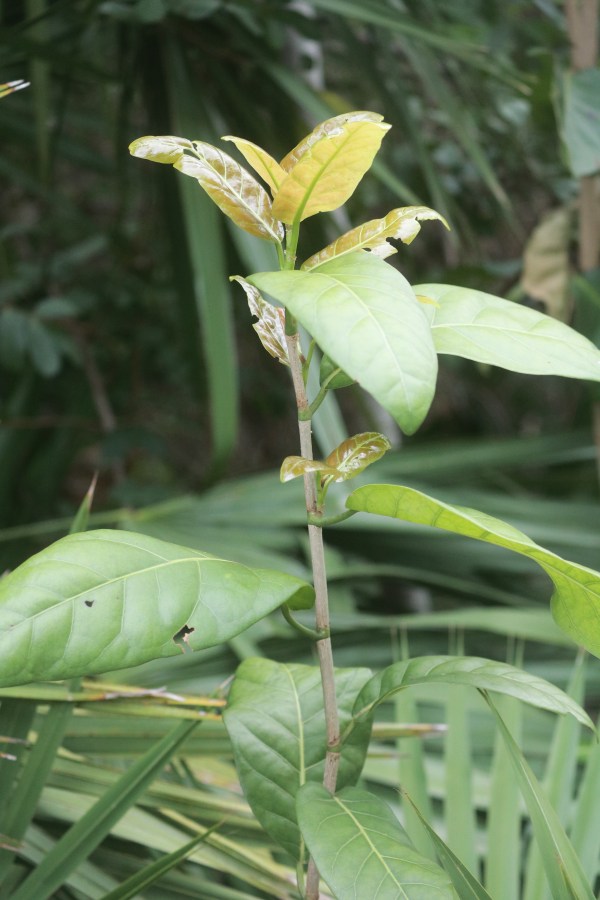
Photos today by John Bradford.


First of all, those plumlike fruits are not really plums, not even fruits. The actual fruits look like seeds, and the fleshy purple covering grows from the female flower petals swelling up around the small actual fruit. No doubt the fake fruit feeds seed-spreading birds, and maybe they float. Pigeon-Plum is abundant in mush of the Caribbean, often in marly salty dry forests. Seed fragments from Pigeon-Plum go far back in Florida archaeology. The fact that ancient people ate the fruits makes me wonder if pre-European people helped disperse the species throughout the Caribbean all the way to Florida, as with peppers, agaves, and papaya. Or then again, maybe pigeons spread it.


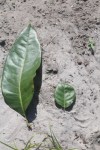
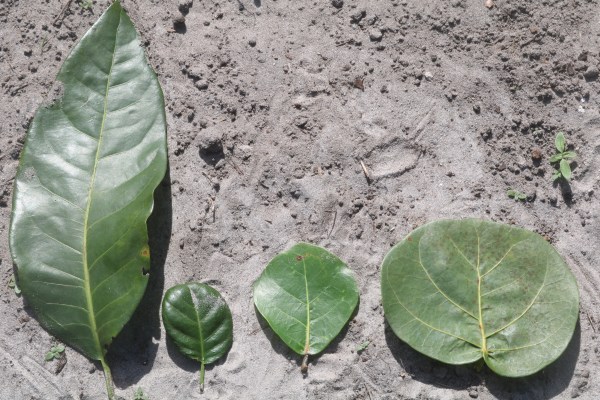
What I find most fascinating about PP is the feature responsible for its name “diversifolia.” Many plants have different “shade” leaves and “sun” leaves, but today’s tree goes to diverse extremes. The young shoots rising from the forest floor have elongate leaves a foot long or more. The branches on mature individuals, by contrast, have normal-looking small leave the size of a pocket watch. Those big-leaved but fragile forest-floor youngsters are equipped for gathering maximum light in the protected shaded understory. The small but tough mature leaves are better for resisting exposure to sun, wind, and salt spray. And, speculatively, leaf-eating insects. The two leaf types look like two different species. Come to think of it, the two types were historically misinterpreted that way as “Coccoloba laurifolia” and C. diversifolia. In 1949 botanists Richard Howard noticed the two “species” growing on the same tree in Cuba.


Pigeon-Plum is related to Seagrape, and the two sometimes hybridize. There’s a neglected postage stamp hammock remnant along the RR tracks in Jupiter where Seagrape and Pigeon-Plum grow intimately intermixed. Really—with the stems of each rising from single clumps. Room for doubt, (!) and no DNA test handy, but suspect some of the in-between forms there are the hybrid known as Coccoloba Xhybrida.

Left to right all from same clump: PP big-leaf form. PP little leaf form. Hybrid? Seagrape.

 
5 Comments

Posted by on April 4, 2025 in Uncategorized


Stuck in a rut? You may be sphexish!


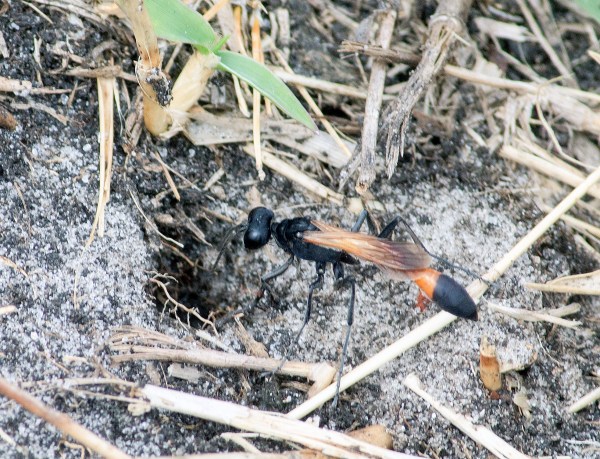
Just ask the Great Golden Sand Digger
Sphex ichneumoneus or similar species

[technical note, I hear from a reader that the photo may in fact be a different tho similar species of digger wasp acting Sphexish]

When does a digger wasp in Cypress Creek meet Big Bang Theory? Leonard Hofstadter took his fictional name from Nobel Laureate physicist Robert Hofstadter (1915-1990). Robert’s son Douglas Hofstadter likewise achieved fame and glory, in computer science, in A.I., and in thinking about thinking. Douglas coined the term “sphexish” to describe (apparently) irrational repetitive behavior. You know, broken record. Look at the Latin name of the wasp above, and then witness this Sphex (or close relative) being sphexish. Over the last couple days I’ve come to suspect that the behavior might (might) have to do with seeking pebbles filling in the nest. But then why all in the same groove?

Click below for hot diggidity digger (repeat) action!

https://drive.google.com/file/d/1U0XEaN4tJPBPNIHL-XczTNi0fw-QzE9C/view?usp=sharing

Added later—worth a look

 
2 Comments

Posted by on March 28, 2025 in Uncategorized