Ceratiola ericoides, Pinus clausa
Florida-Rosemary (Ceratiola ericoides) is related to blueberries, not to fragrant rosemary. It looks like a gnarly little needle-leaved conifer growing in the scrub, mostly on open, sunny sand where little else grows. How does it begin life in such a sterile sun-cooked sandbox, no place for little green babies. In pre-European times, sprouting followed rain and fire. In our local fire-suppressed scrub fragments rosemary’s babie are precious few, Is the shrub doomed by over-protection?
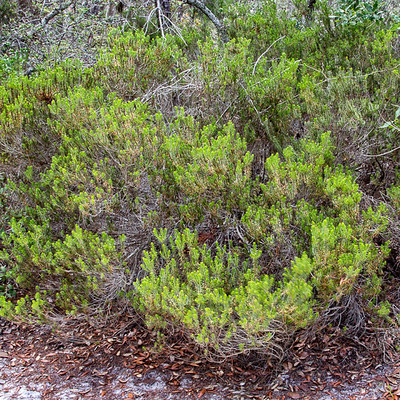
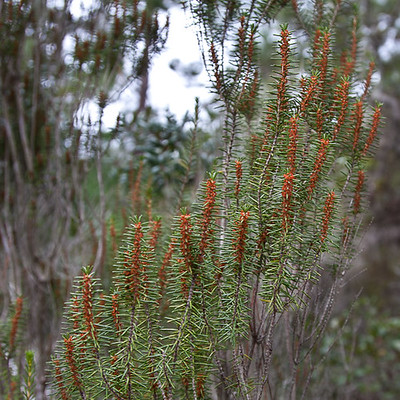
Photos by John Bradford
Naw, I don’t think so, thanks to its scrubby pal Sand Pine (Pinus clausa). There is a little detail about Ceratiola I have not mentioned. It forms ever-widening clumps widening from tipped branches rooting at the clump base. They tip over with age, the base forms new roots, and the clump gains ground. Inch by inch over the decades.
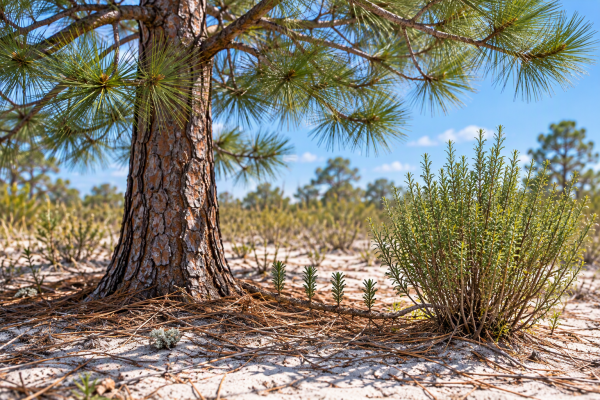
Illustration by AI
And there’s another thing. The tipped branches die beyond the basal roots in the hot barren sand, unless they plop under the canopy of a Sand Pine. The entire branch can then sprawl alive and well under the needled boughs and become gently buried in a couple inches of falling pine needles. With time the still-living buried branch sends up new little vertical fake seedlings along its length, all the way to the end. Sometimes you can see the youngsters all in a row. With time, the old branch disappears with its progeny living on.
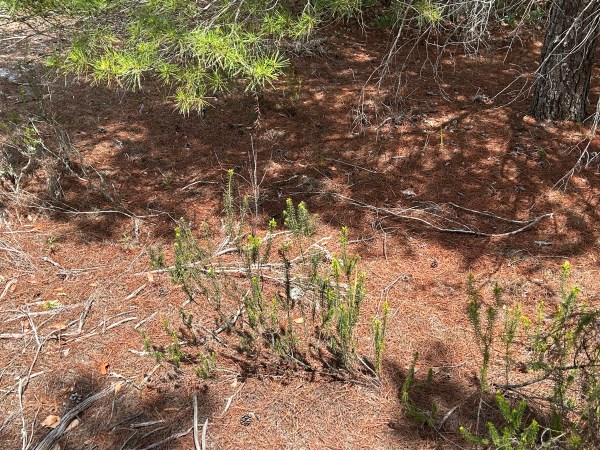
Now I don’t have a time machine, but I’ll bet those branch sprouts carry the ceratiolas forward to their destiny despite the absent fire. Pine trees die, or fall to storms and hurricanes. They don’t live that long to begin with. Moreover, if the babies make it to the outer edge of Mother Pine’s skirts, they might “escape” and rise while the mother pine is alive and well.
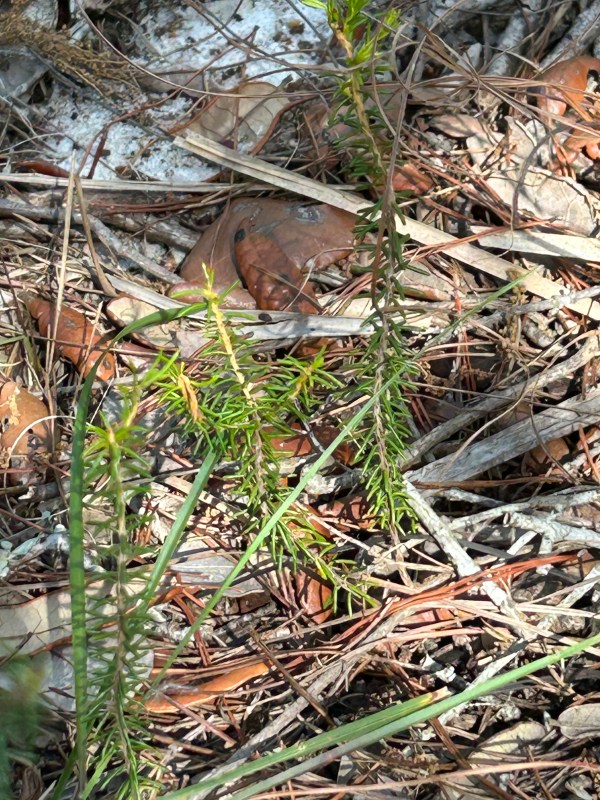
When the mother branch is under needles, the sprouts look like seedlings.
 John Bradford
 George Rogers
 George Rogers
 Dee Staley

