Ximenia americana
(Ximenia comes from the name of a botanical Mexican priest.)
(Don’t confuse with Spondias, which is a different “hogplum”)
Every species in the Florida scrub came from somewhere else, or its ancestors did. Some local scrub plants are limited to postage stamp distributions, such as 4-petal pawpaw. By contrast, hogplum is a globalist, despite the geo-limited name Ximenia “americana.” Its main presence is arguably in Africa, where its roots run deep in every sense, and where I suspect it originated. And vastly beyond. Here is the worldwide picture from plants of the worlds online:
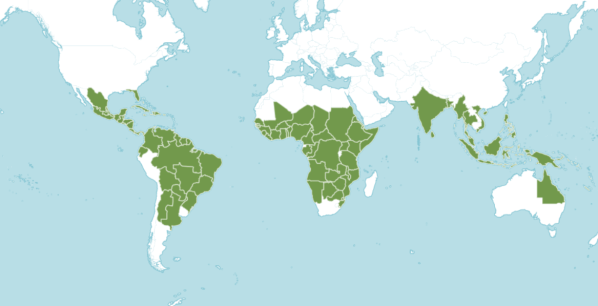
How does it get around so? Birds and grounded wildlife help, but the main mover must be the hard and buoyant fruit “pit.” After all, the species is not only across vast swaths of hot sandy poor-soil mainland, but also on oceanic islands, mostly near the shores. In Florida this prickly, partly parasitic, crooked shrub lives sometimes in hammocks, more often in scrub, including the most sunbaked, forlorn, barren spots. We’ve looked into its biology previously:
https://treasurecoastnatives.wordpress.com/2015/08/29/hog-plum/
So today let’s go for more of the global story. Making plumlike fruits, good wood where wood is hard to grow, fodder, and traditional medicines, today’s species has broad and old roles in human affairs in other regions. (BTW, although the fruits serve as human food in regions with ancestral knowledge of preparation, the species produces cyanide and maybe worse, so no sampling!)
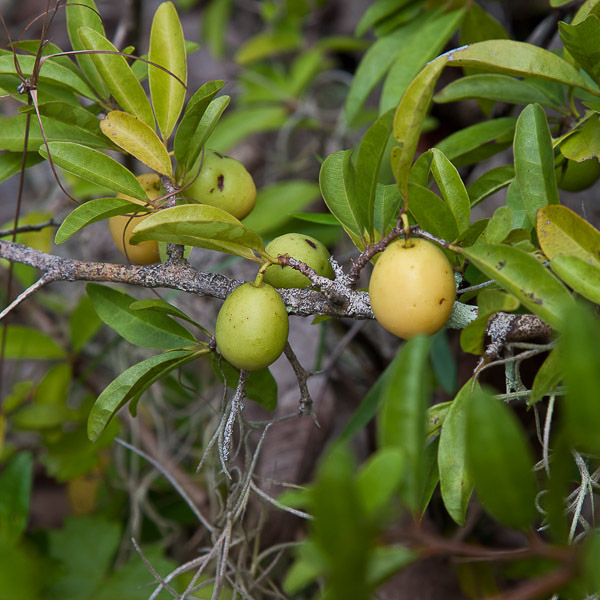
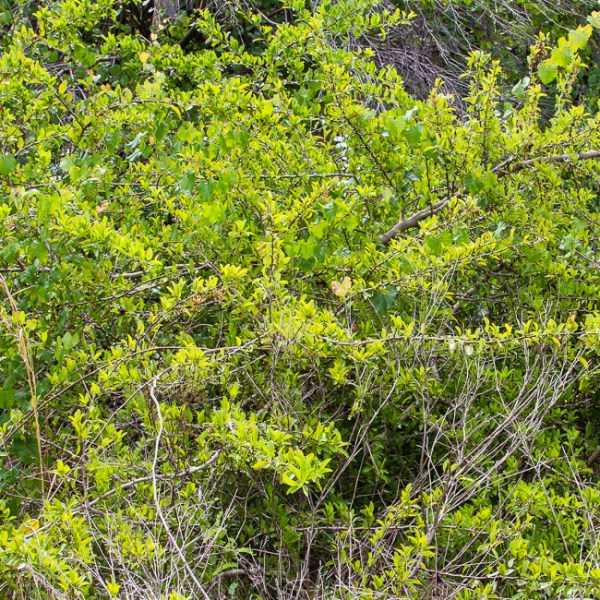
All of today’s plant pictures by John Bradford.
There’s a lot of it across sub-Saharan Africa. In Ethiopia the shrub has declined in recent decades due to population expansion coupled with over-harvesting for the beautiful sturdy wood used for utensils, splinter-free handles, and charcoal. A problem there we don’t experience much in Jupiter is competition for the fruits with baboons and monkeys, although racoons eat the plums abundantly. Speaking of wildlife, one of many reported applications is usage internally and externally against cobra venom. Additional medicinal uses are too numerous to list here, but a sampler I found interesting include countering constipation (mentioned often and emphatically), fleas, leeches, leprosy, hemorrhoids, and Staph infections. In India fragrant Ximenia wood smoke is valued for incense and fumigation. In places, the fermented fruits are ingredients in beer, and the fruits rarely, I think, to flavor gin. In Indonesia the leaves are ground into a condiment (although I don’t see or smell why). In Tropical Asia it turns up in jellies and preserves.
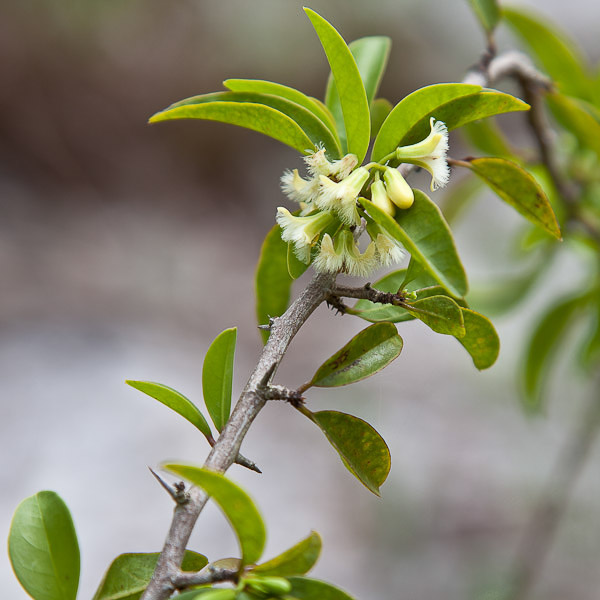
The seeds are rich in stable, easily preserved oil with every use for oil you can think of, and more: for contraception (?), for hair, for antisepsis and healing, as a lip balm, for youthful soft skin, for cooking, and as lamp fuel. The oil has industrial value as a binder for pills.
Our little tree has garnered climate change attention. Burkina Fasso is well endowed with Ximenia americana where it serves all the purposes noted above. A recent study showed about 62% of the land area to be proper habitat, but climate change models reduce that by 15-25% by 2070. That is important because its fruiting peak is during months when other gathered foods become scarce. A single tree can generate 50 kg of plums, creating opportunities to sell them along roads and in markets. The year-round foliage is a mainstay for livestock herders.
Let’s return briefly to the wood. Before WWII it was an export to Japan from the Yap Islands east of the Philippines. I think the most remarkable use for Ximenia americana comes from Fiji. In that nation wooden stands called kali are neck “pillows” elevating the head to avoid messing up large elaborate hair styles during sleep, especially among nobility. The favorite hardwood for kali was, you guessed it, Ximenia americana. We already learned above it is beautiful, hard, splinter-free and fragrant characteristics. They polished it to a glossy finish using shark skin.
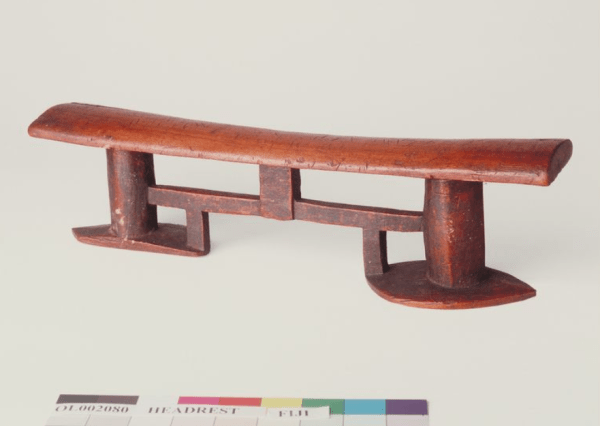
In Florida, next time you stroll through the scrub, the hogplum is not a mere thorny ankle-poker with fragrant flowers and raccoon food. It is a gnarly green museum of worldwide significance. And I’ll bet there a whole lot we don’t know about its storied history in human affairs where its plums, wood, and oil have been needed (for keeping your hairdo tidy) for tens of thousands of years.
 John Bradford
 George Rogers
 George Rogers
 Dee Staley
 Treasure Coast Natives