Today the Honeycombheads (Balduina angustifolia) were bright in the scrub, blooming massively attracting a whole lot of floral visitors. We’ve enjoyed them before: https://treasurecoastnatives.wordpress.com/2021/09/10/honeycomb-heads-have-their-very-own-bee/
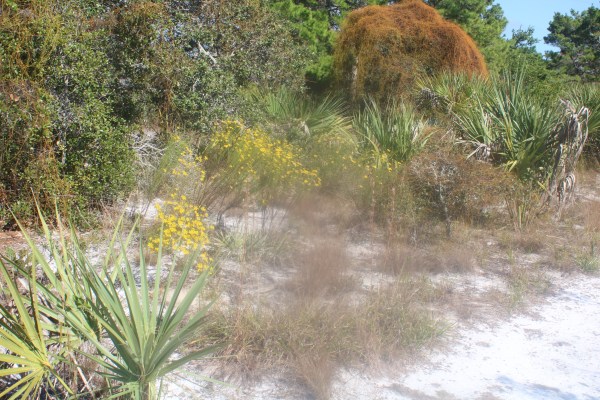
Most of Florida was submerged several thousand years ago, although sandy dunes and ridges here and there were above the waves. Those “islands” and more recently exposed dunes became our modern scrub. That poses the fascinating question of, where did all the scrub flora and fauna come from? Without a deep dive into that immense topic, suffice it to say here, some species arrived from the more-arid and scrublike southwest like Scrub Jays, some wandered southward from points north, some floated from afar by sea (like probably Ximenia), and some evolved on the scrub from variably distributed and wandering ancestors. And so forth. You could ponder that for a whole career.
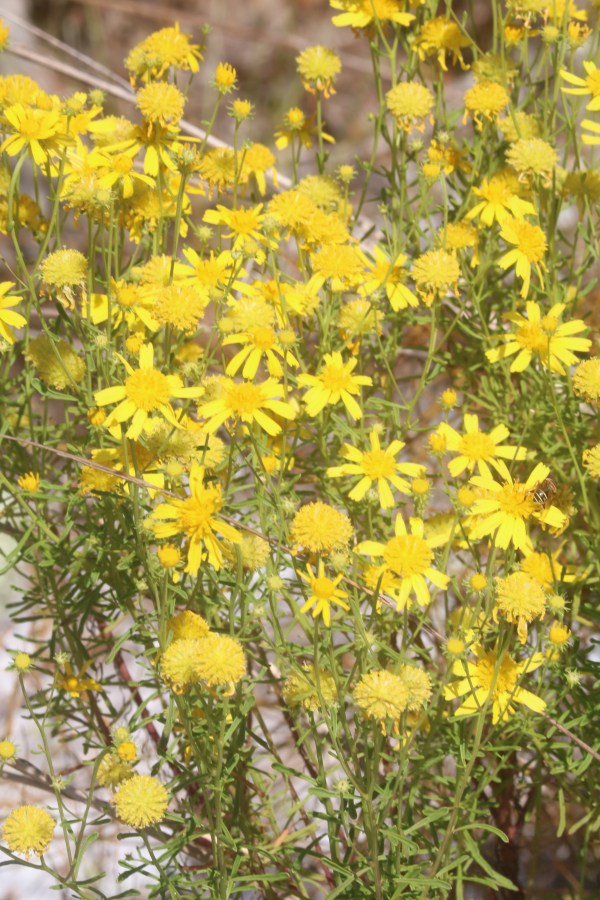
So, ya gotta wonder how we got those flamboyant Honeycombheads, which are mostly restricted to sandy open places like scrub in Florida and nearby. And now we shall speculate wildly. (Yes, a proper DNA-based evolutionarystudy is called for, but in the absence of that I have a license to make something up.)
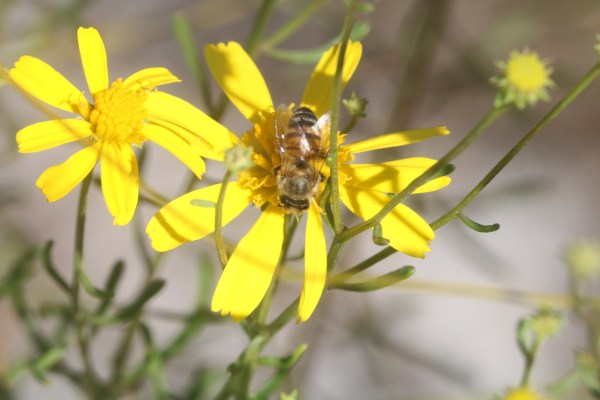
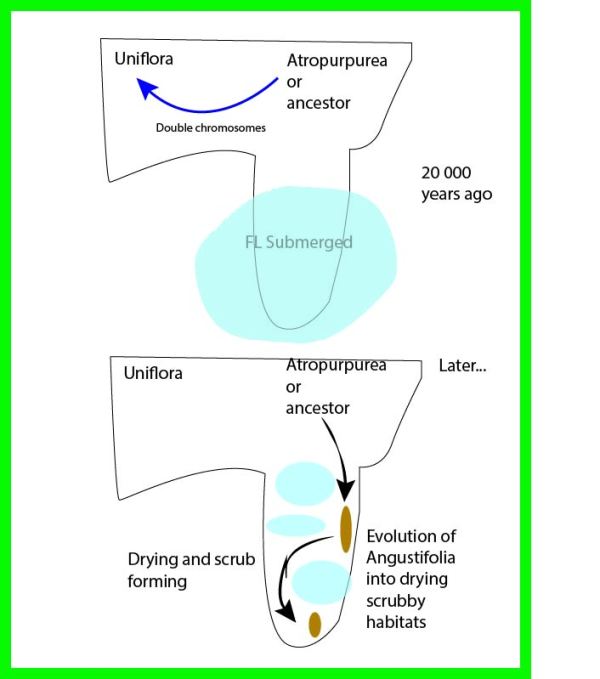
What makes it fun to wonder is that there are only three species of Balduina, all of them native to the Southeastern U.S., the other two (B. atropurpurea and B. uniflora) centered on terra firma to the north of Florida. Those two species extend together from North Carolina to the Gulf, in Floria both limited to the northern counties. Today’s species, B. angustifolia, seems likely a sandy scrubby southern offshoot of the more-northern pair Balduinas. (Interestingly btw, B. uniflora has twice as many chromosomes as the other two species.)
The two “northern” species then could have existed before South Florida emerged from its ancient submersion. The northern species both favor wet sandy shores. Having the same number of chromosomes as B. angustifolia, B. atropurpurea (or conceivably an extinct close relative) looks like an older mainland ancestor for B. angustifolia. That species could have split off evolving into newly forming scrubby habitats as Florida rose above the sea. Even today’s scrub is not so different from the ancestral “sandy shores,” just particularly well drained and sterile.
 John Bradford
 George Rogers
 George Rogers
 Dee Staley
 Treasure Coast Natives