Ludwigia linifolia
Onagraceae (Evening Primrose Family)
Changing season lengthening days, heat, rain….and my favorite places after Dunkin’ Donuts, the depression marshes, are awake: Bushmints, Gratiolas, Milkworts of every color, Rosegentians, St. Johnsworts, Stillingias, Stripeseeds, Yellow Flax. Flowers flowers and more flowers! But you know what’s missing? Pollinators (although there would more if I got moving early in the day). Where are all the bees?
Part of the answer, I fear without “hard knowledge,” is that a lot of observers have observed a decline is native bees. Don’t like that! Somebody should assess the native bees in the rural, exurban, suburban, and urban WPB area. Somebody did that in Brazil using Mexican-Clover growing along roads leading into urban habitats. Problem is, Florida native bees may not be that enthusiastic about non-native Mexican-Clover, or about roadsides. Also, there’s a correlation between more-specialized flowers and native bees. Bottom line—this concern needs a local assessment!
A second reason for not seeing many pollinators in an expansive marsh is that in my personal experience the farther out across a large depression marsh you wade, the fewer the bees. The wasps and dragonflies out there are strong long-distance fliers. But are bees reluctant to cross hundreds of meters of marshland to visit a flower? This speculation brings us to an important point: pick any flower species occurring far out into wet marshlands and odds are it can reproduce without insect pollinators. Every plant in the list above is either known or strongly suspected of being able to reproduce without insect visitors.
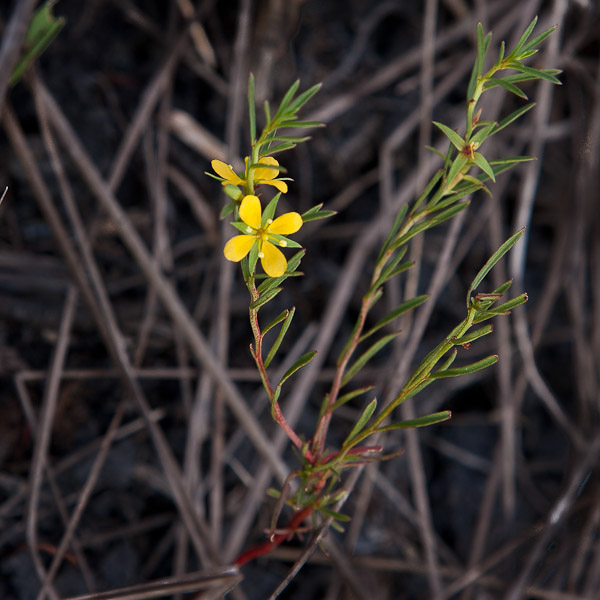
Southeastern Primrosewillow by John Bradford.
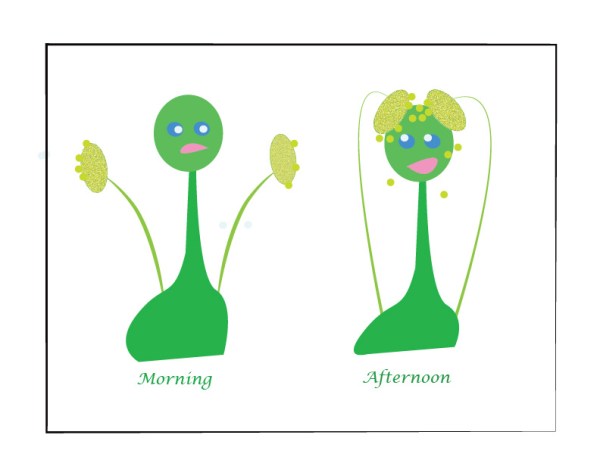
A particularly attractive example in flower now is Southeastern Primrosewillow, a modest beauty you don’t see everyday. It may be shy about hiding its sunshine yellow blossoms among the St. Johnsworts it resembles, but it sure isn’t shy about pollinating itself. Go visit in the morning, and the pollen-bearing anthers are spread off to the side, out of the way in case a visitor brings pollen to the stigma standing tall at mid flower. But in the afternoon just before the petals fall off, the anthers clasp to the stigma and powder it with “self” pollen. No way that blossom goes to waste, even if the bees let it down.
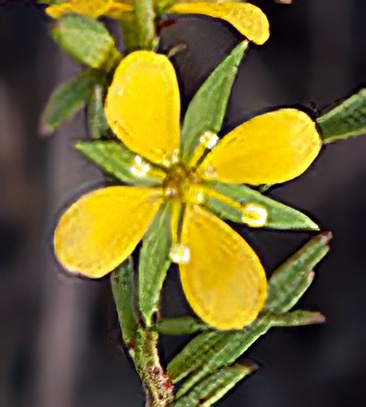
Morning with four white anthers spread to the side, stigma in the center. Enlarged portion of photo above.
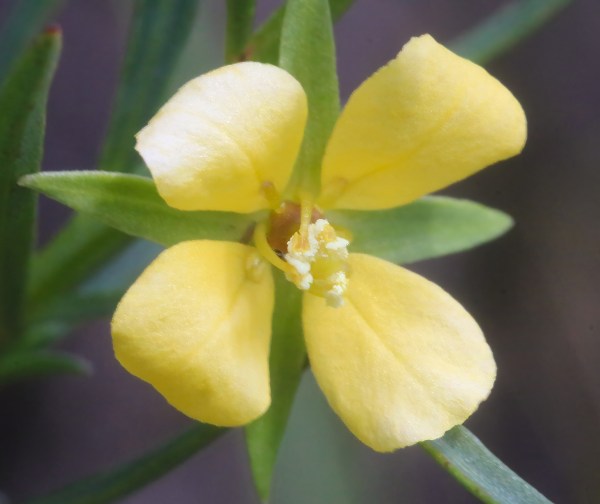
Afternoon, anthers pressed against and pollinating the stigma. The pollen is white.
Southeastern Primrosewillow is native across the southeastern U.S. But look it up its range in the authoritative Flora North America, and hey what’s that? Tabasco, Mexico??
Ala., Fla., Ga., Miss., N.C., S.C., Mexico (Tabasco)
That’s 1500 miles away! The key to that leap must be self-pollination. One seed carried by a bird or a hurricane or a muddy shoe can establish far from home, self-pollinate, and spawn a nation. If that is so, wouldn’t today’s pretty wild flower turn up “unofficially” in additional hot wet places? Let’s try India. Yep, , “in rice growing areas.” Africa?—yep, one herbarium specimen in Gabon, and maybe in the People’s Republic of the Congo. You get the idea! Self-sufficiency of the meek and humble.
 John Bradford
 George Rogers
 George Rogers
 Dee Staley
 Treasure Coast Natives
theshrubqueen
May 17, 2025 at 3:59 pm
Hi, George – I love the graphics. The butterflies have just come back in force here, but I think you are right about the bees. Lawn chemicals?
George Rogers
May 17, 2025 at 4:50 pm
yes, perhaps in part. The perceived problem is widespread. I’d like to know how prevalent it is in areas far from suburban lawns and agricultural fields.
theshrubqueen
May 17, 2025 at 5:45 pm
It is. I am very close to Hawks Bluff so there is a lot of Savannas nearby. It bothers me that people are not more concerned about the bees.