Raphanus raphanistrum
Brassicaceae (Mustard Family)
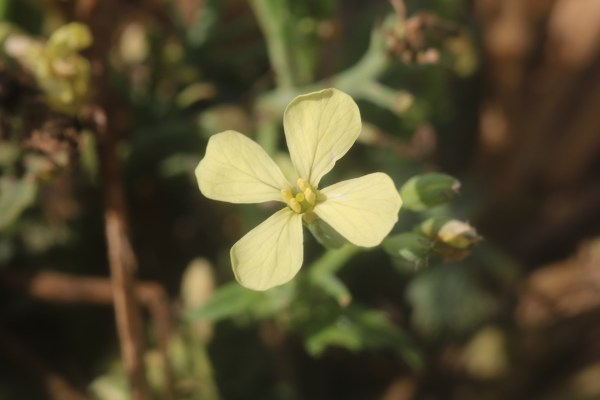
Wild Radish is an Old World weed you don’t see much in South Florida natural areas. In some places, however, they see far more than they’d like, being a bigtime agricultural weed resistant to herbicides and having seeds as bycatch during harvesting. Some non-farmer folks fancy the plants as “edible.” But no no no! It picks up environmental toxins. Edible? Well, it is the parent species of the radish in my salad, and the two can intercross even now. And no, WR does not have a bulbous red root.
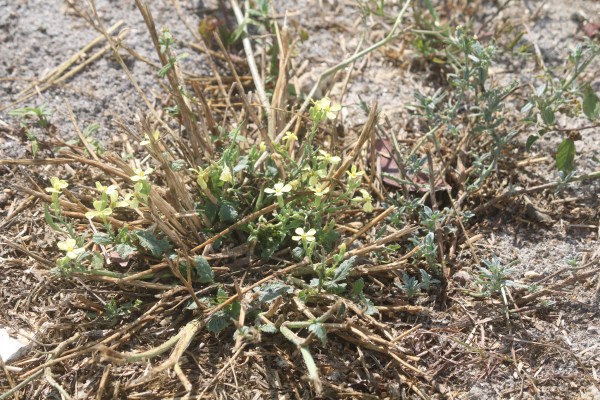
Today in Cypress Creek
I don’t want to poison it or eat it, or cross it with salad fixings. The interesting thing, documented back in the 80s by California biologist Maureen Stanton, requires a tiny bit of background:
Here is that background. A long-standing concept in plants and animals is a spectrum of degree of parental investment in offspring. Some species make a huge investment in each offspring, providing each an advantage in establishment: humans, elephants, coconuts. At the other end of the spectrum, some parents release a huge number of undemanding “cheap” offspring into the cruel world betting on quantity instead of quality: rats, spiders, dandelions. No species has to occupy either extreme, most species are intermediate, but what you do not often see (I can’t think of another example) is one species using both strategies, making a mix of high-investment AND cheap skitter-skatter offspring.
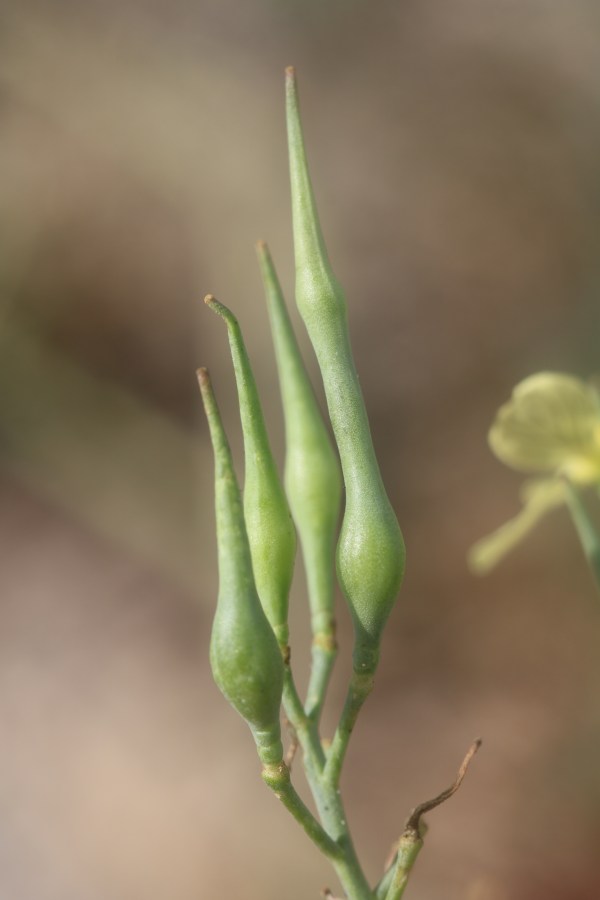
The pods break apart rather than opening.
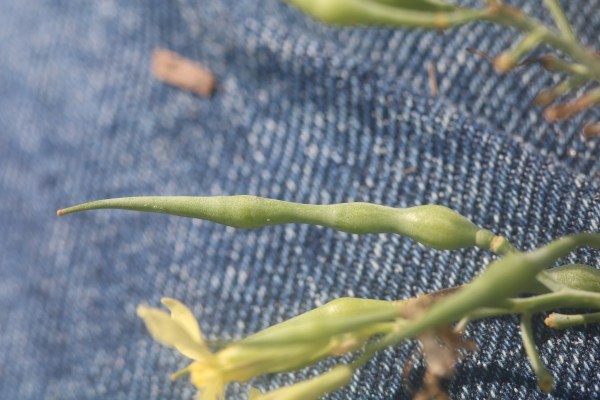
Wild Radish does. As Dr. Stanton documented, the seedpod starts out making one “big” seed at the base. Then higher in the pod it forms one or more smaller cheaper extra seeds. The number of smaller plan-B seeds varies considerably—apparently in good conditions the pod enjoys the luxury of adding several extras. When times are tighter or the season is short, the pods still makes the main seed while holding back on its less-endowed smaller siblings. Sort of like a royal family having a well groomed heir apparent, followed by minor princes in reserve.
 John Bradford
 George Rogers
 George Rogers
 Dee Staley
 Treasure Coast Natives
Laure Hristov
May 7, 2025 at 5:05 pm
So very interesting as always!
George Rogers
May 7, 2025 at 9:51 pm
Thanks Laure