Until today I thought the blog was defunct due to technical reasons. But through a stroke of record-keeping genius, John found the key to salvation so here we are, bullett dodged.
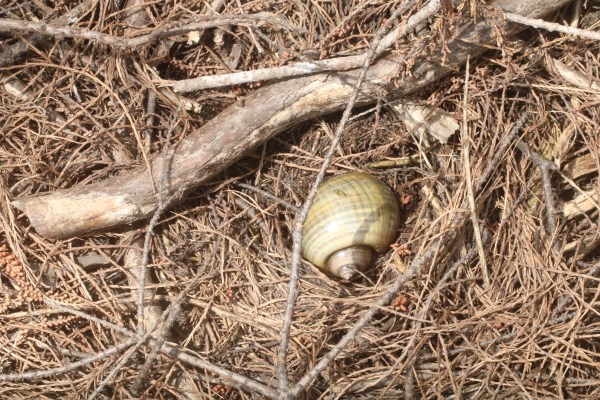
Today I did something I enjoy excessively—walked through a mostly dry Bald Cypress Swamp. Met an otter ‘long the way, also to my surprise hog scat deep in the swampy shadows, and an apple snail mobile home.
But entirely absent were young Bald Cypress, seedlings of saplings. None, not one, in a swamp spanning acres. Bald Cypress does make seeds, and they germinate in wet places where they blow….but not where the older trees drop their needles.
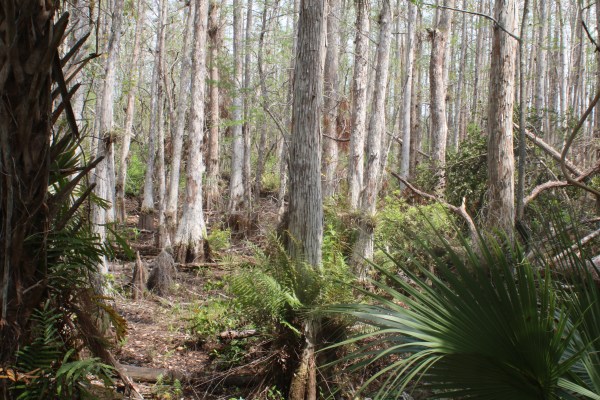
Something a crowded Bald Cypress swamp generally does not need is more trees . Those roots are already competing fiercely in awful waterlogged soil. Making competing youngsters underfoot would be suicidal, not a plus. Arboreal family planning, in fact, is well known among conifers, although I have not seen seed-o-cide reported for Bald Cypress itself. But I sure saw it in practice today.
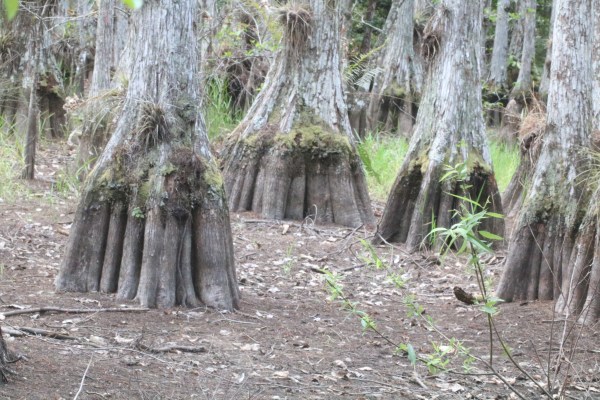
Poisoning your own seedlings is called autotoxicity. And if you can do, you might as well knock off other species’ seedlings as well, known as allelopathy. And of course Cypresses get extra help via annual flooding.
If a Bald Cypress topples is the swamp, who fills the void? This is one of the few conifers able to regrow from basal stump sprouts. It can begin anew, but only when regrowth is necessary.
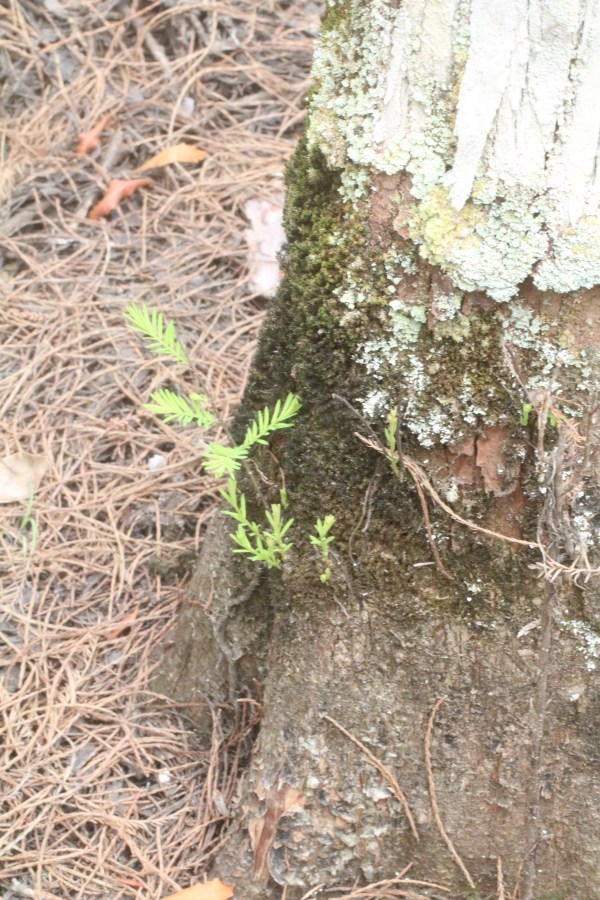
Think how many species of woody wetland plants most have their seeds blow, float, or ride inside animals or birds into a swamp. You do see some “outside” woody youngsters growing on cypress trunks, on knees, on stumps and logs, and on various other humps and hummocks. Wax Myrtle and Buttonbush do that. But not on the fallen needle carpet.
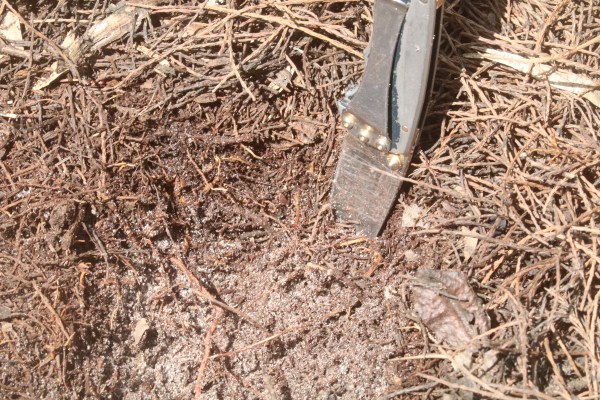
Those carpets can be several inches thick, and the material visibly resembles expensive potting soil from a garden store, it stifles seed growth like a natural preemergent herbicide, with two exceptions.
One is Cocoplum which has ecological tolerances so broad it loves to be pruned into a hedge. Its hard floating Cocoplum seedpit feeds and apparently protects the embryo from drying, flooding, and needle poisons. Nothing stops Cocoplum. It could sprout on Mars.
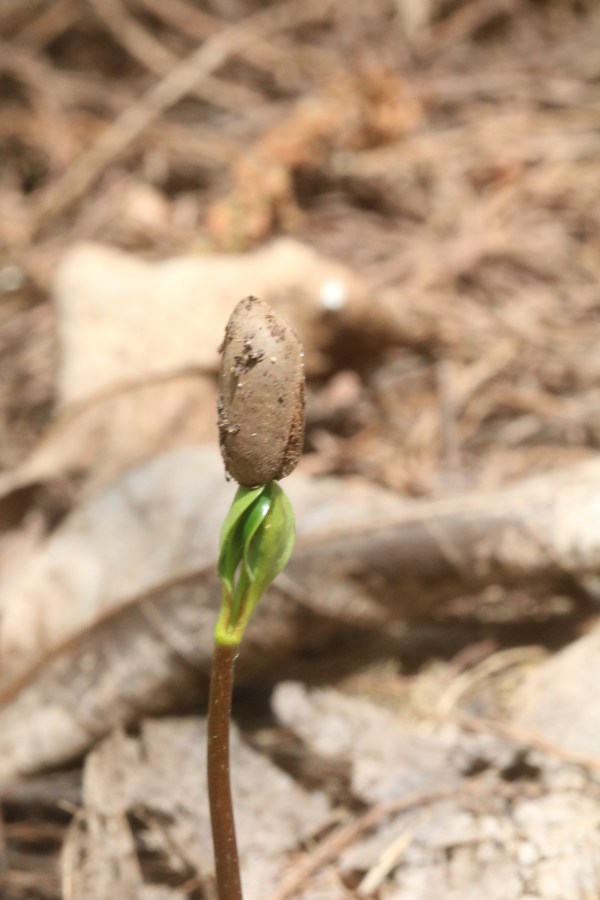
The second needleproof tolerator is Pond Apple, which, like Cocoplum, also has large, hard-shelled, protective, nutrient-rich floating seeds. These have an extra trick (called epigeal germination) where, once the root hits the carpet, the rest of the seed lifts safely above the poison carpet, and ready for “next year’s” flooding.
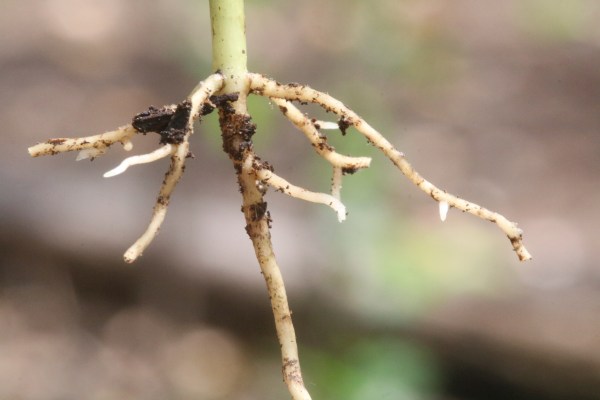
Its roots spread horizontally trouble-free into the needle duff Pond Apple can remain as small understory tree, or eventually become substantial.
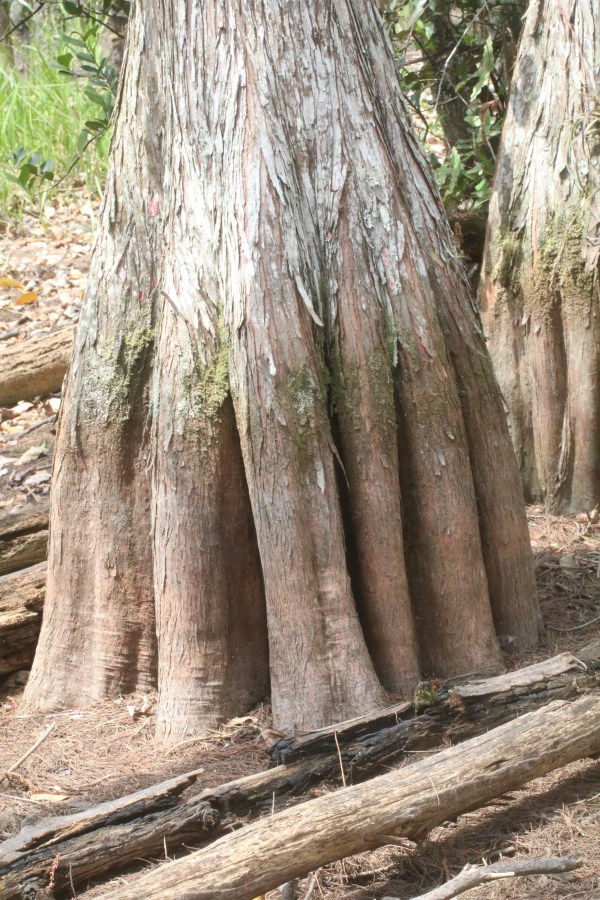
Being able to invade a light gap by floating seeds faster than a Cypress’s basal sprouting, Pond Apples can crowd into Cypress Swamp gaps, although given a few centuries, the enormous Cypress will have the last word.
 John Bradford
 George Rogers
 George Rogers
 Dee Staley
 Treasure Coast Natives
htpetrie
March 17, 2025 at 12:58 pm
Really enjoy your insights!
–
Howard Petrie
Stuart, FL
George Rogers
March 19, 2025 at 2:02 pm
much appreciated
Flower Roberts
March 17, 2025 at 7:11 pm
Fascinating. Thank you
John Bradford
March 18, 2025 at 10:44 am
Thanks!
nicola4582
March 18, 2025 at 3:08 am
Agree – really fascinating! I live in England and have never seen anything like this. Thank you
George Rogers
March 19, 2025 at 12:32 pm
Thanks for noting from afar!
Debra Klein
March 18, 2025 at 1:51 pm
Thank you, beautifully articulated. Debra Klein
George Rogers
March 19, 2025 at 12:32 pm
Thank you Debra