Trapped home today, car in shop post-mishap , so limited to walking distance behind the house. There is a “September plant” on the back fence: Florida native Grapes!
Around here and far beyond we have two different groups of vines that: wander, climb, and sprawl abundantly; cling with tendrils; have small greeny -yellowish insect-pollinated flowers with males and females on separate individuals; and bunches of “grapes” used to make jelly. The cool part is the two groups are green examples convergent evolution, unrelated species evolving striking similarities, like bats and birds, sharks and porpoises. The two unrelated groups are grapes and smilax. Grapes are Dicots, loosely speaking “woody plants,” and smilaxes (catbriers) are woodless Monocots.
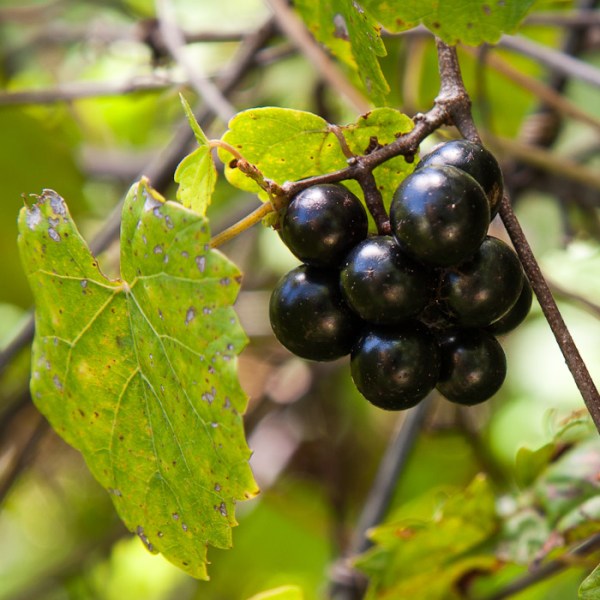
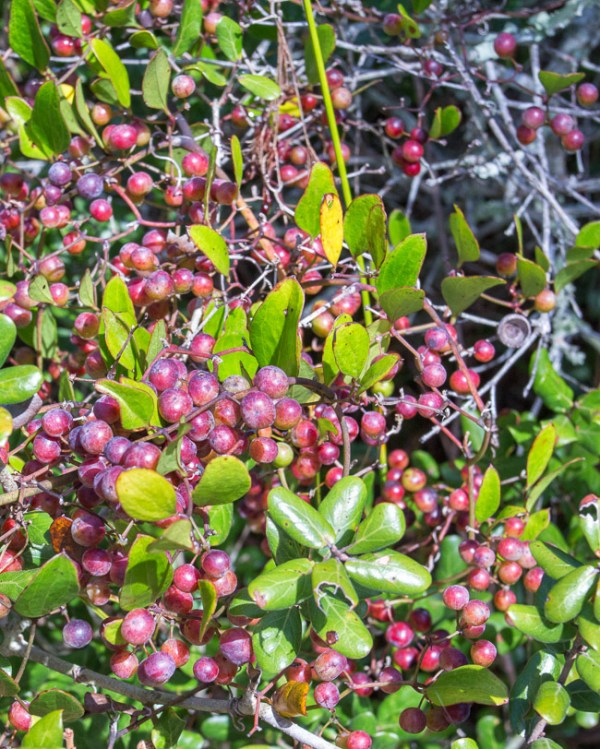
Grapes top photo. Smilax bottom photo. All photos today by John Bradford (except the cut stem).
The South Florida Grape Family includes several species, mostly Muscadine Grape (Vitis rotundifolia). We don’t these days seem much interested in wild grapes for eating or drinking, although wildlife feels otherwise. The wild plentitude of grape vines makes a sommelier wonder if past people tapped into the easy abundance. Oh yea. According to botanist Earl Core, not only did indigenous residents of the Southeast gather grapes, they made raisins. In fact, wrote Core, the alternative name for Muscadine Grape and its wines, scuppernong, comes from the pre-European name “askuponong.” Archaeological pottery shards from Texas have chemical traces of ancient wines.
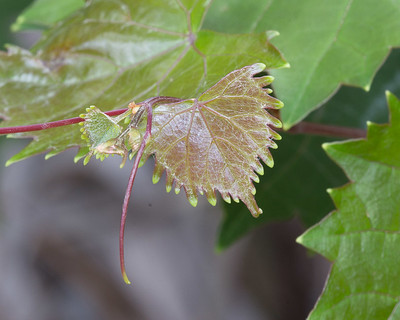
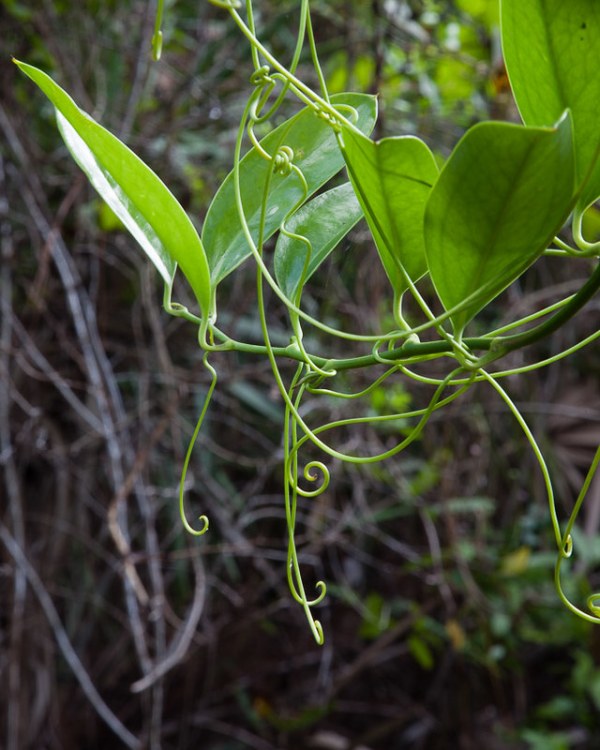
Top photo: grape tendril. Bottom photo: Smilax tendrils
Later, people of European ancestry, including Thomas Jefferson, developed various Scuppernong wines, although less popular than the countless vintages available from around the world. I actually like scuppernong wine. Muscadine’s greater contribution to the wine industry, in addition to other American grapes, is as a disease-resistant rootstock for grafting delicate Old World varieties.
Speaking of grape beverages, here’s a “new” one. As described on the FAU environmental science website, “a foot long [Muscadine Grape] stem that is cut and inverted could give up to a liter of drinking water. “ As much as I’d like to go cut a big old grape stem, I’d shun killing a massive vine for a potential blog photo (and besides, the lady in the Publix parking lot trapped me home). I did, however, cut across a pencil-sized grape stem to see where that drinking water hides. Look at those storage pipes even in a twig! How can a long climbing vine store and replenish great quantities of water? How does it fill those pipes (technically, “vessels”)? “Sucking” by evaporation from foliage far above in a 90-foot vine is not an adequate explanation.
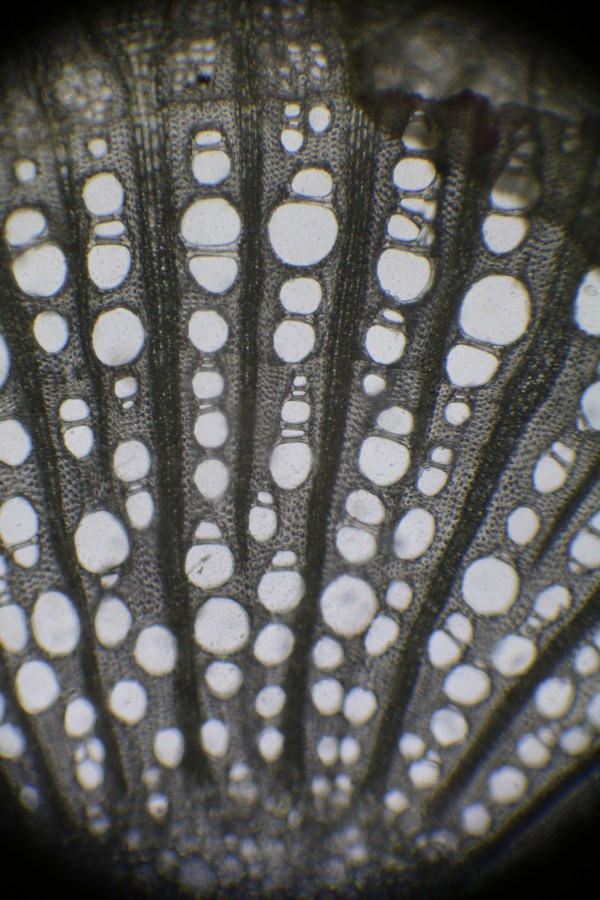
A grape mystery! With feeble evidence, the traditional explanation was, well, perhaps the roots push new water up from below The evidence was feeble because it was mostly wrong. Being valuable, wine grapes get high-tech research, which produced a surprising new finding undiscovered by 500 years of academic botany. It turned out that the living stem tissues surrounding the pipes can refill the pipes all along their length, like little streams feeding a big river along its length.
A glass of (ancient indigenous scuppernong) wine would sure taste good now.
Some pest might ask. If grape has those big pipes, And if smilax is so whoop-tee-do similar, does smilax have the huge pipes too? (yes)
 John Bradford
 George Rogers
 George Rogers
 Dee Staley
 Treasure Coast Natives
theshrubqueen
September 21, 2024 at 4:47 pm
I probably have a 90 foot vine in my yard..hmm