Polygala nana (Senega nana)
(Polygala smallii is a very similar rare species in SE Florida.)
Polygalaceae
Time for a fetching little wildflower in bloom now (and otherwise often) on exposed sands, mostly in moist shallow depressions. It’s a sunny eye-grabber out where much of the beauty is of a slightly harsher flavor.
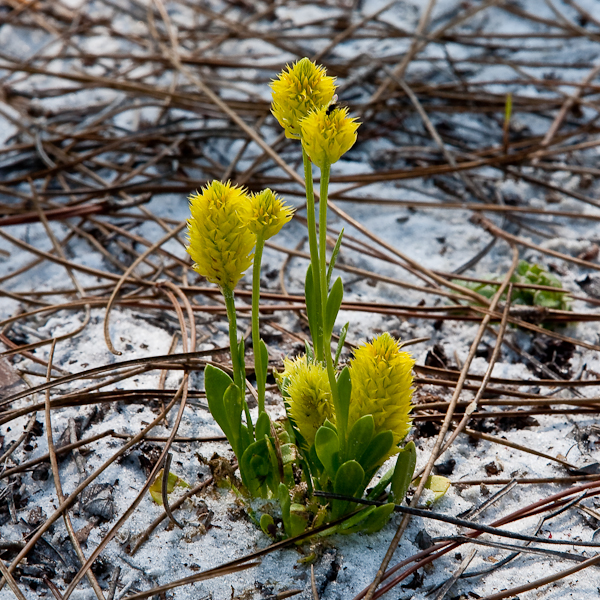
Today’s photos by John Bradford.
Speaking of flavor, why the name “Candyroot”? The bruised root smells licorice- -ish. And how do we know that? The Seneca Tribe used similar Polygala species as medicines, most notably to treat snakebite. The flower clusters can look like rattler tails, thus the name “Seneca Snakeroot,” giving the genus Polygala the synonymous name “Senega.” That the fragrant roots are bioactive has long been known, involving the plants in commercial patent medicines. Don’t eat ‘em—polygalas contain toxins, including ones that irritate the digestive and respiratory system. The irritants include compounds known as “saponins”, and there’re is evidence of these stimulating milk production, potentially (speculatively) explaining the name “Poly-gala,” meaning “lotsa moo juice.”
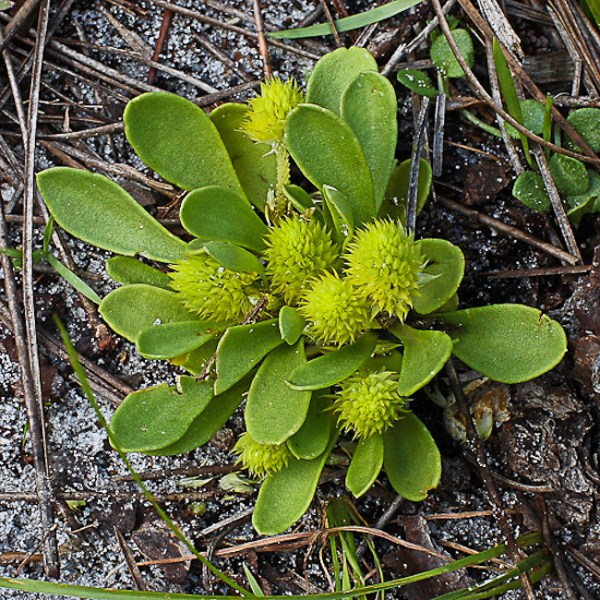
What fascinates me about these little plants is their leafy rosette and skinny taproot. No need to dig one up….below is a photo of a museum specimen. Nobody to my knowledge has looked into Polygala rosette functions directly. So let’s play a natural history game. What is known about similar plants we can stretch extremely speculatively to today’s charmers?
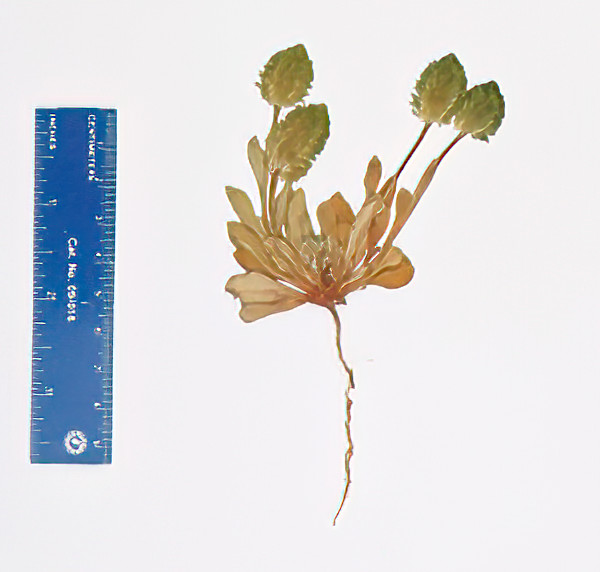
Puny little root!
Does that spindly little taproot look capable of meeting the water and nutritional needs of all those rosette leaves? Accomplishing that is difficult in sterile loose sand drying quickly after rain. But maybe there is a supplement. Better known in deserts than in Florida scrub, some harsh habitat rosette plants harvest airborne water (including fog, mist, seaspray, dew, and drizzle) through their foliage. The rosette capturing water resembles The Dish capturing CNN, and the flattened leaves protect each other and the immediate ground from exposure. Some rosette water-catchers have tissue called “hydrenchyma,” expandable for hydro-storage. Polygala nana does have a hint of succulence.
Don’t get me wrong—I’m not suggesting Polygalas have any known carnivory (they do not), but come to think of it, the idea of taking in water and nutrients through rosette leaves brings to mind carnivorous rosette plants such as sundews and butterworts. Maybe these carnivores started out long ago in evolution absorbing water with dissolved nutrients, and became “so good at it” they expanded to taking in dissolved bugs.
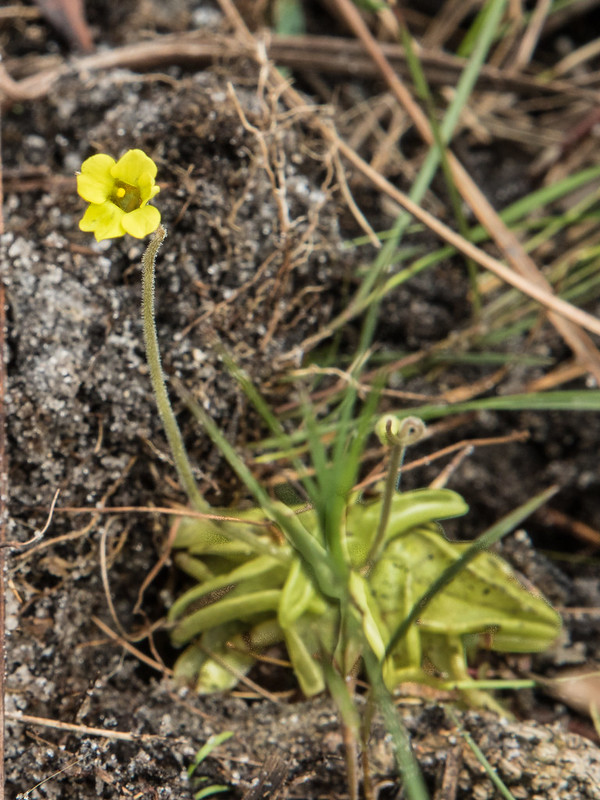
Butterwort with its carnivorous rosette.
To sum it up, I’m just “trippin’” with all this, but even so, I’d bet a couple bucks that Polygala nana supplements its water and nutrient elements via the leafy rosette.
 John Bradford
 George Rogers
 George Rogers
 Dee Staley
 Treasure Coast Natives
Laure Hristov
August 16, 2024 at 2:13 pm
A very interesting little plant and so pretty with it’s yellow flower! Hope all is well!
George Rogers
August 19, 2024 at 11:05 am
A beauty for sure!!
Greg Braun
August 18, 2024 at 3:40 am
Thanks George. I often wondered if th
George Rogers
August 19, 2024 at 11:04 am
Thanks Greg, nice to hear from you!
friedova
August 18, 2024 at 10:57 am
Hi George and John
I have followed your blog for over a decade now. The light-hearted approach accompanied by “just the right” photos enable a high degree of learning.
thank you so very much
Art Goldsmith
George Rogers
August 19, 2024 at 11:03 am
Thanks Art! Made my day!!