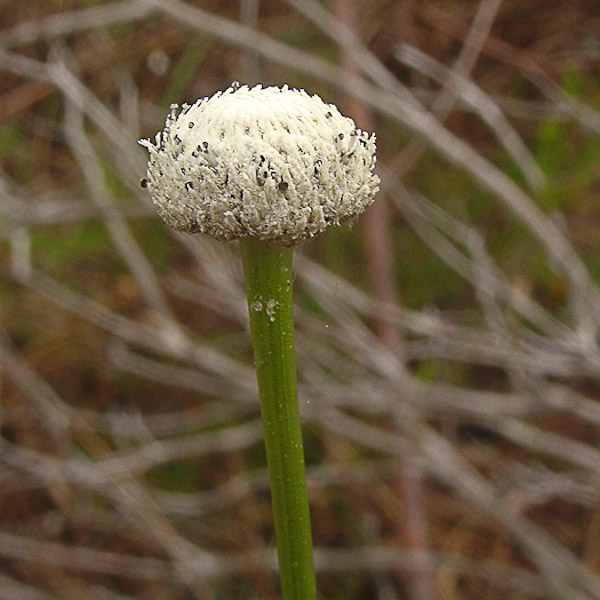
Ten-Angle Pipewort by John Bradford
South Florida seasonal depression marshescan be vast (or small) shallow basins seasonally flooded more or less a foot or so deep. Being underwater part of the year, including now, and sun-baked dry in the spring, these flip-flop habitats are intense ecological filters where oddities survive. Being a challenge to visit half the year, they are scarcely studied. The animal kingdom is represented with many otters, an occasional wet feral hog, shy snipe, charming tiny fish (otter food?), extreme ant nests, and long-distance wasps. Speaking of otters, did you see the report of a man attacked by a rabid otter near Center St. in Jupiter back in September?
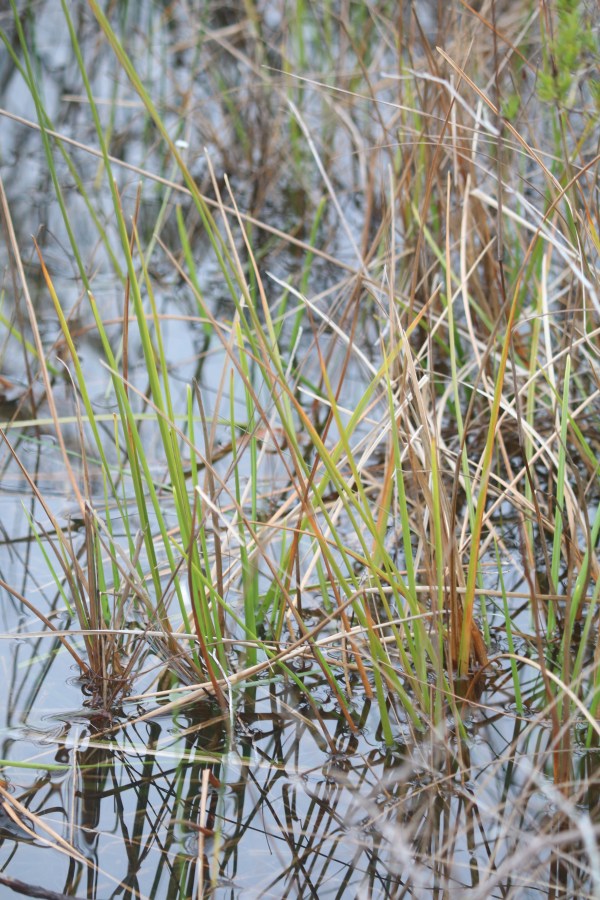
Ten-Angle PW emersed.
Back to the plants. Among the curiosities are two, and maybe sometimes a rare third, species of Pipeworts, Eriocaulons. Ten-Angle Pipewort is a large kinda-domineering clump-making species that grows with most of its spongy foliage in the air and sun above the grassy waters.
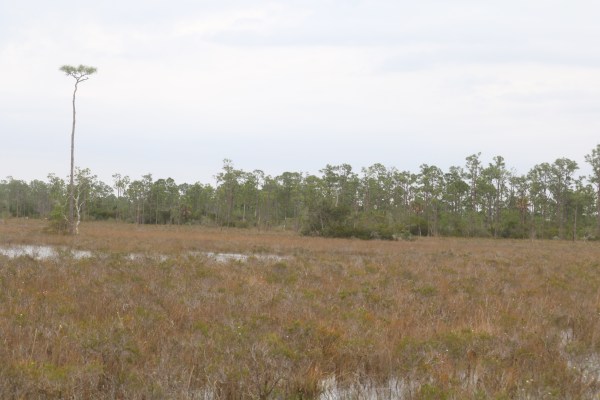
Where the PWs grow
It’s funky little cousin, Flattened Pipework (E. compressum) is curiouser. When the marsh is flooded for many months the leafy rosette, not only remains submerged, but its covering is not merely water. The water supports a cloud of periphyton made of variable combinations of algae, blue-green “algae,” microbes, filamentous floating bladderwort foliage, and decaying organic debris all tangled into a stringymass. Sometimes the cloud is essentially all a single species of algae, other times a crazy mix of things, some under a microscope shakin’ their bootys. Studying periphyton composition, nutrient dynamics, and interactions with larger aquatic life could fill years of research, which remains overall in a primitive state, focused largely on pollution rather then overall marsh ecology. The periphyton shades the marsh bottom, and as the water recedes becomes a green “paint” on the plants and exposed soil. Periphyton sequesters nutrients to the point of hiding phosphorus from water testing. Some of the blue-green algae in the soup undoubtedly “fix” (capture) nitrogen. A tangled web it weaves. The point being that Flattened Pipewort has its submerged shaded leaves under all that, while it raises its flower stalk like a periscope.
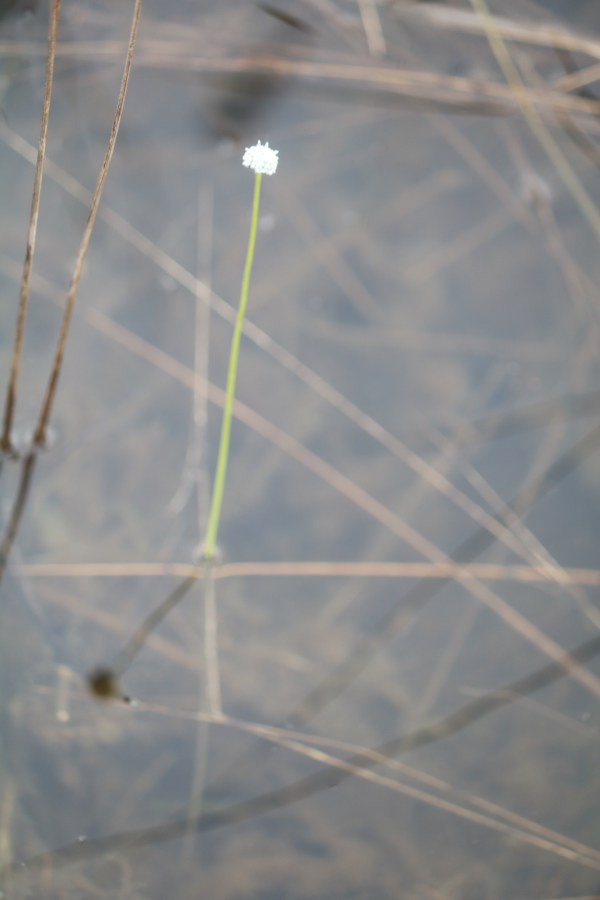
Periscope
Wouldn’t it be fun now to bore you about Google-derived expertise on gas and nutrient exchange between the Pipewort and the periphyton. That remains for future researchers with cool skills and fancy gear. But we can peep curiously through a microscope at those submarine FPW leaves. (When not submerged the plant can make more normal-looking leaves.) The submerged foliage gets its main support from the water so, like many aquatic plants, the blades are delicate, thin, and translucent, especially toward in the broad basal portion. They do have little “crossbars” visible in the photo. Perhaps those help the leaves stay flat.
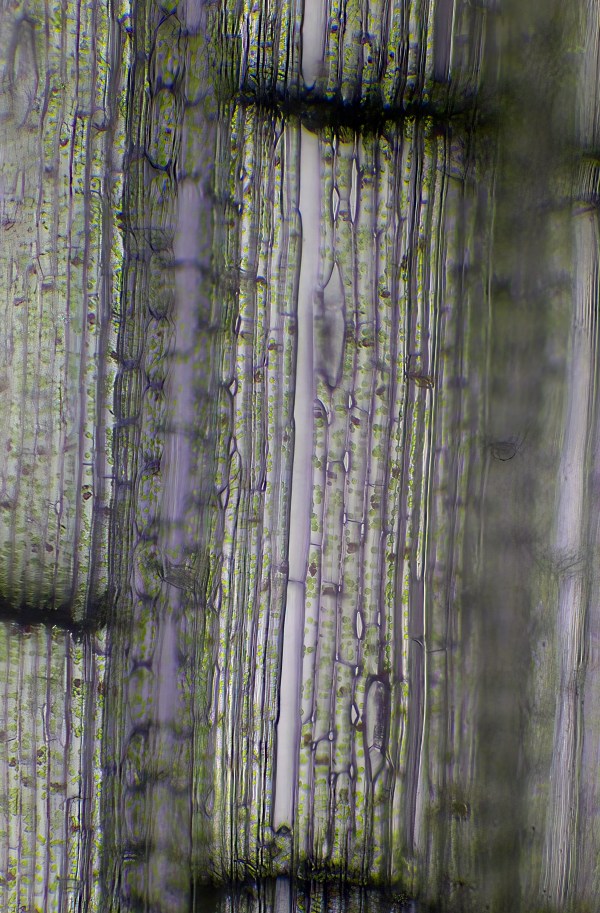
Microscope view of submerged Flattened PW leaf. Dark bands are the “crossbars.” Note the pores.
What’s truly odd are “pores” where the leaf cell walls separate, making the blades resemble sponges. The holes don’t fully extend to the outside. The covering must be extremely thin. The porosity would allow gas exchange among the cells all the way to their outside edges. That’s handy in the drink where evaporation can’t pull water and nutrients through the plant, as practiced by land plants. Water plants with filamentous leaves are sort of locked into an aquatic lifestyle (although some can make non-filamentous leaves in dry conditions). Seems like Flattened Pipewort, by contrast, with its low rosette passing through submerged and exposed conditions, in some habitats repeatedly, has found a compromise. I’ll bet as the habitat dries partially, or goes through periods of intermittent standing water and drying, those sponge-pores close up allowing the leaves to either weather intermittent exposure, or to tide the plant over as moisture diminishes until its “dry conditions” leaves take over. Just guessing on that though.
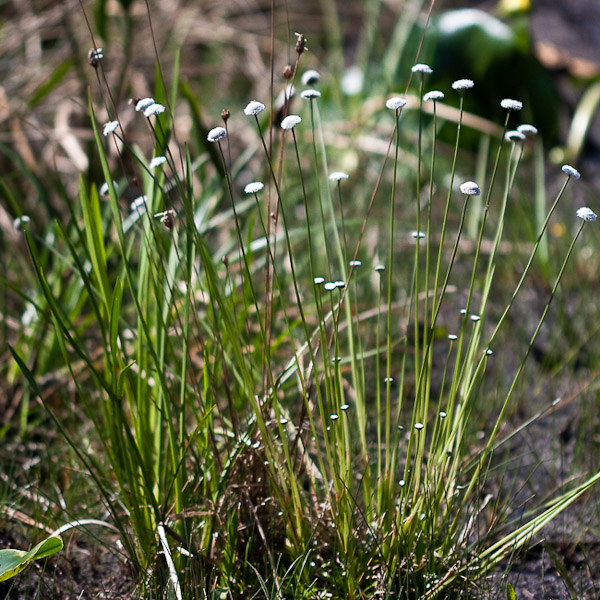
Flattened PW growing like a normal plant un-submerged. By JB.
 John Bradford
 George Rogers
 George Rogers
 Dee Staley
 Treasure Coast Natives
Barbara Levy
January 29, 2024 at 10:14 pm
Thank you George!! Given the depressing state of idiotic human affairs, it it incredibly affirming to see how smart plants are. If you’ve never read The World Without Us, I HIGHLY recommend it – utterly fascinating.
George Rogers
February 8, 2024 at 7:54 am
Hi Barbara, Just found your comment…sure, will give it a look! Thanks