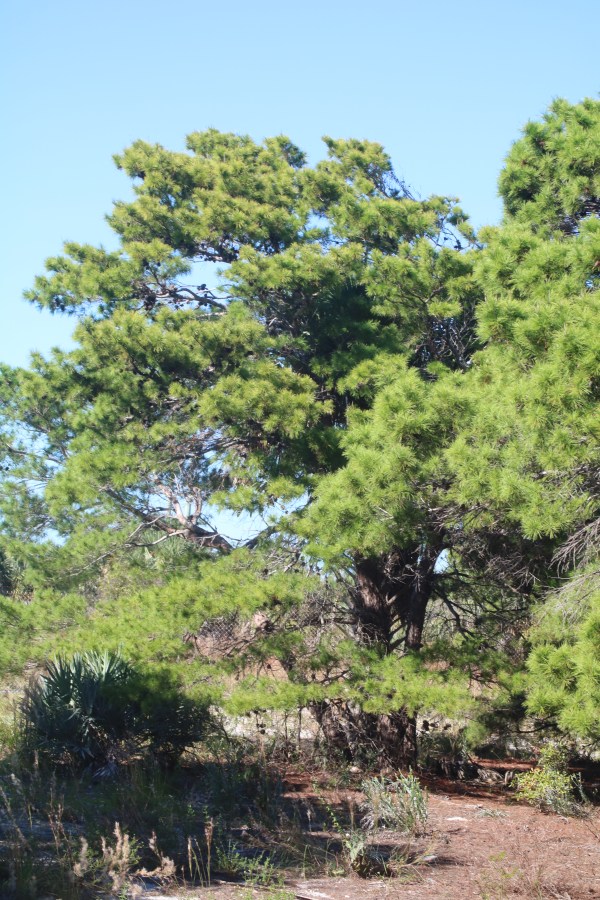
Plants help each other, not deliberately.. Most helpful facilitations occur no doubt by happenstance, the presence of one species improving conditions for the other. Much like the light over my neighbor’s garage illuminating my driveway for carrying in groceries. As a green example of facilitation, I’ve spent hours working around Lovevine where insect floral visits almost never occurred. That changed, however, when Cassine Holly common in the same habitat came into bloom attracting bees. Suddenly the Lovevine became popular, receiving visits from the bees originally drawn to the Holly.
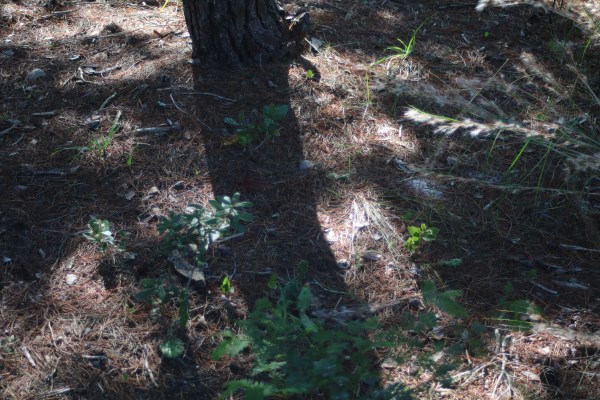
Under a nurse tree
I’ve always “had a thing” for nurse trees, maybe left over from prior life in harsh habitats, such as California. A nurse tree hovers over smaller plants, which may ultimately grow big. The nurse provides shelter and more: fallen leaves as “mulch”, soil-nutrients, broken-off “nurse logs” with baby plants in the decaying bark, perches for seed-dropping and guano-dropping birds, shelter for nitrogen-dropping creatures, rain capture and channeling, support for climbers, and probable benefits concerned with soil chemistry and microbes.
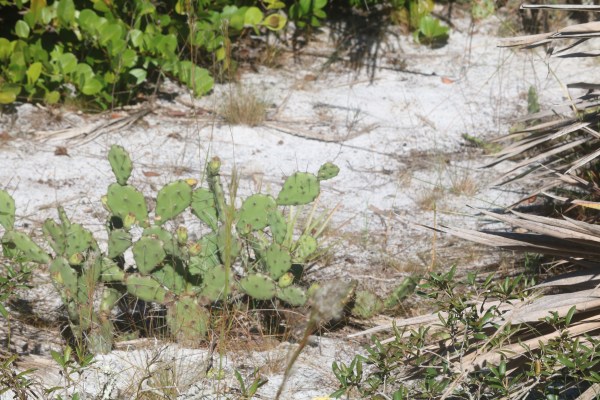
Dry desert where there are no trees.
Walking in the scrub today among “mature” Sand Pines, magical little gardens of young plants were thriving under the boughs surrounded by comparatively sterile parched desert away from the trees. In addition to a naturally short lifespan, Sand Pines grow where the relentless salty winds blow, where hurricanes blow bigger, and where fires and the sun both scorch the earth. Walk through a stand of Sand Pine, and it is easy to find fallen individuals, ones with major limbs broken off, and gaps.
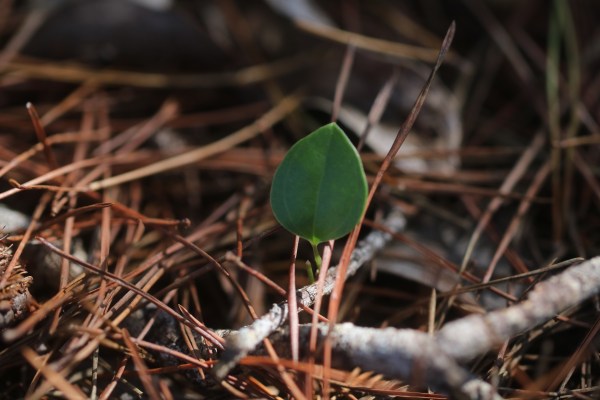
Above: Smilax under the pine. Below: Baby Smilax preparing for growing up—already starting tuber.
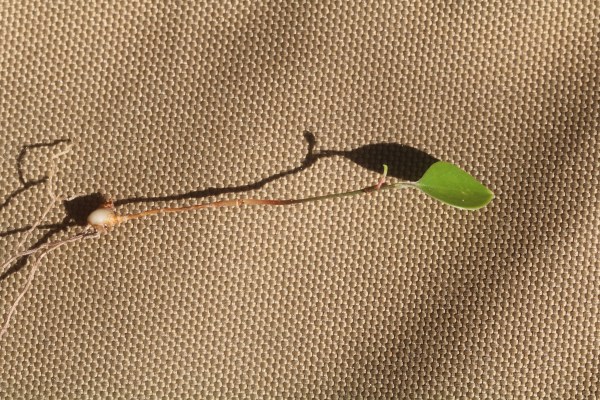
How often do scrub plants start life under a nurse pine, then complete their life cycle after the pine is gone? Literally crawling under a pine today, the youngsters poking through the pine needle mulch included hogplum, myrtle oak, palafox, and smilax—that is, every woody-ish species within a stone’s throw except maybe Sand Live Oak.
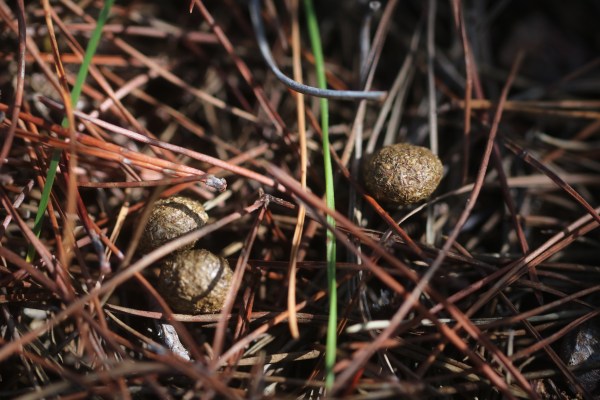
A nitrogen contribution
The benefits of nurse plants to their underlings are obvious, but…do the proteges ever benefit their nurses? An intriguing answer, not original with me, is yes, probably in the next generation. What species was missing from the under-the-pine list above? Sand Pine.
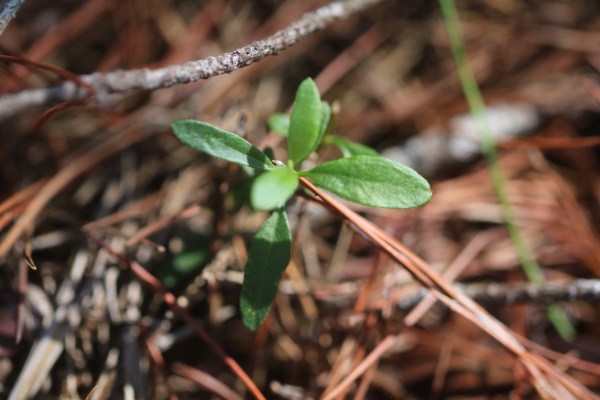
Palafox, I think
Never say never but there is an apparent tendency in many species for a tree’s offspring to rise up someplace other than as a competitor under the parental branches. (I dare you to find a baby Hogplum under a large mature parent.)
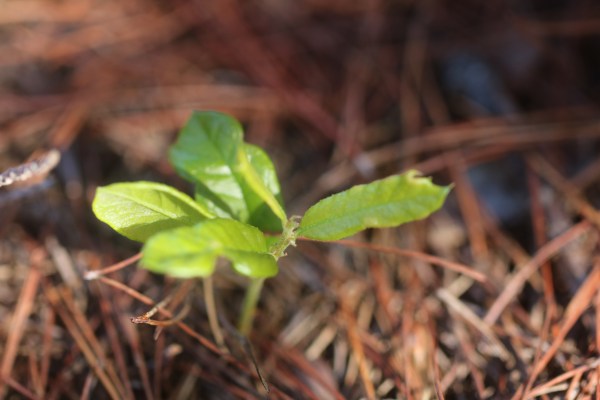
Oakling
This tendency is not adequately studied, but for the sake of argument let’s pretend it holds. What species serve as nurses to baby Sand Pines? Do the species nursed by pines “return the favor”? The idea of generationally flip-flopping nurse services has raised its head in botanical literature, although has not been demonstrated in the local scrub ecosystems to my knowledge.
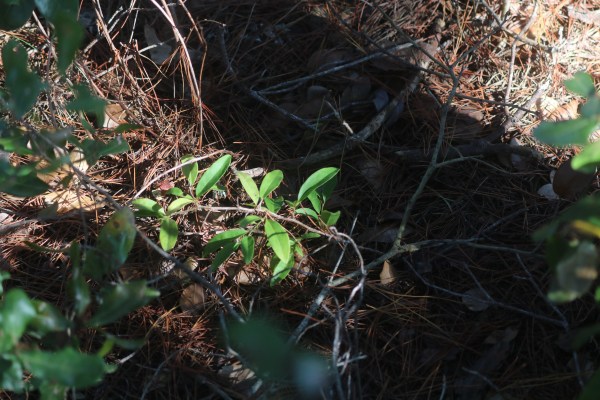
Hogplum
And now a word from our sponsors
 John Bradford
 George Rogers
 George Rogers
 Dee Staley
 Treasure Coast Natives
Linda Grashoff
October 22, 2023 at 7:59 pm
Thanks for clarifying the difference between nurse trees and nurse logs. I’ve been calling the latter by the former’s name. Won’t do that anymore.