Spiranthes species, Bombus species
White wands waving in wet places…perhaps one of several species of Spiranthes orchids, often called Lady’s Tresses. About 15 species in Florida. What they lack in orchidaceous showiness, they make up in subtle interest. Lady’s Tresses Orchids are a fine example of the “strategies” found in floral arrangements and timing in relation to pollinators.
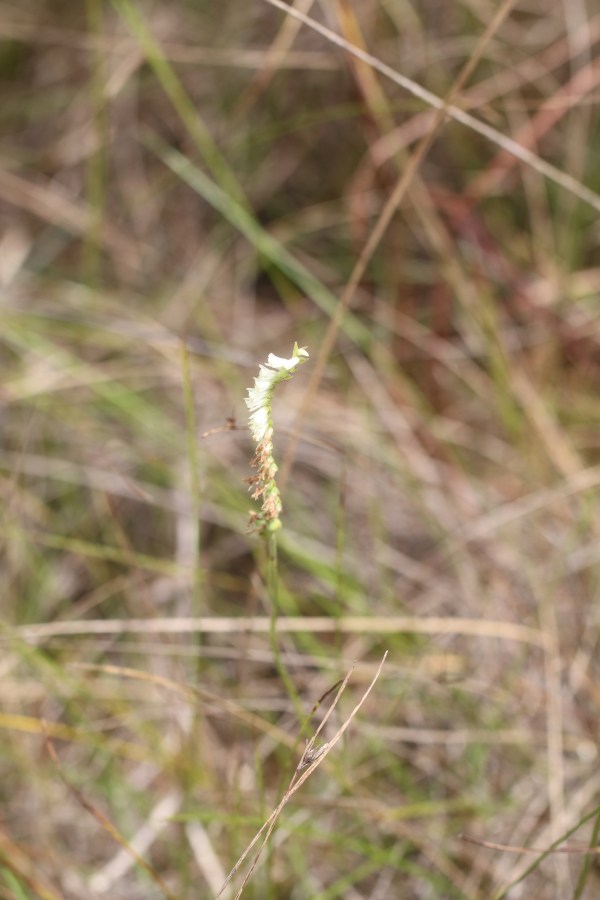
Although a varied mix of insects might turn up occasionally on Spiranthes species, most Lady’s Tresses receive most of their pollination from Bumblebees. Bumblebees and the twisty white wands are well matched.
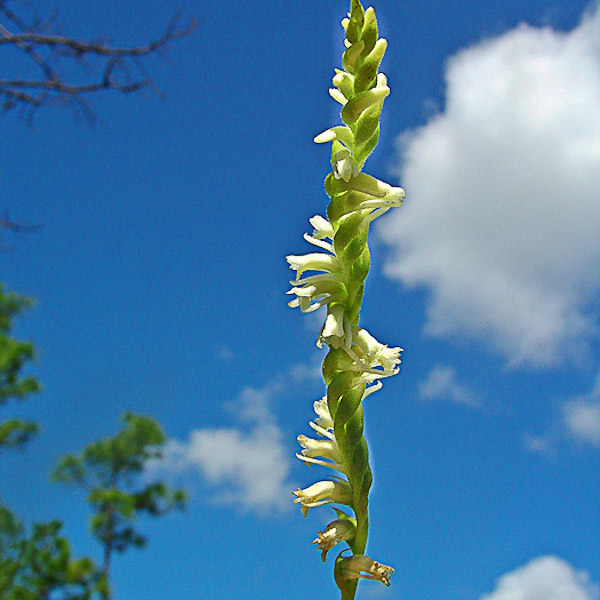
This image and next by John Bradford.
For one thing, the Spiranthes wands are “in flower” for a long time as flower opening, maturation, and nectar presentation progress slowly along the wand. That being so, each wand in the marsh is in place and worth visiting for a long time, allowing the clever bees to develop a route of reliable nectar visits. That is, the bees are capable of “traplining.” Folks who study bumblebees are interested in the question of, “do they mentally map the entire route, or does the stop at one flower lead to the next?” Only the bees knows.
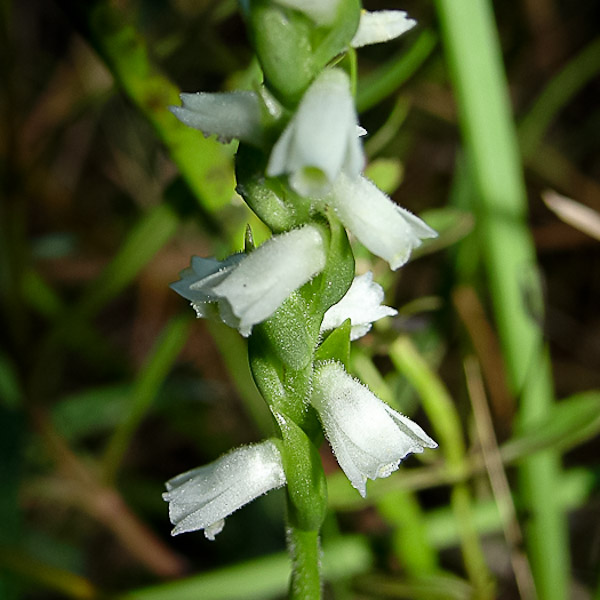
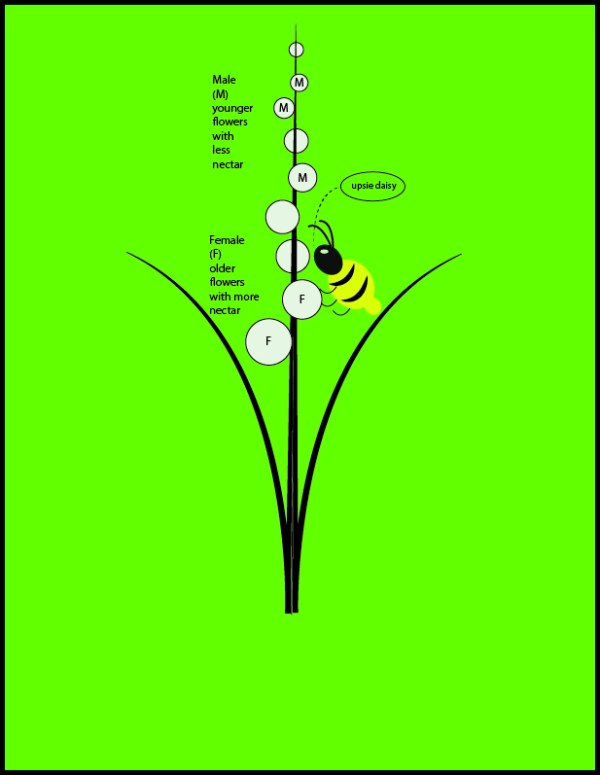
What we know is that it gets more complex. Presented with a vertical spike, Bumblebees (and many other floral visitors) start at the bottom and work upward from the older flowers toward the base toward the immature younger flowers above. That works out well for the bee and for the orchid. The lower mature flowers have more nectar than the upper less-mature flowers. Score one for the bee.
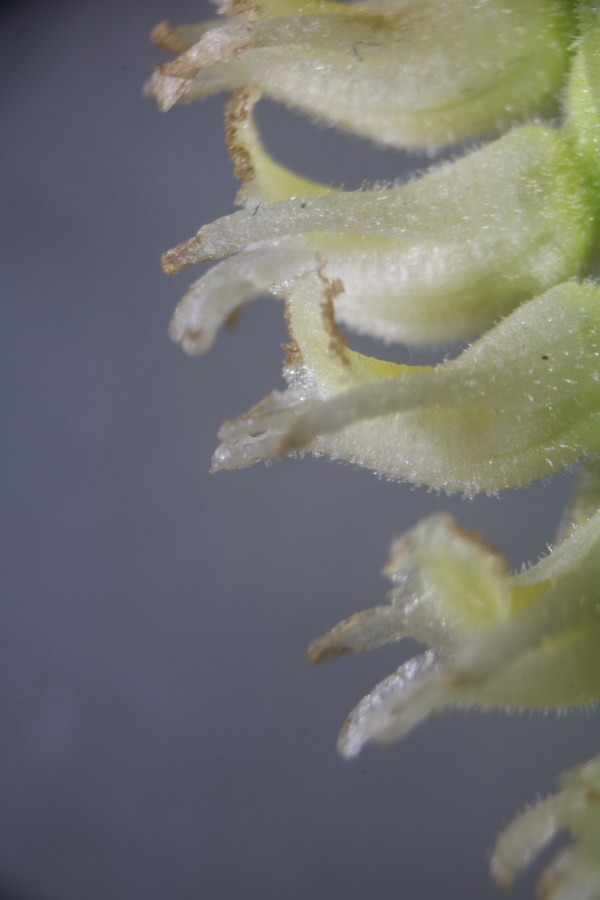
That works out great for the plant as well. Its flowers start out male, then become female. That way the older flowers toward the spike base are female, below the younger male flowers toward the spike top. That way a visiting bee on the rise encounters female flowers before male, or you might say it drops off pollen onto the receptive females before picking up new pollen from the males and jumping off to the next stop along the trapline. If the bee encountered the male flowers first, it would merely self-pollinate the plant instead of cross-pollinating.
 John Bradford
 George Rogers
 George Rogers
 Dee Staley
 Treasure Coast Natives
theshrubqueen
June 10, 2023 at 11:07 am
Very cool and what a great common name.