Cat Briar
Smilax auriculata and additional species
Smilacaceae
In South Florida, you could arguably say “springtime” is in the air: or at least pollen (lots of it), and new flowers popping into bloom. Among those starting to flower is Cat Briar, Smilax. We have a few species around here. They are similar, so let’s not sort them out. What’s more interesting are those green flowers. They have some curious characteristics.
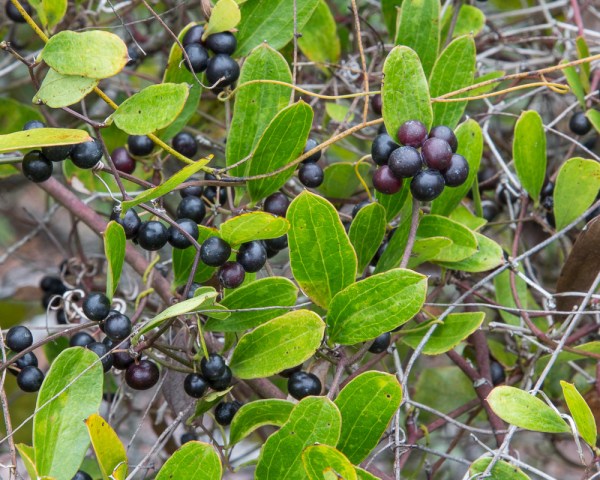
Smilax fruits by John Bradford.
The vines are dioecious, that is, with separate pollen-making males and fruit-making females. That requires pollen transfer from the males to females. No problem, right? That is what the birds and bees are for. Only problem is, these flowers make no nectar to feed their bugs.
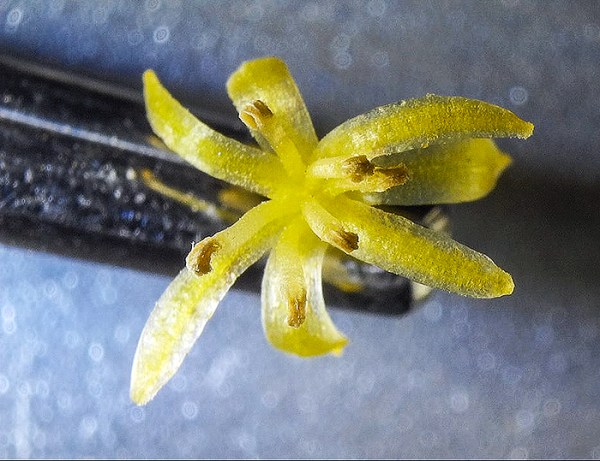
Male flower with 6 stamens, by JB.
But they do have some assets. The presence of pollen on the male flowers is a reward, even if that leaves the female flowers with nothing edible to offer. They do, however, a strong fragrance. Some folks call Smilax “carrion” flowers, although I find them to smell much better then decaying roadkill, to my nose. more like a scented detergent. Although perhaps false advertising, the powerful scent seems to help draw pollen-bearing insect visitors. Some observers suggest the big ostentatious stigmas on the female flower to add fake promises by looking like pollen-bearing anthers. I don’t see it, but I’m not a beetle.
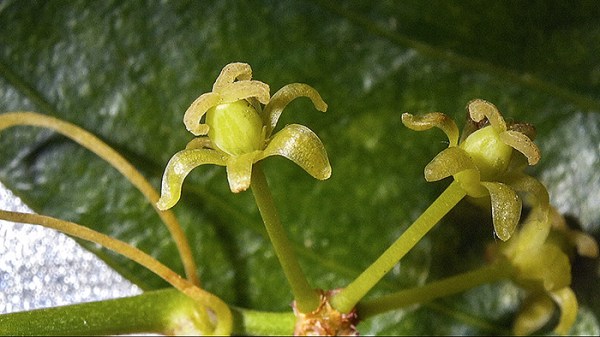
Females, by JB. I guess those stigmas on top look like the stamens on the male flower. Maybe to a fly!
Turning back to the male flowers, there are a couple of additional odd features. As is true of some other plants, the pollen is mixed with stretchy stringy, sticky material call viscin (vis-EEN) threads.
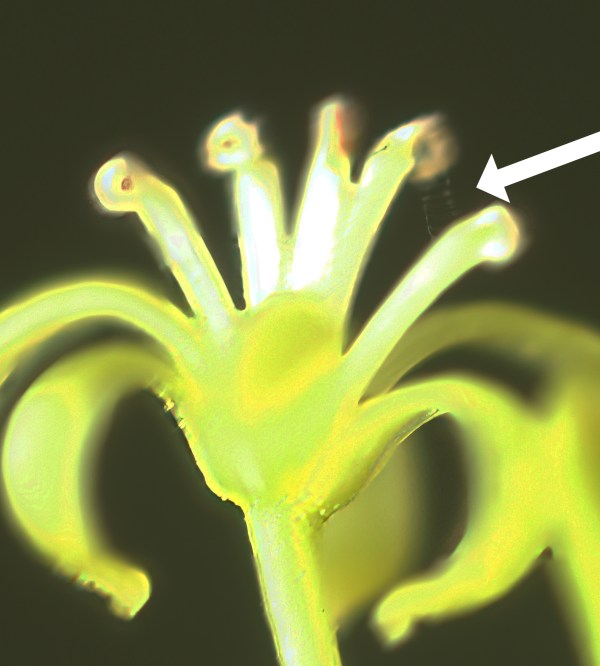
Look very closely for two delicate viscin threads, dangling like bungee cords from falling pollen.
Botanists interpret these as preventing the pollen from being blown away by winds and rain, and/or helping to snag the pollen onto the visiting insect, and/or to help with bulk pollen delivery. Sometimes viscin threads extend from the anther to an adjacent part of the flower, seeming positioned to snag on a bug. (Mite webs can occur in flowers too but are not likely to extend out of pollen masses.) CLICK here to see pollen stuck to viscin threads vibrated out of flowers.
Also, the petals (tepals) are a little sticky, like flypaper. Pollen falls out of the anthers and sticks to the petals, probably being a secondary source of pollen presentation, sticking pollen onto pollinators from the petal surface.
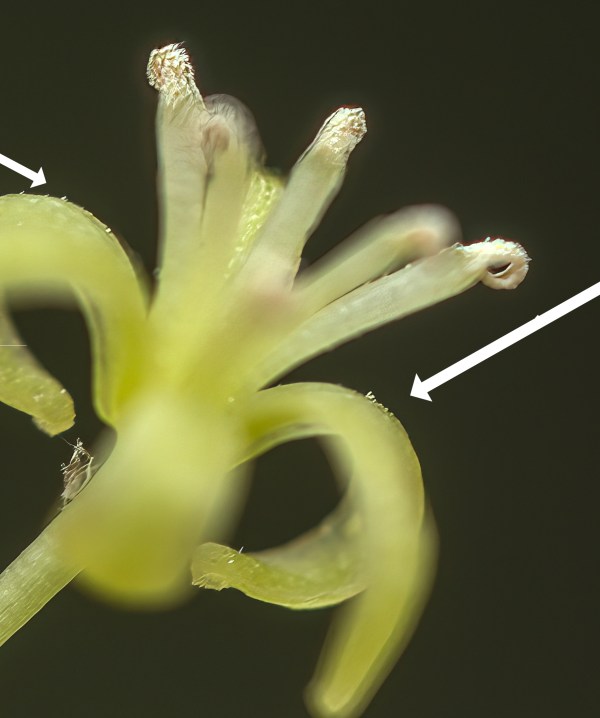
Pollen sticking to the petals
 John Bradford
 George Rogers
 George Rogers
 Dee Staley
 Treasure Coast Natives
theshrubqueen
February 19, 2023 at 3:59 pm
You would think that would cause difficulties in reproducing…not so much.
Richard Stauffer
February 19, 2023 at 5:56 pm
In my area (Pasco co) bona-nox blums seam to be more fragrant in the evening,not a bad odor at all. Maybe a night moth???