You ever notice the range of colors in honey? From light and clear to deep brown depending on the flower species visited. Producers pride themselves on regional variants: sourwood honey, orange blossom honey, clover honey, tupelo honey, and so forth. Hundreds of honeys! The variation is fun, like wines. In fact, some wineries offer their own honeys hand in hand with vintages. CLICK
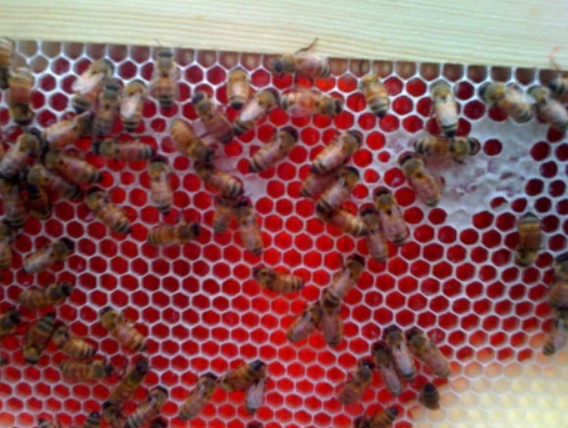
Honey for everybody! Well, until the honey get a little funky. Let’s start with red honey in Tampa….odd but for a nice reason. The Monin Syrup Company there manufactures sweet syrups for cordials and cocktails, and the factory feeds the “factory seconds” to bees, which come and get it from miles around. If the discarded syrup is a red variety, so is the honey.
Beekeepers around Brooklyn NY experienced red honey too , again tied to cordials and cocktails, but it did not taste so great. Enviro-detectives found “red dye #40” in the jars. How can that bee? Turned out the Dell’s maraschino cherry factory was illegally dumping maraschino runoff into NY Harbor. A consequent investigation into the syrup pollution revealed the crimes to extend beyond cherry juice to massive pot cultivation in a hidden portion of the facility.
In France, no red honey but blue and green. Turned out they manufacture M&Ms nearby in Germany. Waste from the candy plant shipped in open containers to an incinerator in France. Sacre blue!…bees found the candy waste, and the rest is honey history.

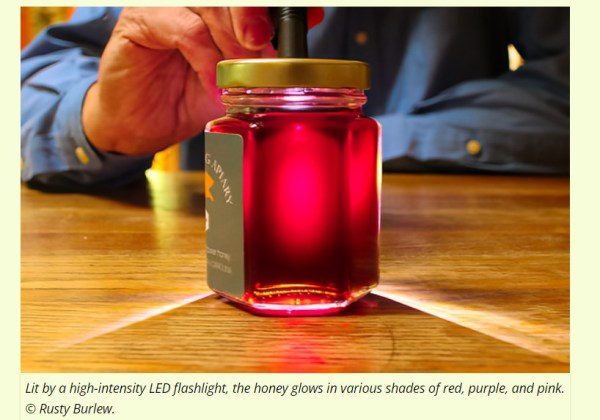
Closer to home, North Carolina purple honey remains mysterious despite being a novelty in demand for many years. Potential explanations include: aluminum reacting with acid in the bees’ tummies, originating from kudzu (with grape-colored flowers), nectars from sourwood trees turning blue from chemical reactions. Some think the purple comes from blue or purple fruits such as blueberries, or toxic pokeberries. Although bees do not bite fruits directly, they feed on juices from fruits with damaged skins or when broken or squished on the ground. Vineyards like bees as pollinators, but the bees sometimes become pesky feeding on damaged grapes.
You know, if I sold purple honey, I’d prefer a perpetual flowery mystery to an answer of, ” it is acidified aluminum.” And you know what else, if I share purple honey with my foodie friends, I pray no creative producer added value by stirring in a little grape juice.
 John Bradford
 George Rogers
 George Rogers
 Dee Staley
 Treasure Coast Natives
theshrubqueen
February 11, 2023 at 6:36 pm
Hey George, very interesting. I love local honey and make Elderberry syrup for allergies with it. I agree about the purple, I’m saying it is the Kudzu or maybe Elderberries?
leonorealaniz
February 11, 2023 at 9:57 pm
Hei, can this blog post be shared in any way? Folks here in W Mass would dig it. Leonore Alaniz