Annona glabra
Annonaceae
Pond Apples are trees naturally of swamps, shallow wetlands, and seasonally flooded shores. Wetland trees attract much attention with respect to the mysteries of surviving with their roots submerged seasonally, or permanently. This would be true of Pond Apples.
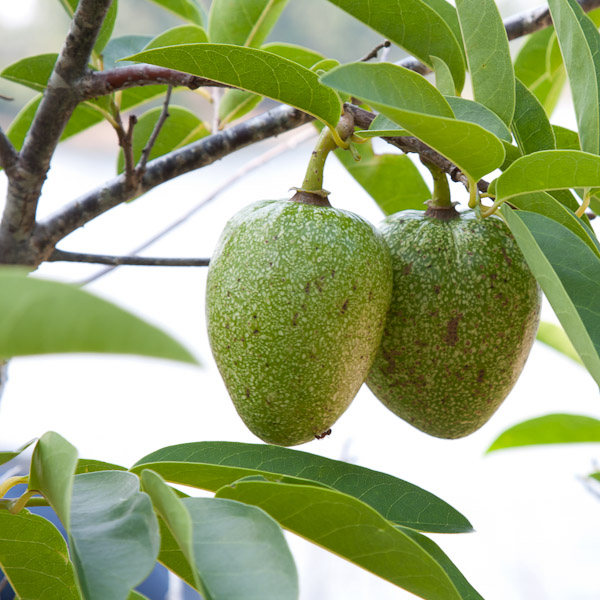
Photo by John Bradford
But I wonder also the opposite: how a tree happily flooded when large survives Florida dry months in seasonally flooded depression marshes before developing a root system sufficiently effective to access year-round deeper wetter soil. Pond Apples often begin life in seasonal marshes where the soil dries at least on the surface for months at a time.
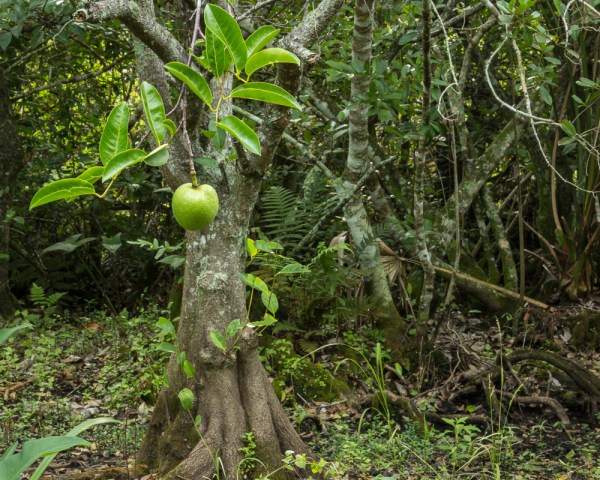
by JB
In places they are the only species or nearly so to sprout on the marsh bottom to become eventually large single-trunked trees. This is a situation where it might come in handy to “bank” water from the wet season to use in the dry months. You know, like a cactus. Not that the ability to store water in thickened stems is rare in the world at large, but you don’t see it often conspicuously among native Florida woody plants. Seems more “Madagascar” on the Discovery Channel to me.
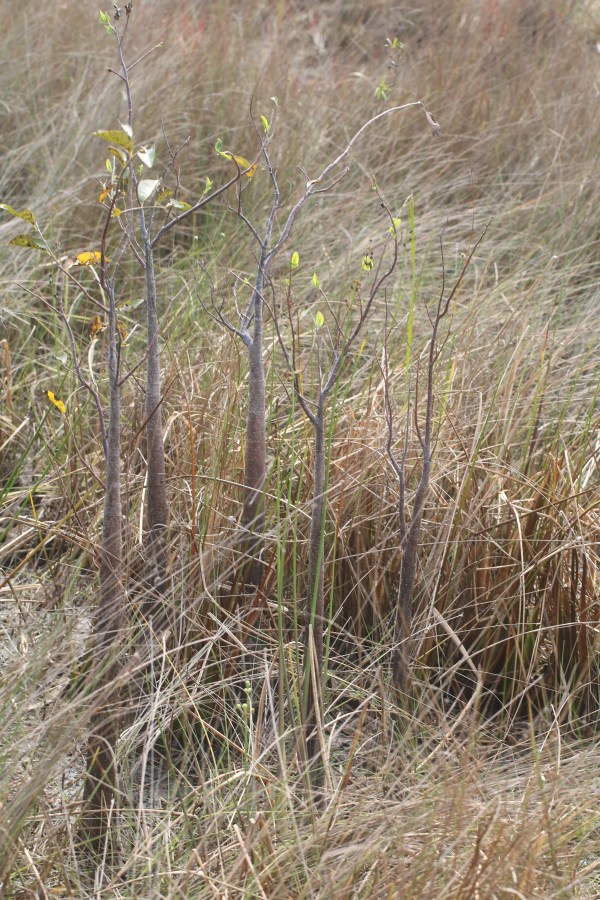
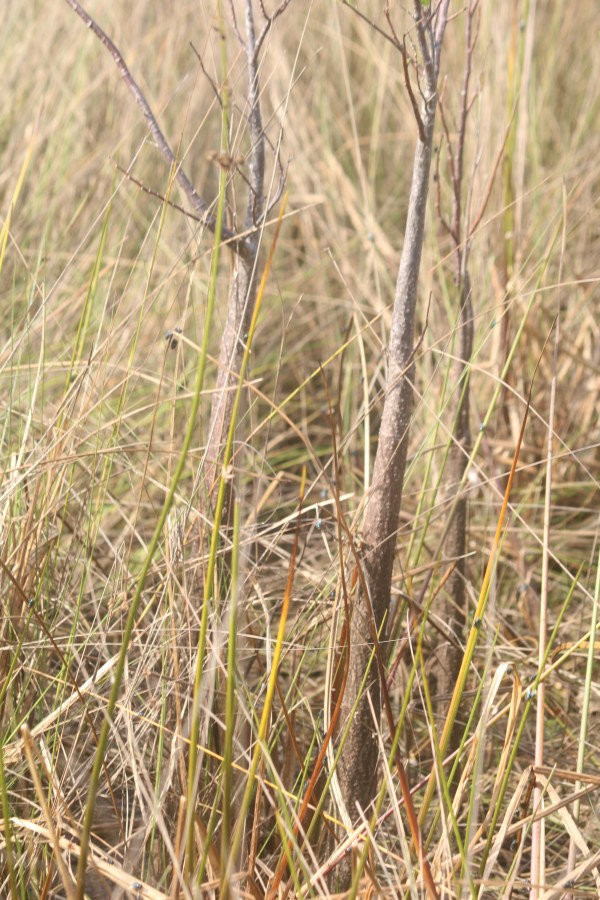
Young Pond Apples can have upside-down cone-shaped trunks thickened from the ground up to the lowest branches. Not a good thing to cut up tree trunks in natural areas for blog photography, so take my word that the cone is not solid wood, but rather squishy, wet, fibrous, porous, and white. You can squeeze it like a sponge between your fingers. Not that anybody has ever done the research, but I bet the spongy cone helps moisten and protect the deeper tissues during the dry months, and that it aerates the submerged roots during the flooded season. By the way, that research would not be easy.
Pond Apples, upon becoming large, can have swollen buttressed bases, but they become hard wood, not spongy. The largest individuals can develop arched roots reminiscent of Bald Cypress “knees.”
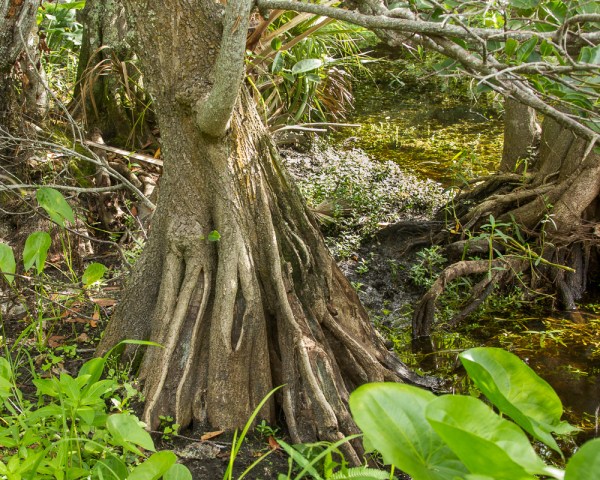
Buttressed base, by JB
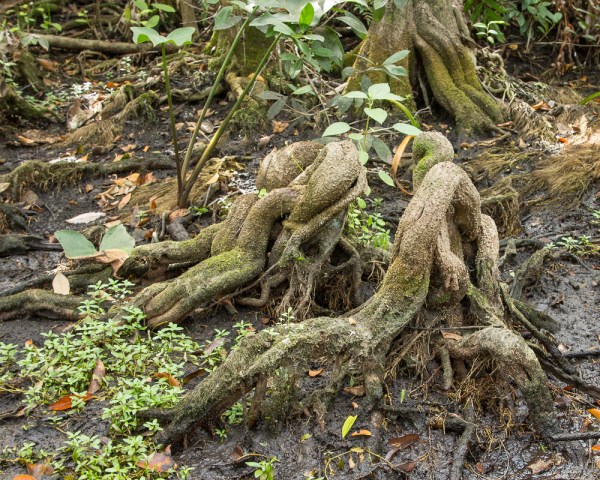
Pond Apple “knees” (arched roots), by JB
 John Bradford
 George Rogers
 George Rogers
 Dee Staley
 Treasure Coast Natives
Diane Goldberg
February 2, 2023 at 4:26 pm
What to you think about the taste of the fruit?
George Rogers
February 2, 2023 at 5:48 pm
yukky
Chris Lockhart
February 8, 2023 at 3:25 pm
Fabulous “knees! Where are these wonderful pond apples?