Today, John, lichen-student Bill Grow, and I enjoyed Kiplinger Natural Area in Stuart, Florida. That is, until a startling thunderclap sent us scurrying like three comical crabs. Bill’s lichens engendered a symbiotic frame of mind, and a hoppin’ symbiosis this afternoon involved a trio of salty species. Delighted we were to encounter the crabs still fiddling a happy tune along the algae-poisoned St. Lucie River. The crabs were crab-walking, burrowing, and waving their massive claws like a homecoming queen in a convertible, wearing a giant foam finger.
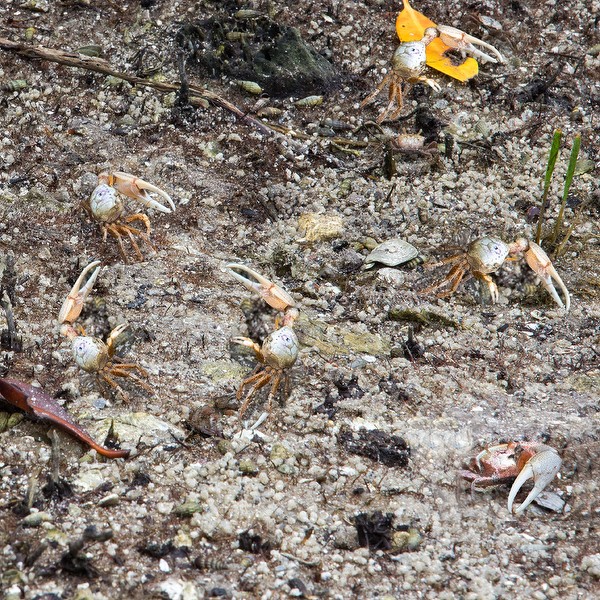
Crab party by John Bradford
And that’s good for the mangroves. Biologists have repeatedly noticed, in different terms with different points of emphasis, the mutual benefits of Fiddler Crabs and salt-loving plants. Anyone who visits a mangrove swamp can attest to Fiddler Crabs too numerous to ignore. Crowds of burrowing scavengers in the root zone of a tree in a marginal habitat must matter, and they do, apparently overall for the better.
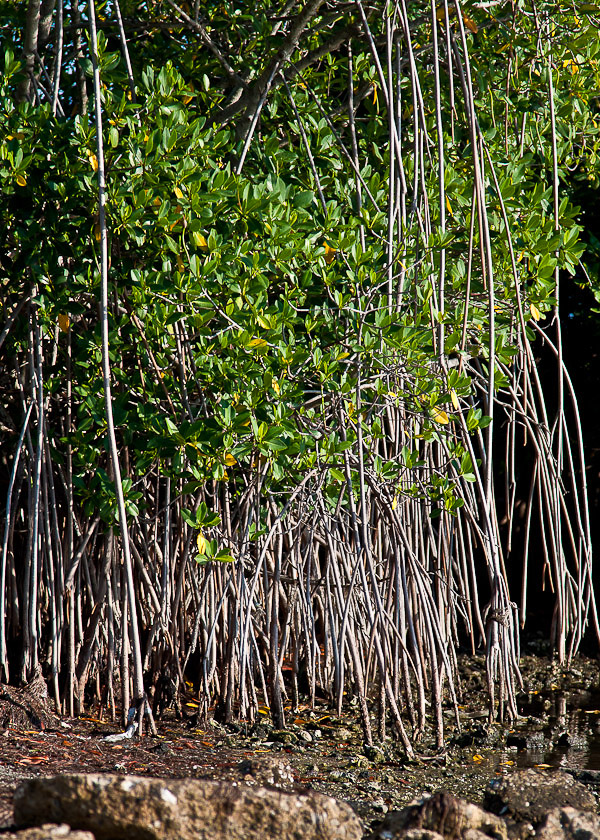
Crab habitat by JB
That tidal mud is suffocating to roots. No problem, the crabs are natural rototillers, and their burrows interconnect into subterranean duct systems. The soil is salty, yet the reticulated tunnels allow tidal fluxes and rainwater to flush out the salts and toxins.
That soil is nutrient-poor, so thank you crabs for gathering, depositing, spreading, churning, and becoming fertilizer. Research by biologist Nancy Smith and collaborators documented enhanced White Mangrove growth in the company of crabs vs. crabless losers.
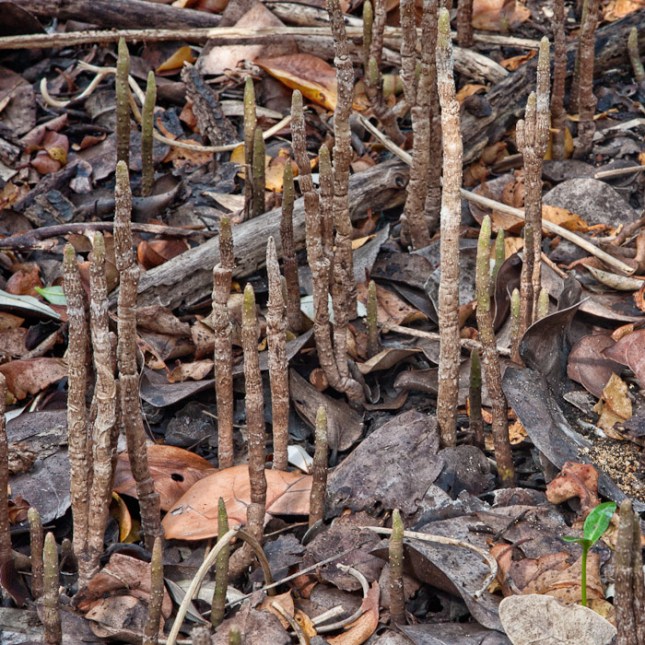
Dead man’s fingers by JB
Researchers Erik Kristensen and Daniel Alongi showed the Gray Mangrove (west coast Avicennia marina) to grow leafier seedlings and more “dead man’s fingers” where fiddlers roam. There’s a hint the Avicennia contributes to the active crab lifestyle beyond the presumed benefit of roots bracing the crab burrows against moving water. Materials from the happy roots seems to favor microbial growth beneficial for the crab diet of algae and small organic miscellany.
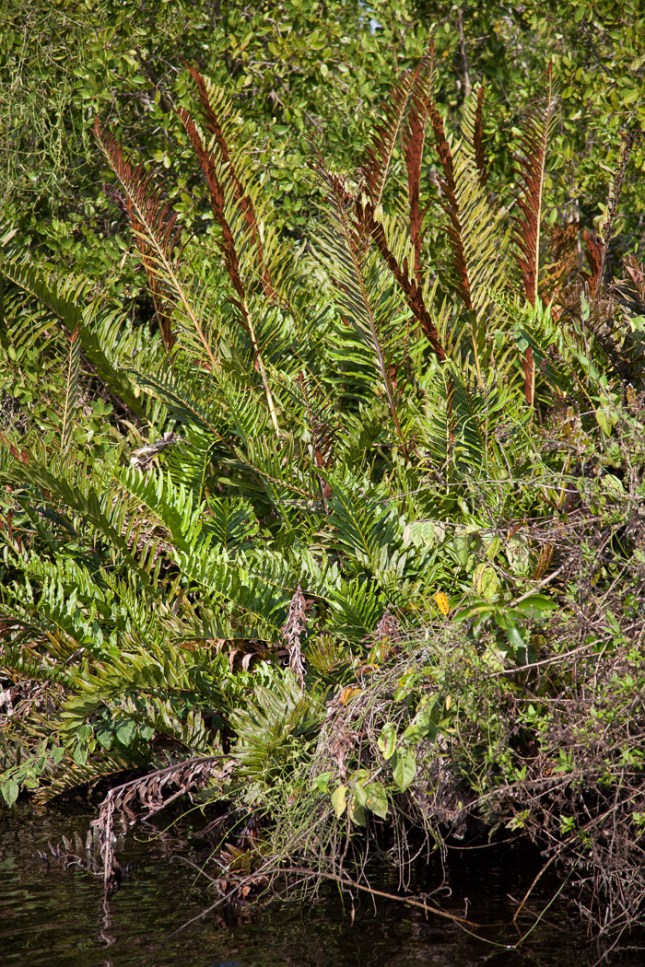
Leather Fern by JB
The mangrove swamp along the St. Lucie River hosts huge Leather Ferns. According to biologist Peter Hogarth, the crabs have a hand (or a claw) in this too, their enriched mine tailings are “planting mounds” for baby ferns otherwise in existential peril if not elevated above the brine.
 John Bradford
 George Rogers
 George Rogers
 Dee Staley
 Treasure Coast Natives
Gregory Overcashier
August 27, 2016 at 7:07 am
Fascinating article George. Your articles always inspire me to get out in the yard and snoop.
Peace
Greg
friedova
August 27, 2016 at 10:06 am
George, I feel less crabby after learning the best eco-crab facts ever. Will oysters yield some pearly wisdom in a future post?
George Rogers
August 28, 2016 at 12:39 am
For sure! Absolutely. Yep.
.
theshrubqueen
August 27, 2016 at 1:37 pm
Ah, those eco-crab facts – enlightening as ever. Nice crab pictures, too.
George Rogers
August 28, 2016 at 12:39 am
Thanks SQ!
Greg Braun
August 27, 2016 at 2:05 pm
Thanks George. Good post. Have you & John compiled a list of plants you’ve seen at Kiplinger? If so, I’d appreciate it if you would forward a copy to me, even if it is just a copy of field notes. Thanks
Greg Braun Sustainable Ecosystems International (561)-758-3417
>
George Rogers
August 28, 2016 at 12:42 am
Well, a pity, no such list in our hands. There is perhaps one in the management plan but not sure really. We’re just having fun. Lists are work. We are escaping work.
Martin
August 29, 2016 at 11:32 am
If I was gonna do that much work, someone would have to be payin’ me!