Pistia stratiotes
Araceae
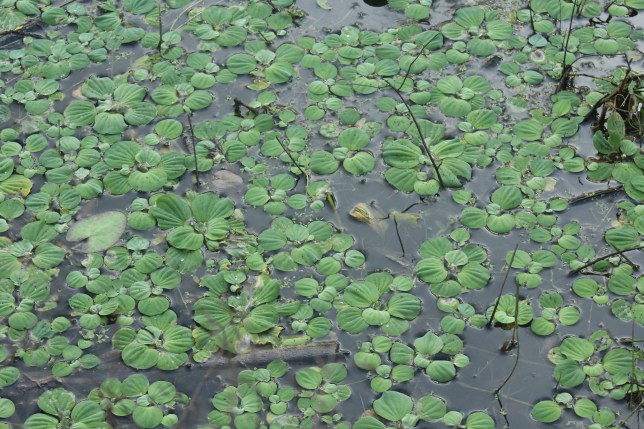
Honeymoon salad (lettuce alone) (by Evan Rogers)
John is away for Christmas, so my substitute field companion today was son Evan, down from North Carolina with camera in hand. We’ve been out in recent days hanging around with hawks and sandhill cranes, mostly by canoe with water-lettuce impeding navigation.
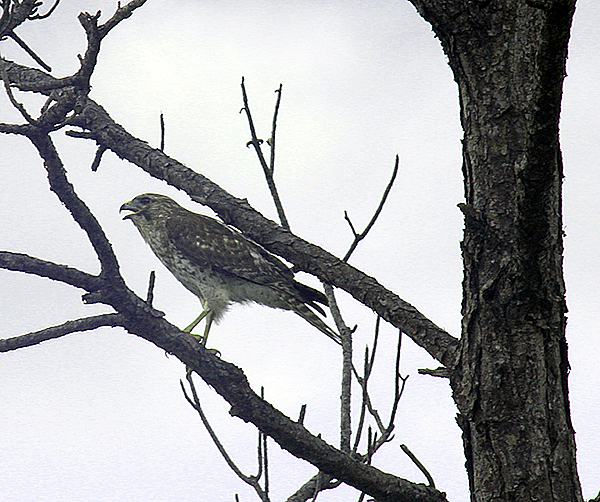
Hawk guarding the marsh (by Evan Rogers)
Is water-lettuce native? One of my most-used local plant handbooks says, “native to Africa,” but that’s the trouble with single sources. Weeds get around, and the small seeds are conceivably transported by migratory birds or even on floating debris.
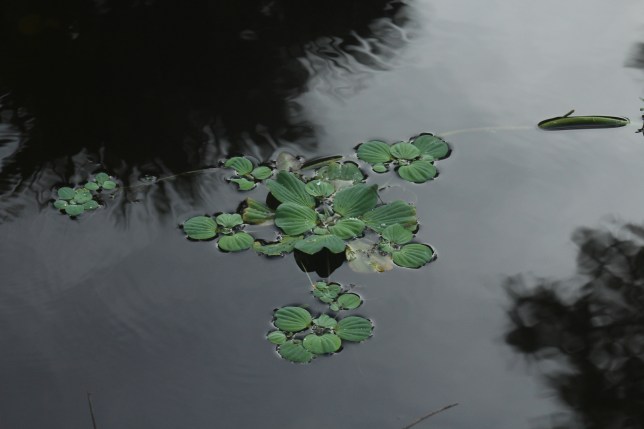
All strung together by stolons…canoe traps (by Evan Rogers)
Who’s to say it didn’t arrive on is own? Aroid specialist Sue Thompson in the Flora of North America is open-minded (and see Notes below):
“Some botanists consider the genus to have been introduced into the United States and many regional floras state that fruits and seeds are not produced in the flora area. However, s Seeds with high rates of germination have been reported from many sites in Florida, however … The status of Pistia as native to the United States has not been resolved; available evidence suggests that it is indigenous.”
Whenever and however it arrived, Water-Lettuce goes back in Florida about as far as botanical exploration.
Water-Lettuce is one of the odder members of the odd Aroid Family, known to native plant enthusiasts for arrow-arum, golden-clubs, and jack-in-the-pulpit. Gardeners and florists love aroids as anthuriums, philodendrons, and spathiphyllums. Funeral homes like them too, as calla-lilies. The sign of an aroid is having small flowers in a spike called a spadix, and a colorful specialized leaf called a spathe wrapped around the spadix.
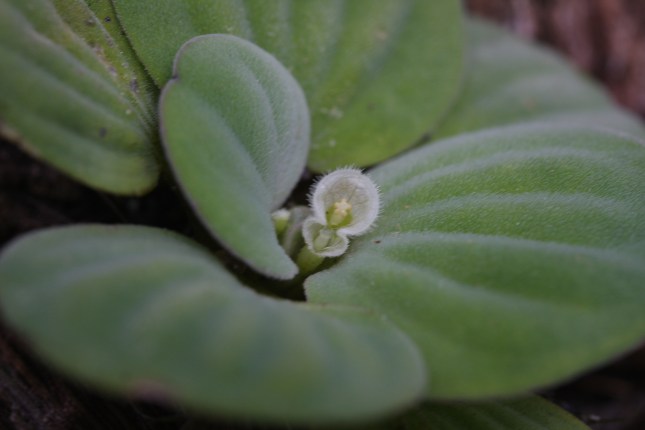
Pixie spathe (white) around spadix
The spathe and spadix in water-lettuce are pretty, reminiscent of a tiny peace-lily. The folded water-lettuce spathe has two expanded openings, the top gap allowing a whorl of male flowers to jut out; below those a single female flowers peeps from its own gap.
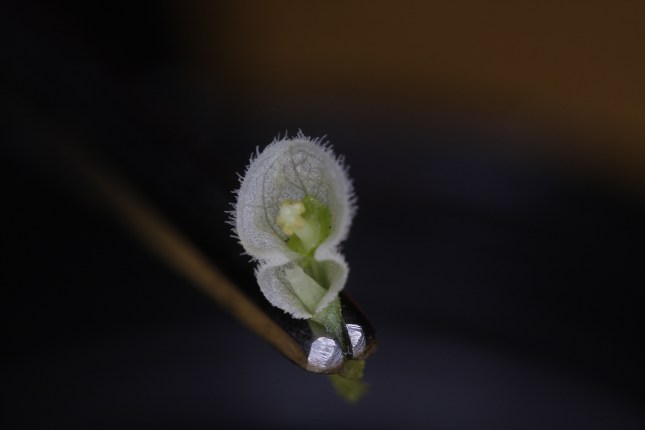
The yellow star is a whorl of male flowers. Below it is one white female flower.
Naturally hydroponic, the fuzzy rosette floats with its roots dangling. With full sun, swimming in water, nutrients in the soup, and stolons to sprawl forth and conquer, this weed can expand! That’s bad if it clogs and shades waterways, jams pumps, or decays and stinks.
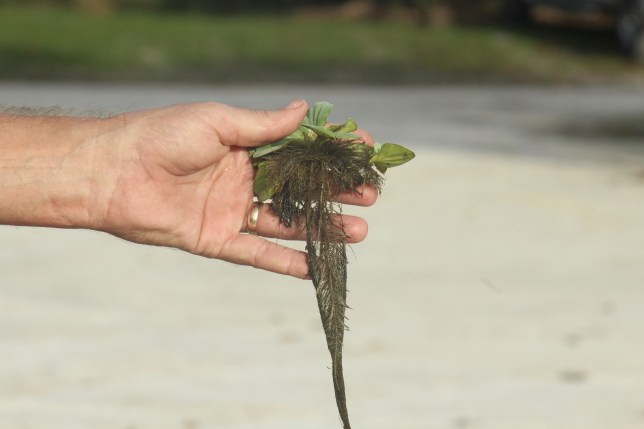
Dangling participles (by Evan Rogers)
On the good side, however, here’s a plant able to pull “sewage” nutrients out of over-enriched waters, suck heavy metals and pesticide residues out of canals, and generate truckloads of biomass if you want biomass. It is not a true lettuce so put away the croutons, but water-lettuce is easily generated compost, although not on edible crops. And we all cheer for biomass biofuels not competing with food crops, fertilizer-free, and providing bioremediation as a bonus.
—————————
Notes:
Just try to get it wet: SPRINKLE HERE
For more on the native vs. non-native question CLICK
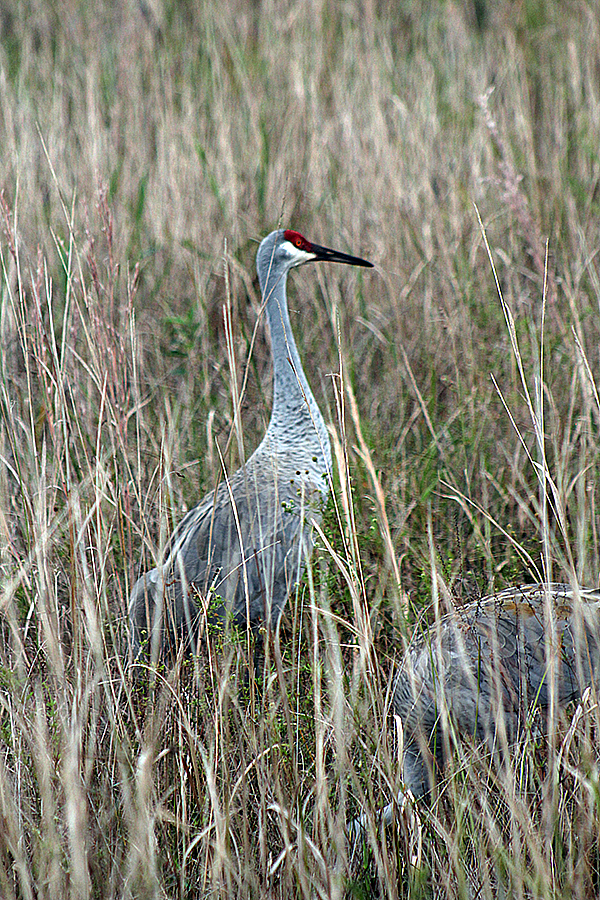
Seed spreader (by Evan Rogers)
 John Bradford
 George Rogers
 George Rogers
 Dee Staley
 Treasure Coast Natives