Vitis rotundifolia
Vitaceae
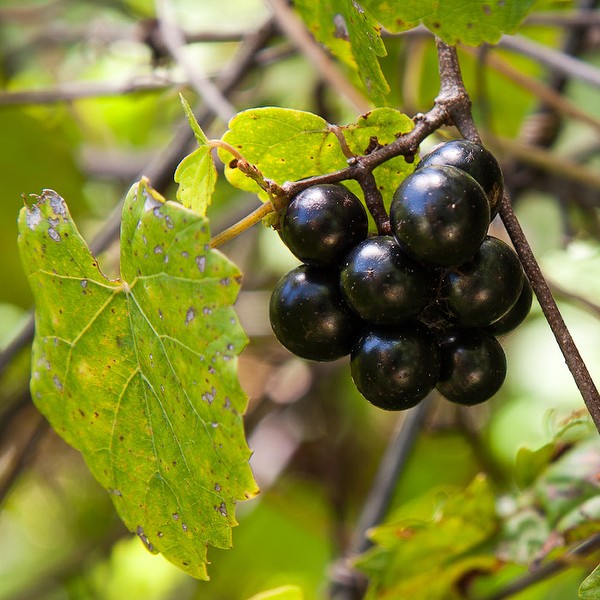
Muscadine Grapes (by John Bradford)
John and George savored the kind of weather today, the first day of 2016, that migrates snowbirds. A slice of heaven complete with trapdoor spiders, antlions, dragonflies, and delicate white mushrooms in a dry sand pine woods near Hobe Sound, Florida.
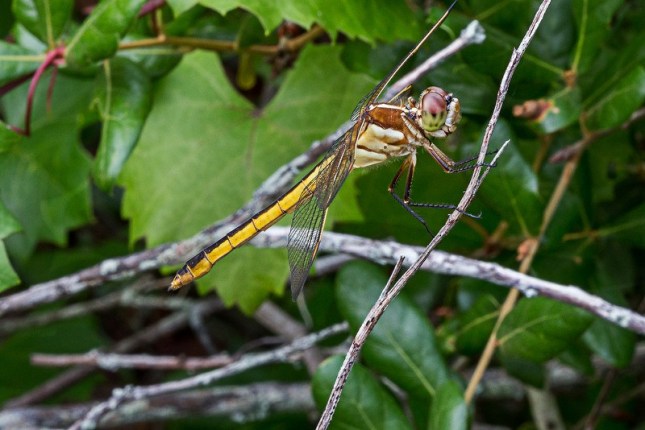
uscadine with Dragonfly (JB)
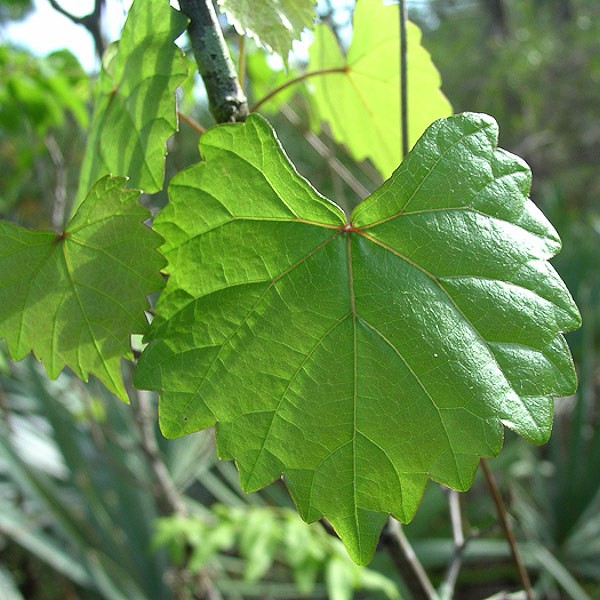
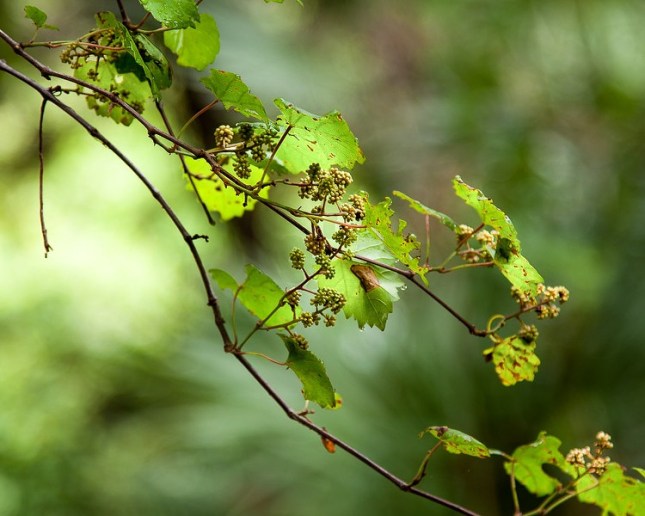
One of my running themes in botany is that a trip to the local state park reveals more fascination than an eco-tourism trip to Shangri-La with a khaki-clad guru pointing out some exotic orchid. The very thing that makes nature so much fun is its universal accessibility. So today’s state park marvel is Muscadine Grape. Everybody sees it, or trips over it, one of the most abundant lianas everywhere you go. It has heart-shaped leaves with big marginal teeth.
(By JB)
Muscadine has odd features, even compared with other grapes. Most grapes have 38 chromosomes, but Muscadine and a few others have 40, making it tough to hybridize. It does not graft well with other grapes, although you can graft Muscadines onto one another.
The flowers are usually male and female on separate plants. And the stems are a little weird, because, although they climb by tendrils (little clingy fingers), they also can sprout roots. The roots either remain small until the stem contacts the ground, or alternatively much later, the roots dangle like cables from the woody stems high in the tree canopy.
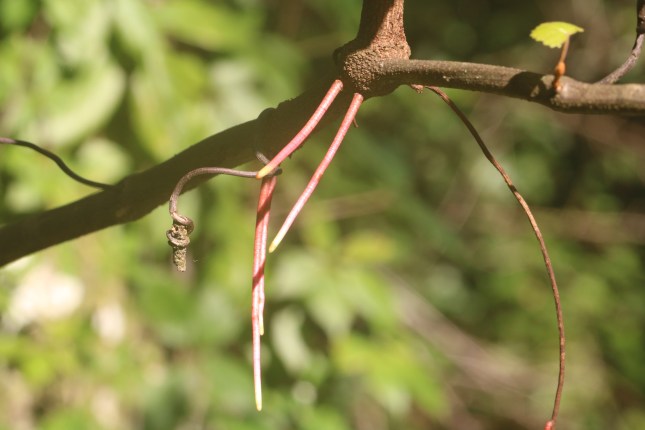
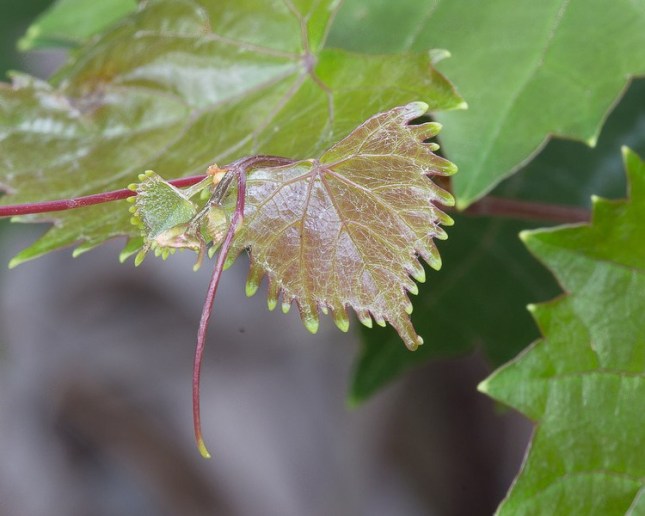
In most grapes the tendrils are forked, contrasting with the unbranched tendrils in Muscadine.
JB
A hand goes up in the back of the room:
“Do they use Muscadine for wine?” You bet your sweet bippy. It is the oldest cultivated grape in North America, which is easy to assert because Native Americans had the pleasure before Europeans got the knack (see below). Today there are hundreds of cultivars, including the Scuppernong Grapes, originating in North Carolina.
A jumbo Scuppernong vine on Roanoke Island is one of the most intriguing individual plants in all the U.S. The exact history is unknown, with different versions in different references, but here are the broad facts. The “Mothervine” appears in account(s) by original settlers on the Outer Banks in the 1500s, with Revolutionary War soldiers chiming in on it 200 years later. Fast-forward two more centuries. The beast remains alive, well tended, and big despite an accidental brush with road-clearing herbicide. The trunk cluster is multiple feet in diameter, and the leafy bits supported by trellises covered 2 acres before some trimming.
The Mothervine probably is the horticultural work of Native Americans. Were Native Americans in eastern North America wine snobs? Reportedly so, to a limited degree. Did they fancy sun-dried grapes? Actually yes, according to a British sea captain in 1565. It’s only raisin-able after all.
Simple tendril (JB)
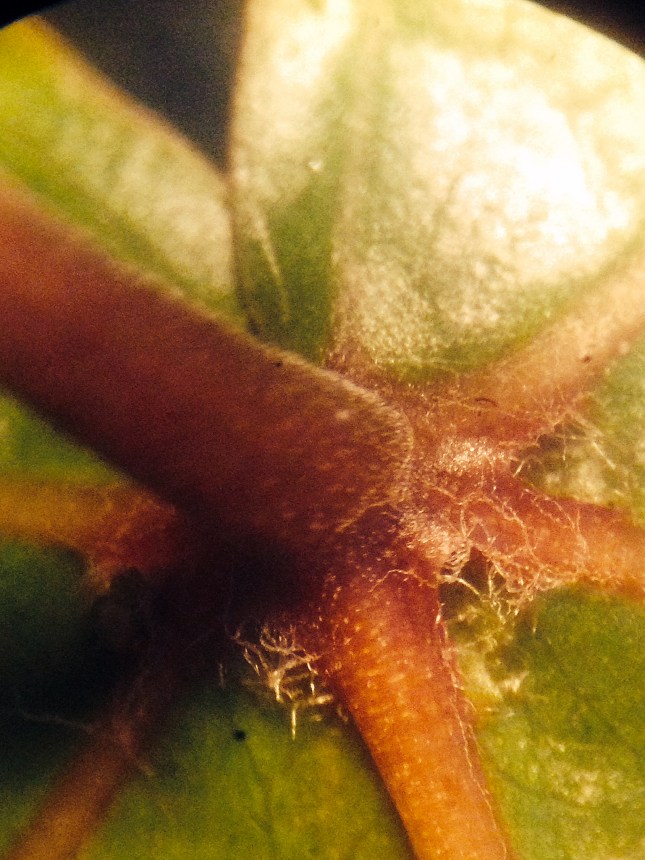
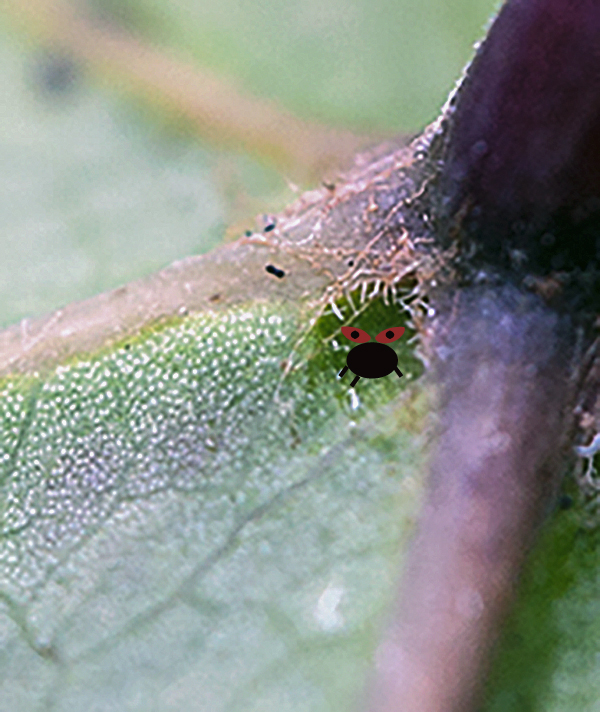
Muscadine and other grapes have a secret. Flip over the leaf and look closely where the petiole joins the blade to spot tiny caves with the doors surrounded by shaggy teeth. These “domatia” are homes to mites lurking like the Once-ler in their tiny lerkims.
The domatia look like caves (microscope picture)
So, why you ask, would a plant bother to host mites? They’re good predatory mites, it seems, interpretably guarding the plant from bad leaf-munching mites as well as from fungi.
———————————————
Have a Mitey Fine New Year

