Blechnum serrulatum (Telmatoblechnum serrulatum)
(Blechnon is Greek for fern. Serrulatum refers to tiny toothlets on the leaf margins. Telmato denotes wet habitats.)
Blechnaceae
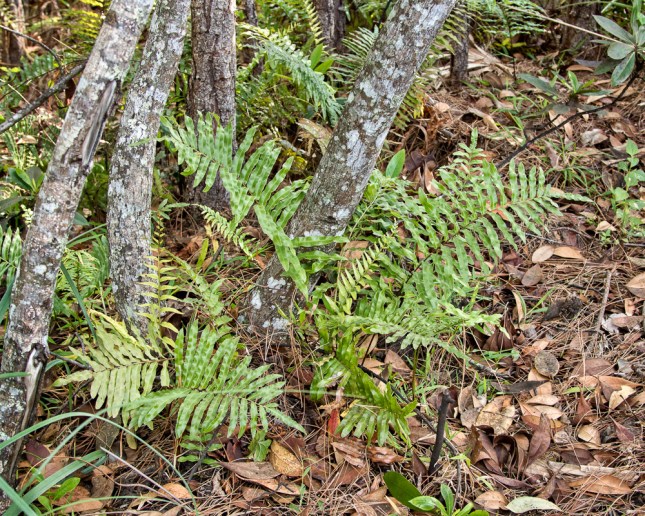
Swamp fern by John Bradford
There’s nothing more enchanted than bright morning in a cypress swamp during the dry season. The habitat is open, easy to navigate, bugless, and decorated with colorful lichens from rose to battleship gray, asters in bloom, and mossy hues a Leprechaun might recognize.
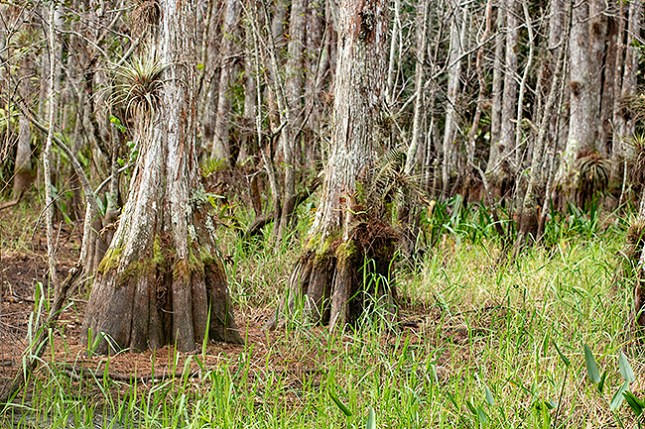
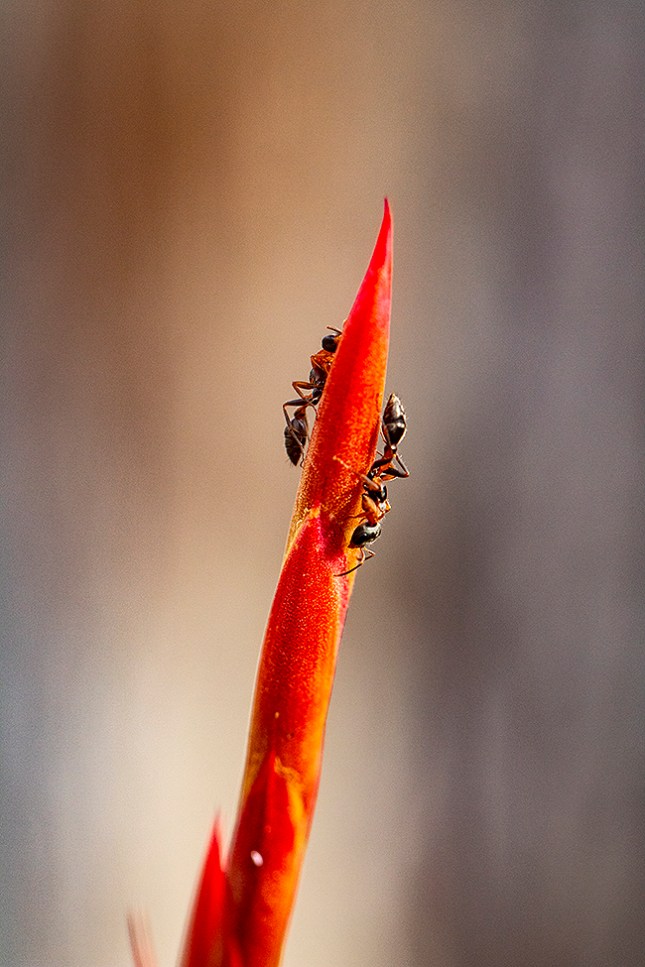
The biology is enchanting too, seeing cypress knees with spongy growing tips; seedlings seizing the day under the leafless canopy; northern needleleaf with ants; and a dozen plant species huddled on the bald cypress above the highwater line.
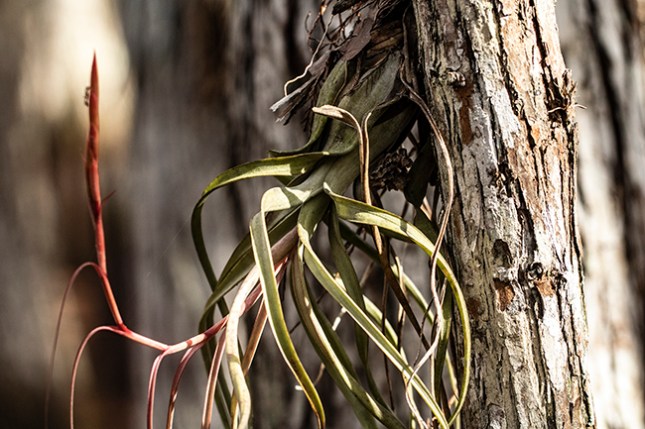
Northern needleleaf with ant
So many wonders, yet time and space force a choice. Swamp fern looks like “any old” fern, so what’s swampy about it? The fern shows at least three curious adaptations to life with its roots submerged some months and desert-dry other months. Being equipped for both extremes give the species a competitive edge, in charge where purely aquatic plants would fry and where purely dry-land plants would drown. Sun or shade just fine.
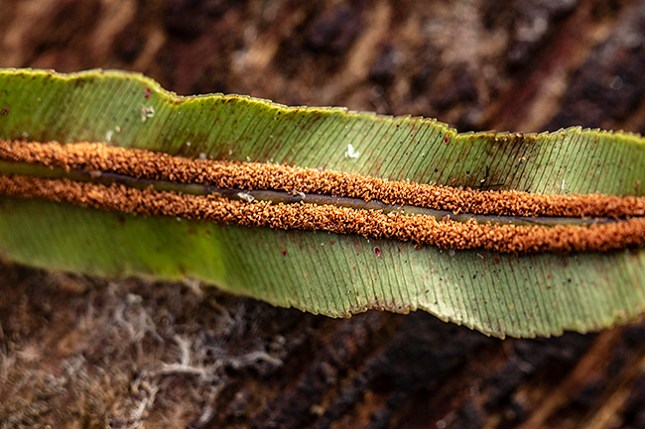
Swamp fern. Two rows of spore cases beneath the toothy leaflets.
Wet and Dry Adaptation 1. The leaf stalks have veins embedded among air pipes extending from the high dry leaves down into the intermittently submerged regions.
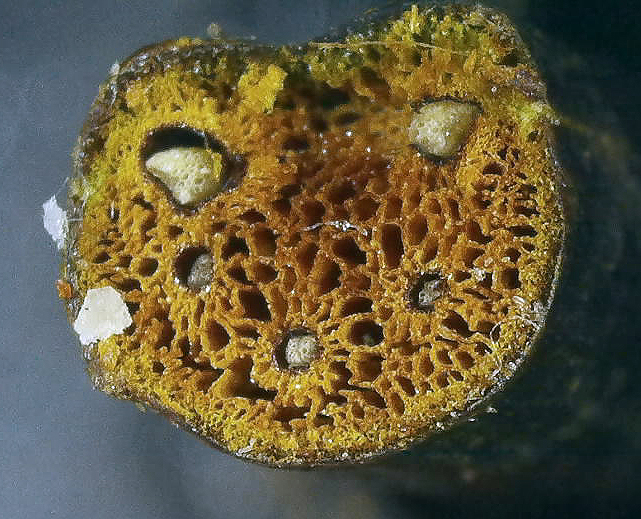
The leaf stalk cut and magnified. The well protected veins are white, surrounded by the air pipes.
Wet and Dry Adaptation 2. When the fern perches on a bald cypress above the high-water line, the plant is not permanently an epiphyte unable to reach the earth. Look closely…like a little banyan, it drops rhizomes and roots from its elevated base down along the cypress trunk and into the soil at the host tree’s base.
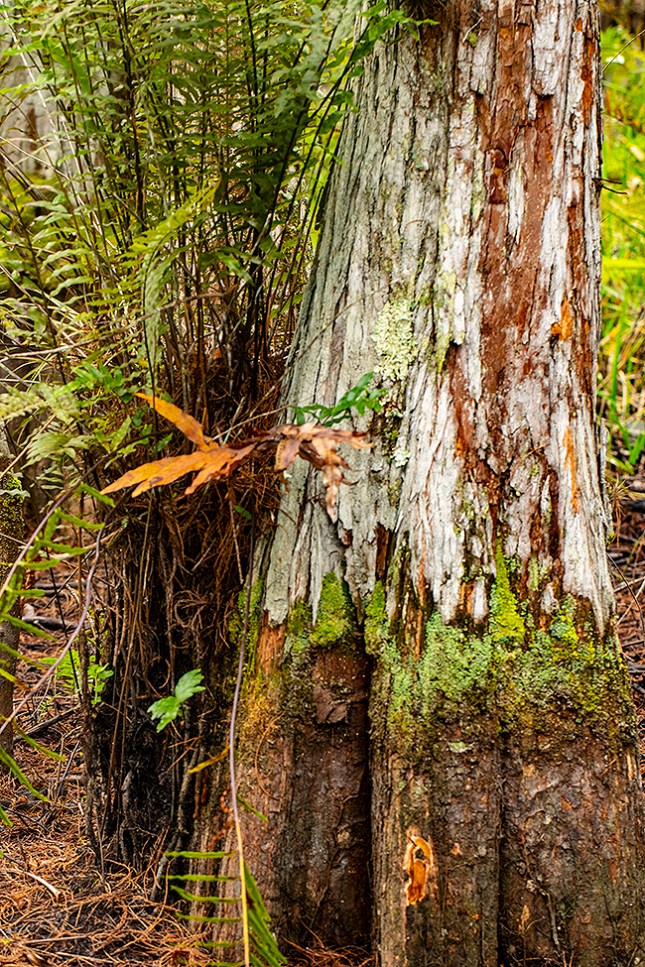
Swamp fern hanging on bald cypress. The fern’s rhizomes and roots descend from the attachment point to the ground. Some months they would be largely submerged.
Wet and Dry Adaptation 3. This one requires speculative interpretation. When the fern sits directly on periodically flooded mud it can build itself a pedestal made of a vertical cluster of slender rhizomes bound together into a spongy fascicle by a fibrous meshwork of roots.
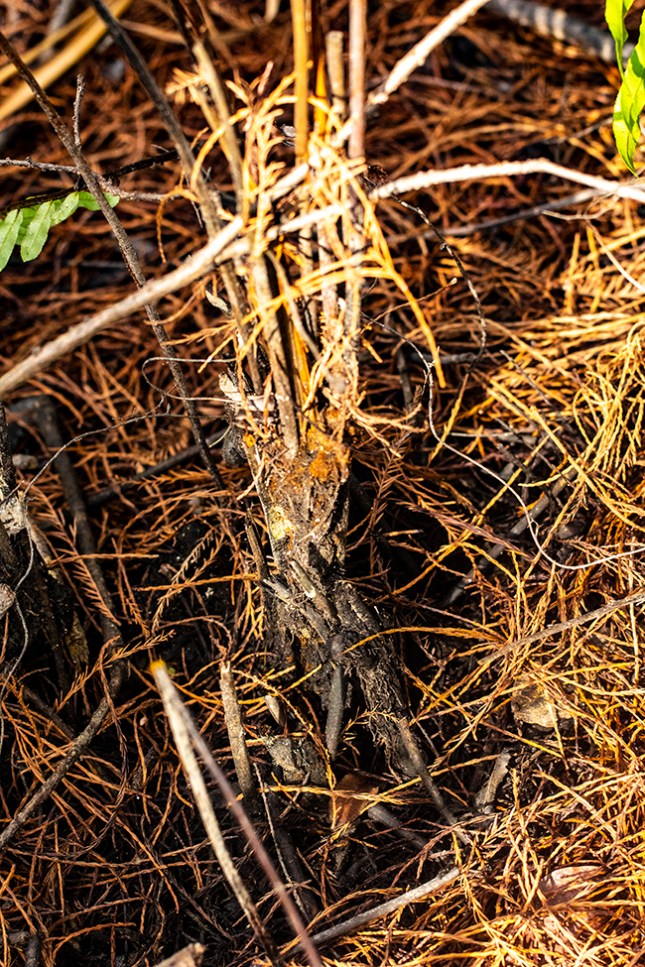
Base of the fern (leaf stalks on top) rising from the black pedestal.
The pedestal lifts the fern above the flood when necessary, and looks like it collects debris and microbes in its network of nooks and crannies. When the water is low, the pedestal becomes a reservoir of moisture and nutrients.
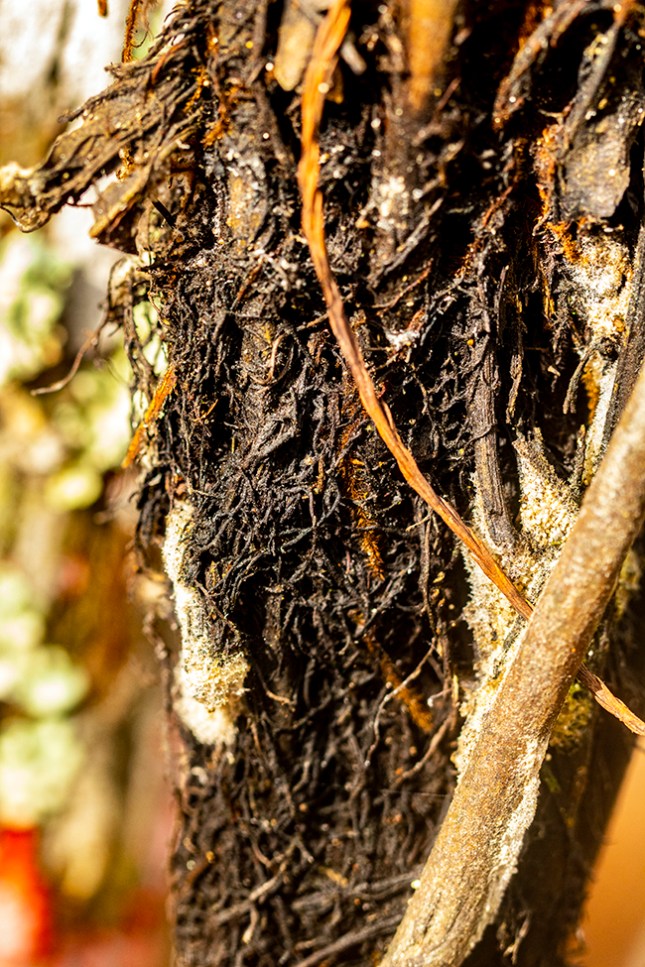
The pedestal is a mass of vertical rhizomes and roots all tangled together to make a tall sturdy sponge.
Among the blackened dead yet fibrous roots are living roots looking like they harvest water and nutrients from the spongy pedestal through which they creep.
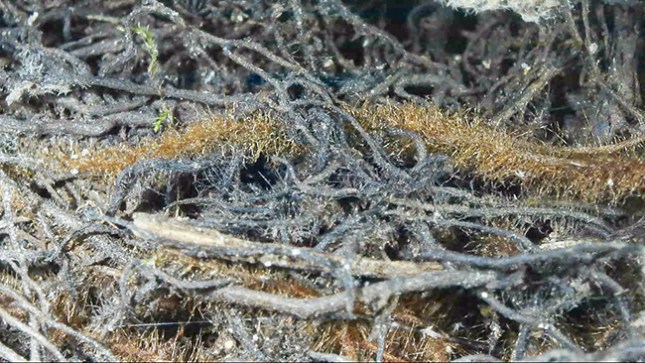
Magnified view of living root creeping through the blackened spongy matrix of the pedestal.
 John Bradford
 George Rogers
 George Rogers
 Dee Staley
 Treasure Coast Natives