Stenandrium dulce
(Stenandrium means narrow anthers. Dulce means sweet, probably in reference to the flowers although I detected no fragrance today.)
Acanthaceae, the Acanthus Family
For a variety of reasons I’ve let the blog lapse in recent months. But here we are with isolation time for nature. So today I took to the Covid-free swamps to re-find a large population of Sphagnum to help with a friend’s research effort. Plans take odd turns. Out of the shrubbery scampered a big mother feral hog with cute baby(ies) and stood her ground in the path making grumpy snorty sounds, so I headed in a different direction, passing Sweet Shaggytufts during my craven retreat. Now that’s a pretty species you don’t see every day, or every decade.
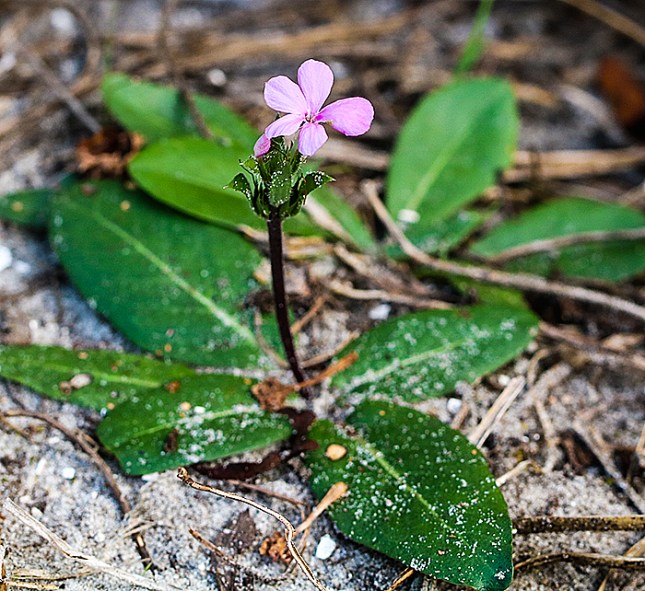
We live near its northern limit, in Georgia, from which the plant extends southward to Chile. Ask three observers what the natural habitat is, and you will get three different answers. It is one of the several species occurring locally that live like toads…starting out in water and ending up high and dry, often very dry. Despite being semi-“aquatic” Stenandrium turns up on hot sun-baked sand, such as it did today, even in deserts and similar circumstances. It spans both extremes, which is not unusual in South Florida. Additional amphibians coming to mind include Brookweed (Samolus ebracteatus), Hornwort (Mitreola petiolata), Small Butterwort (Pinguicula pumila), and Oakleaf Fleabane (Erigeron quercifolius).
Stenandrium forms rosettes flat on the ground, often lots of rosettes, apparently from self-seeding. It likes open space with no competitors and reportedly can maintain its social distance by making natural herbicides.
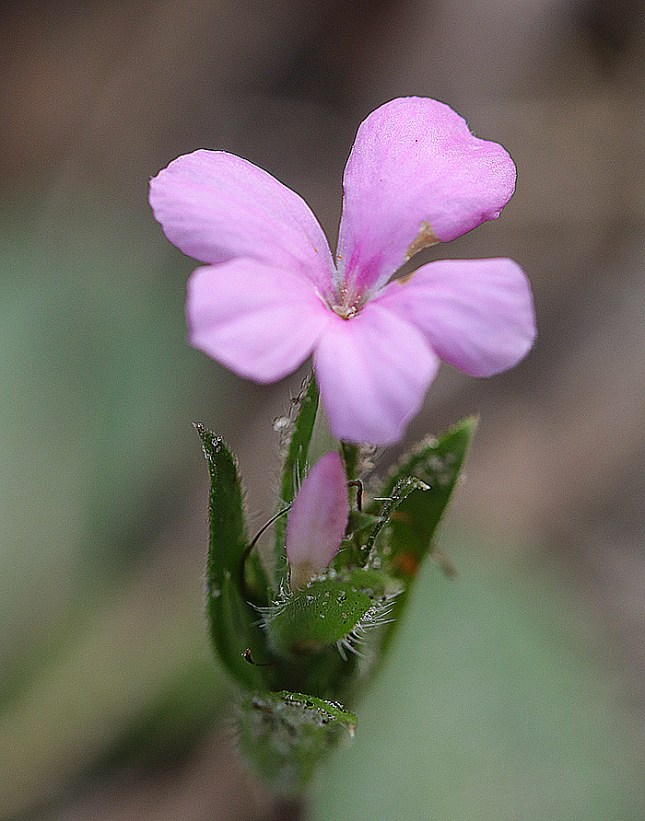
Today’s flower is a member of the large family Acanthaceae where the vast majority of species have microscopic pointy crystal-like structures in their leaves, called cystoliths. Nobody knows what cystoliths are good for, although discouraging herbivores is a distinct possibility. Stenandrium is in the small branch of the family without cystoliths, and (to speculate shamelessly) I wonder if the absence of cystoliths allows it to host the Definite Checkerspot Butterfly larva. Perhaps the missing cystoliths force the need for protection using the insect-feeding deterrent called benzoxazine. (Many caterpillars have the ability to tolerate and sequester toxins from the host plant.) Don’t eat the weeds.
Even in 2020 what pollinates those pretty pink flowers is unknown. Birds, wasps. and bees do not fit. Moths are possible. Butterflies seem most likely, and it would be fun to sit in the Shaggytuft patch awhile and see what flutters along. I might just try that…although waiting for pollinators requires more patience than fishing. Neither fish nor butterflies care about your timeframe.
 John Bradford
 George Rogers
 George Rogers
 Dee Staley
 Treasure Coast Natives