Phyla nodiflora
(Phyla comes from Greek phylon for a swarm, referring to the sprawling growth pattern. Nodiflora means the flower clusters are borne at the nodes.)
Verbenaceae
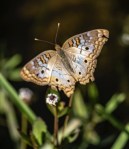
I did not really intend to watch butterflies today, but White Peacocks active all around forced the issue. They love Fogfruit which has appeared in this blog a few years ago, but what the heck, the bunny says do it again.
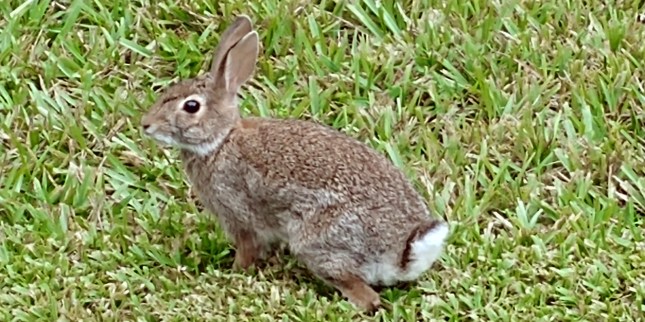
Why am I out just before a hurricane?
This plant is worldwide in warm climates. How it managed world domination is anybody’s guess. The fruit segments resemble small seeds, so it might move via wind, birds internally or externally, furry bunnies, and human activity. Floating stem fragments root along shores. In any event, it is everywhere warm and beyond, in the eastern U.S. as far north as Pennsylvania. Botanist Caroline Gross and collaborators recently studied its DNA to find the species originated in the Americas and spread naturally to Africa, to Asia, and amazingly to Australia. I mean almost certainly before seafarers could have brought it. There are not many plant species native to Florida and to Australia. Yea, right, just try to name one. This modest mat-former is a globe trotter.
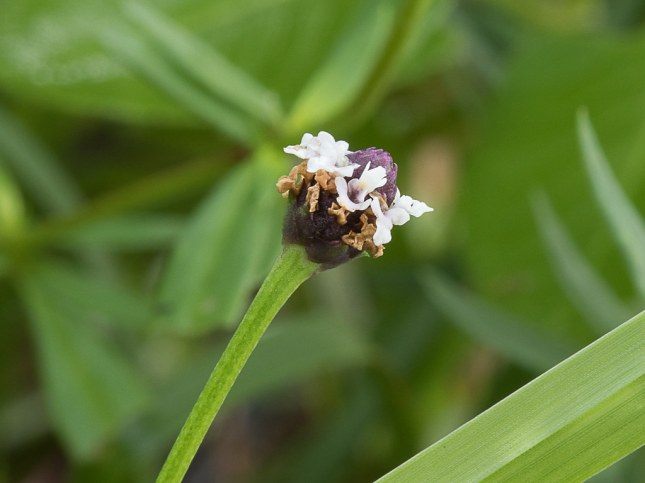
By John Bradford.
It loves moisture…so much that when a patch abuts open water, the watery side of the patch can be conspicuously more robust than individuals just a few feet away. The species is not restricted to wet places, occurring also in varied challenging situations, including dry sandy sites, dunes, and roadsides. Fogfruit can withstand flooding, drought, salt, and limited frost. Deep roots allow competition with grasses. When crowded by competitors, Phyla rises to the occasion, growing oddly tall, and when there’s no need to rise it sprawls into a mat. Some motivated folks use it as a turfgrass alternative.
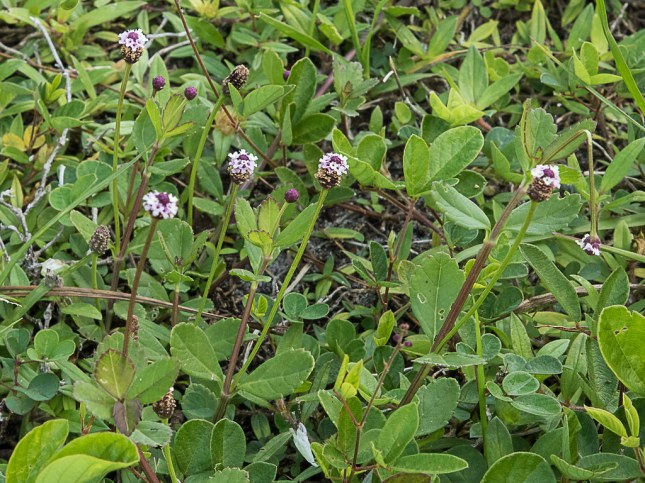
By JB
Other folks, lots and lots of them use it medicinally. Phyla is a little green chemical factory, is clearly bioactive, and is “all over” traditional medicinal uses. You could fill a boring page with 100 examples, such as dandruff.
What I really really like about the Phyla is its support for White Peacock butterflies. CLICK Along a canal near my home are scattered patches of today’s little weed, and every patch had a resident White Peacock. The master of each patch perches on the tallest stem motionless sometimes for several minutes and at other moments wanders around the area of a ping pong table enjoying the sweet Phyla nectar. A little internet research shows the patch-masters as males, each claiming a territory which they guard from interlopers, and invite female guests for nectar and companionship.
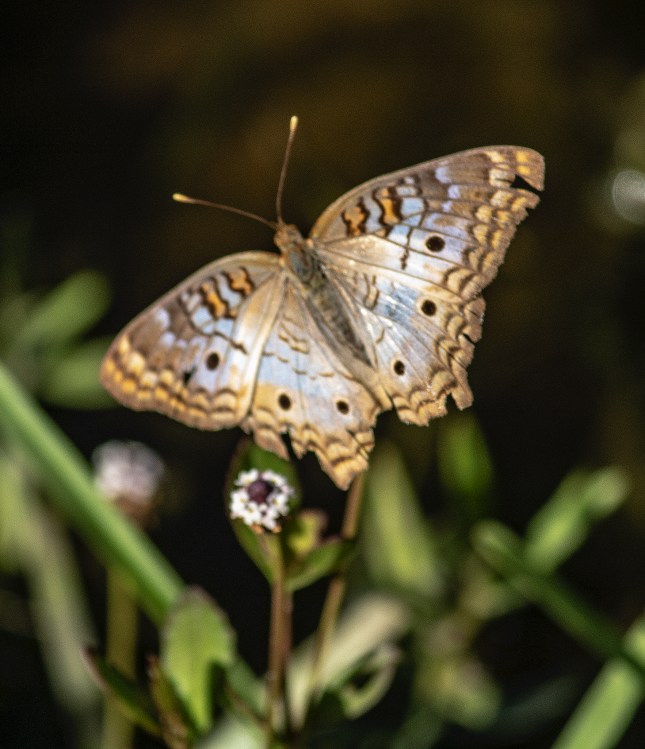
Having not much to do, trapped home by retirement, Covid, and approaching Isiasis, I sat by the canal with binoculars and fire ants, and trolled White Peacock sociology. I’m assuming with little basis every interaction I witnessed was male-to-male territoriality, except maybe for one long complex dance that seemed different, perhaps a dance of love. But setting tawdry sex aside, the males mostly stayed within their territories. It is possible to identify them individually by damaged spots and clefts in the wings, showing that after each encounter they returned to their proper corners.
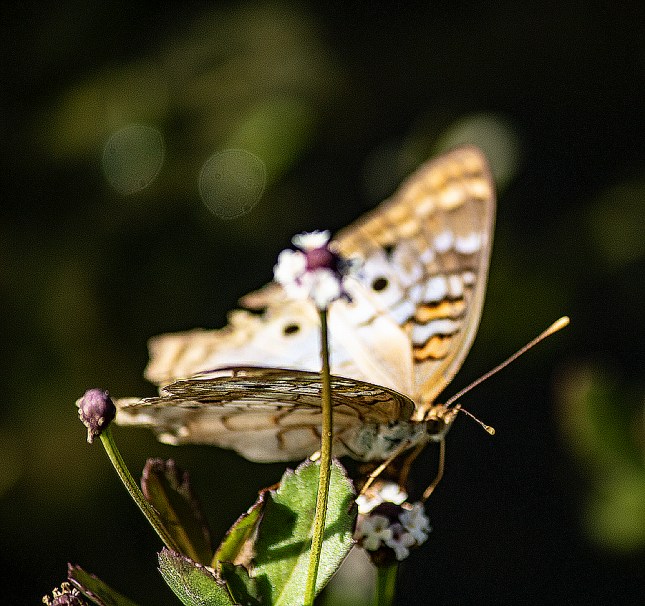
I watched two presumed males in particular in adjacent territories, Fred on the left and Joe on the right. They mostly minded their own business perching and grazing, but every now and then one would encroach a bit on the other, Fred mostly trespassing on Joe. Joe would signal Fred to bug off by means of a split-second chase. You can see it here CLICK slowed to 25% time. A third Peacock came along and set foot in Joe’s kingdom and got chased off with much more bluster than the routine Joe-Fred border incidents. The third party then went and tried Fred’s patch with the same determined result. Hope he found a patch of his own. Wow they are complex and beautiful. I don’t think I’ll ever spray another insecticide.
 John Bradford
 George Rogers
 George Rogers
 Dee Staley
 Treasure Coast Natives