Passiflora edulis, P. incarnata, P. foetida, P. suberosa
Passifloraceae
Yesterday John and George walked the Hawk’s Bluff Trail near Jensen Beach, Florida. The Bluff is a coastal dune of white sugar sand overlooking a vast and lovely marshy area, essentially Savannas Preserve State Park.
As we set off downslope we noticed a fruit resembling a giant yellowish egg dangling from a distant tree. As we approached we found the hillside to be smothered Kudzu-style with a massive non-native edible passionfruit vine (Passiflora edulis) smothering all in its path. So we took some photos of this overbearing plant and feasted on passionfruit like a couple castaways.
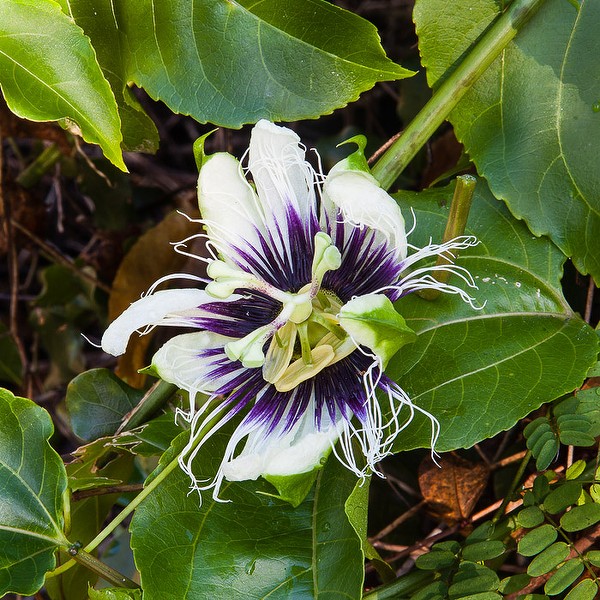
Passiflora edulis (by JB)
We all love passionfruits, but did you know some species have poisonous contents, even cyanide? Bioactivity might explain the prevalence of passionfruit extracts in traditional medicines in various cultures.
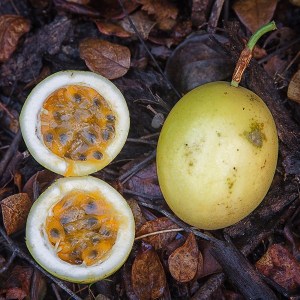
Yellow Passionfruit (by JB)
There are about 11 species growing outside of cultivation in Florida, some native, some not.
Now let’s get one thing straight, the passion in passionflower has nothing to do with lust. We’re talking about the Passion of Christ. According to legend, the Conquistadors interpreted the flower somewhat self-servingly as divine sanction of their conquest. I’m not going to repeat the interpretation of the blossom with respect to the Crucifixion here, as that account is all over the Internet.
But John and I didn’t contemplate religion or cyanide—we just enjoyed a little passionfruit and mosied along the trail. We did, in fact, discuss religion very soon thereafter, however, when we came upon this preview of Hell at the bottom of the hill. (For a more graphic preview you might enjoy Scaremare at Liberty University in Lynchburg, Virginia. CLICK LIKE HELL)
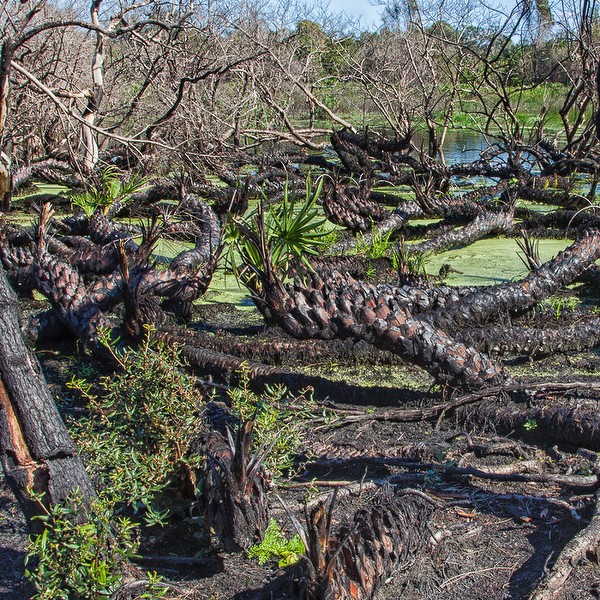
Twisted souls in Hades. (Well, okay, really Saw Palmetto stems after a fire at Hawk’s Bluff.)
Now before we go any further, let’s lighten up and get friendly with the basic construction of a passionflower. They are unique, they are complex, and they are diverse. We’ll use John’s side view of the non-native Passiflora foetida to explore the structure. The white (purple-tipped) fingers above the sepals and petals are called the corona (crown); these are appendages on the petals and sepals apparently responsible for advertising, and may help control access to the flower. The pedestal in the floral center is called the androgynophore; it elevates the stamens and stigmas. Look closely: the five stamens in this species spread from the top of the pedestal, and the three stigmas are just above the stamens.
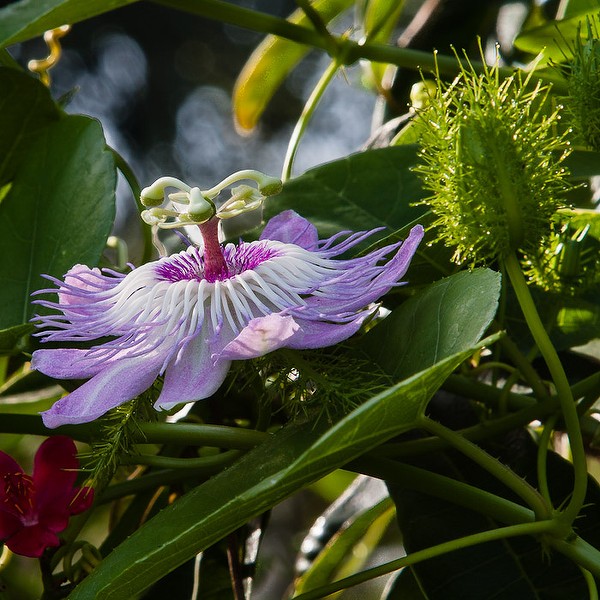
Passiflora foetida (by JB). Note the pedestal, with 5 stamens near the top and three stigmas.
To make it all more interesting, the parts move (not necessarily the same ways in every species). The best-known movement is that the stigmas start out well above the anthers, so that the visiting insect pushing under the anthers is merely dusted with pollen. Later, the stigmas descend to the level of the anthers or below and brush pollen off the visiting insect. In John’s photo above, the stigmas have dropped to nearly the anther level. More intriguingly, there are reports—in just one species known to me—of the entire pedestal tipping toward a visiting bird.
And who does visit? The diversity of pollinators matching the diversity of Passionflowers is dizzying: bees (mostly), wasps, hummingbirds, moths and butterflies, bats, and probably more.
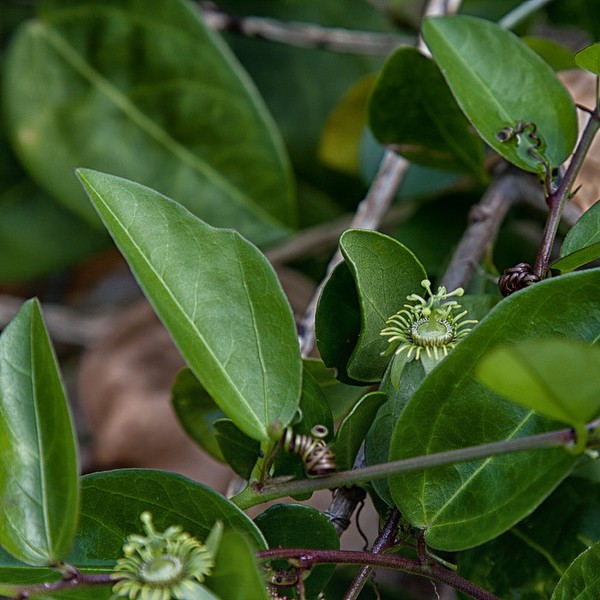
Corky Stem PV (by JB)
We started our hike with the big imposing Edible Passionfruit, and ended it with the modest native Corkystem Passionflower, favored among native plant gardeners as larval host for Zebra Heliconian, Gulf Fritillary, and Julia butterflies. Maybe that tough corky stem limits the larval devastation, which can be considerable. But what pollinates Corkystem Passionflower? This is one of the few species known to be compatible with its own pollen, which may help explain how it became an invasive exotic pest on the other side of the world. At least in some places wasps are the reported main pollinators. Butterflies visit the flowers too, and bees no doubt buzz in, although I can’t claim to have witnessed it.
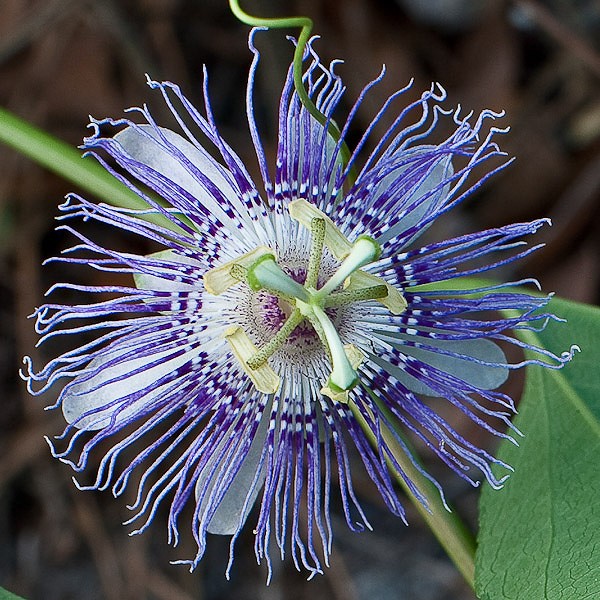
Native Passiflora incarnata (by JB)
 John Bradford
 George Rogers
 George Rogers
 Dee Staley
 Treasure Coast Natives