Cinnamon Fern
Osmunda cinnamomea
Osmundaceae
John and George used today for curriculum development and missed getting into the great blue yonder, but George’s Native Plants class Thursday seized the day in Jonathan Dickinson State Park to savor a dairy display of Milkworts, Elliott’s Milkpeas, and Butterworts mixed with the best crop of Grasspink Orchids (Calopogon species) I’ve ever seen there. High in the old dead pine tree near the Loxahatchee River a young osprey pondered humans from a safe perch.
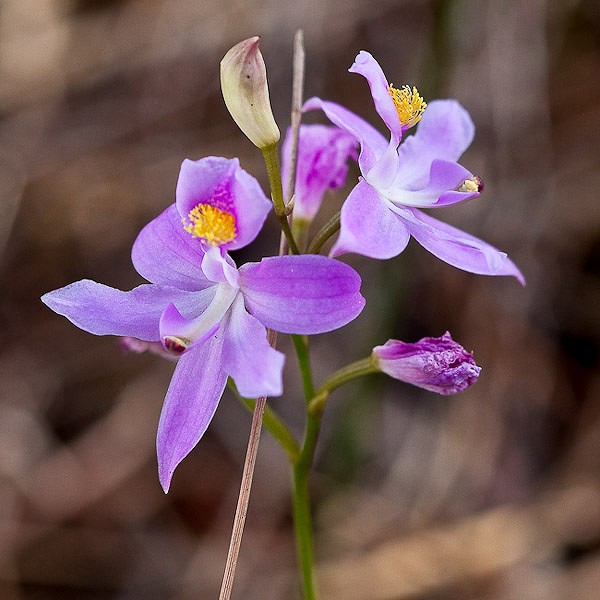
Grasspink Orchid (by John Bradford)
One of the standout species in Jonathan Dickinson Park is Cinnamon Fern, an old friend from earlier times in Michigan and Massachusetts. Partly because of their wind-blown spores, ferns often have broad distributions, in this case from the Arctic Circle across the Equator to southern South America, and from the U.K. (cultivated?) through Siberia to Japan. Fairly impressive! And we wonder why it is often impossible to specify if a fern is “native” to a given locale.
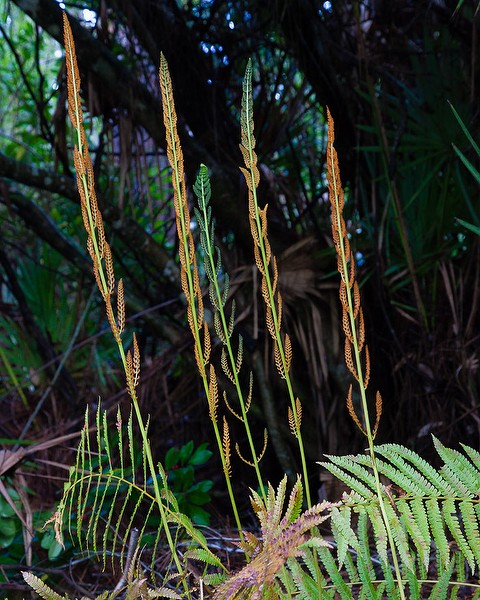
Cinnamon Fern with cinnamon sticks bearing spores (JB)
This is one pretty fern, popular in the garden as in the wild. The fronds stand about 2-3 feet tall in a tuft resembling a badminton birdie, and the cinnamon-colored spores form on giant vertical cinnamon sticks. Unsure of the identification? Peep where the leaflets join the main leaf stalk; there’s a telltale tuft of tomentum.
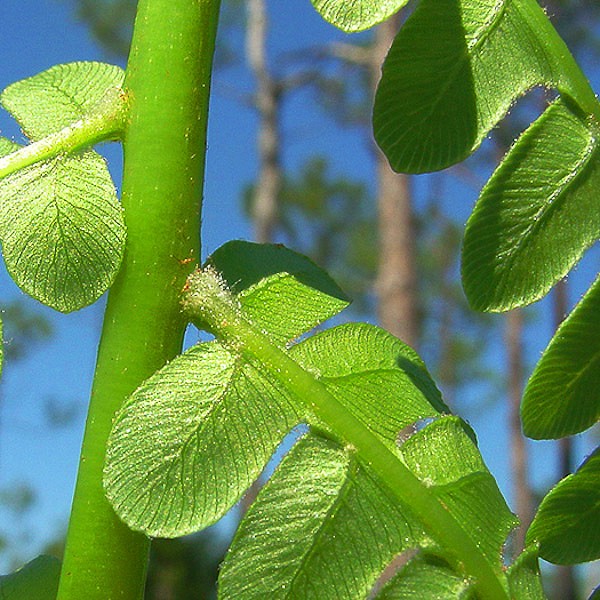
Cinnamon Fern hair tufts (JB)
Now a quick lesson on seed plants and ferns. Most land plants protect their most tender reproductive phase within a seed. But ferns have no seeds. Instead, their spores germinate, not directly into a new fern, but rather into a tiny tender plant the size of your pinkie fingernail or smaller, called a gametophyte (gam-EET-oh-fight). The gametophyte makes the eggs and sperms required to regenerate the mature fern plant we all recognize. The gametophyte is tiny, moisture-dependent, sun-averse, and oh-so-exposed and fragile. But hold on—not that tender and fragile. Cinnamon Fern puts the fight in gameto-fight.
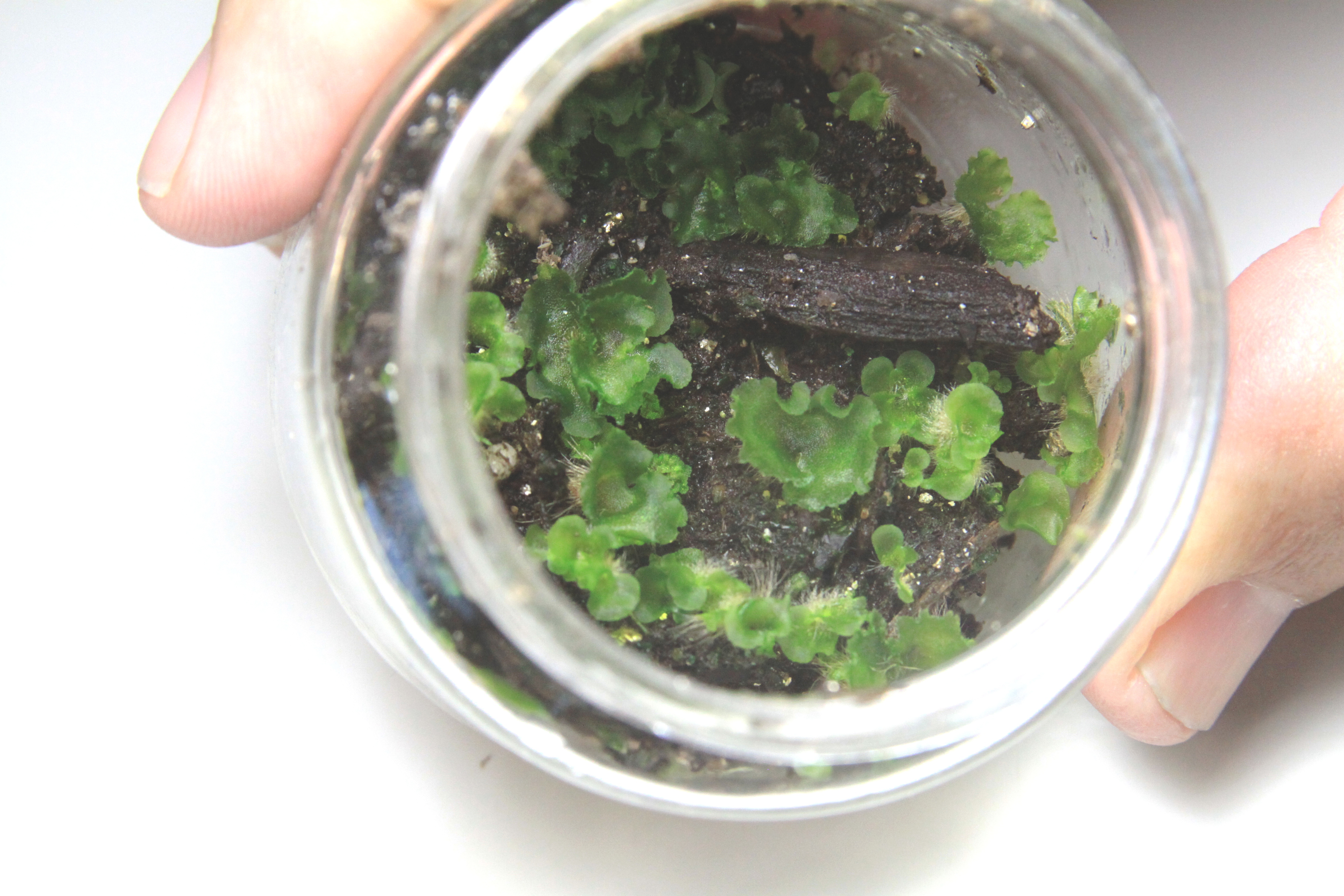
Fern gametophytes. Friends or foes? (by Evan Rogers)
Ferns compete like beasts in the jungle. And the best way to smite your ferny foe is to strike when it is young and tender. In short, go for the gametophyte! It’s bloody combat down there in mud. Recent research in the American Fern Journal showed Cinnamon Fern gametophytes get along dandy with other Cinnamon Fern youngsters, but if you mix them with gametophytes of a different species, somebody gets hurt. When you combine Cinnamon Fern gametophytes with those of another species, the competitor suffers a dramatic setback, even if all you do is water the competitor with water where Cinnamon Fern babies have been. Poison! But don’t start a fight if you can’t take a bloody nose—turns out the other species returns fire, giving our friend Cinnamon Fern a setback of its own.
Plant your spores and place your bets!
 John Bradford
 George Rogers
 George Rogers
 Dee Staley
 Treasure Coast Natives