Bejaria racemosa
Ericaceae
Today John and George beat the rain to the Haney Creek Natural Area in Jensen Beach, Florida, always a joy to visit with ponds, marshes, scrub, and pinewoods all jumbled. It was pretty there today, with Liatris starting to bloom, Cinnamon Ferns in morning sunflecks, and Tarflower showing off all around.
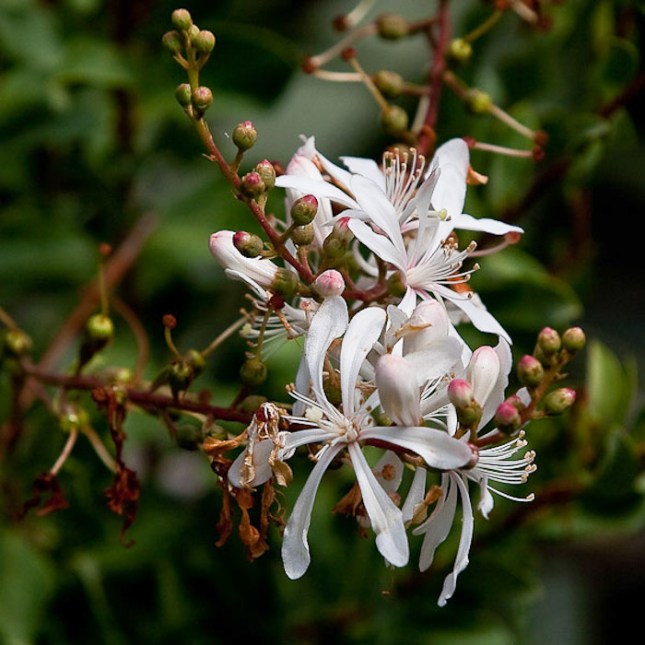
Tarflower as it looks in June. The photos today, except for some details to show specific points, by John Bradford.
Tarflower is a curious shrub in the Azalea Family representing locally a genus of about 15 species otherwise in Tropical America, mostly high-elevation South America. Good lookin’—with big white and pink-infused flowers aplenty, followed by woody capsules resembling sliced bundt cakes. So striking yet skimpy in the nursery trade? Reportedly a nuisance to propagate, and presumably fussy about its conditions.
If you live in the scrub your ecology is automatically interesting, and today’s species has notable quirks. You seldom encounter another shrub with a bristly-er stem, which makes Tarflower easy to recognize at any age, any season. An aphid’s nightmare.
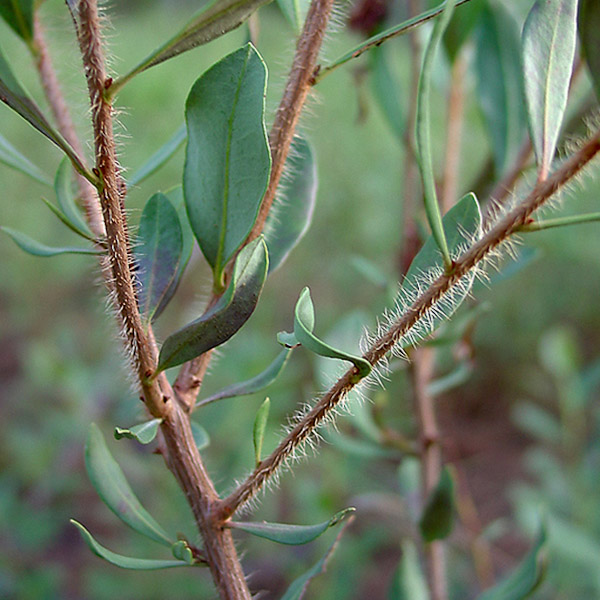
Bristly!
A more notable quirk gives the shrub its name. Clear, super-sticky viscous stickum covers the flower. Sometimes enough to form drops. It reminds me of freshly applied varnish.
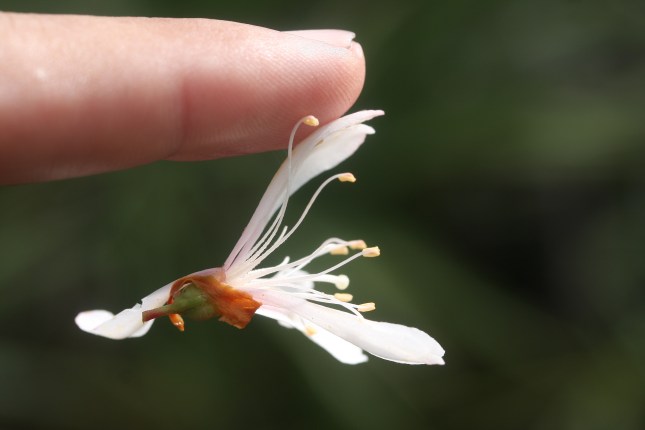
Strong glue
And why does the plant pump it forth?
Possibility number 1. The obvious first thought is it’s tanglefoot to protect the flowers. Cooties may come looking to munch soft petal tissue or to pilfer pollen. They check in, but don’t check out of the Tarflower Hotel. Wouldn’t it be something if the goo had insecticidal or antibiotic ability along with being passive flypaper? People who don’t get to Dollar General have actually used it as flypaper. (Remember that when you go off the grid.) Yes, arthropod stiffs often mar the delicate alure of the floral display. With no data or evidence, possibility number 1 disagrees with my hunches.
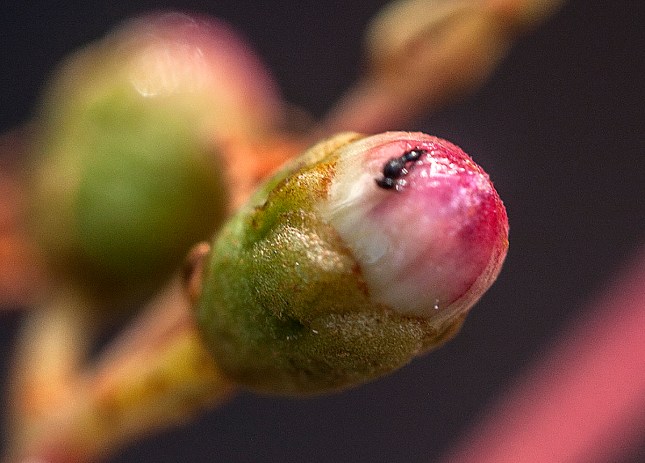
Shoulda listened to Mom!
Possibility number 2. Why do you varnish a picnic table? Tarflower makes big, abundant, kinda-delicate flowers in the nastiest conditions: wind, drying, pelting rain, withering heat, UV. John and I aren’t tough enough to stay in the scrub long. Maybe that stuff is Scotch Guard.
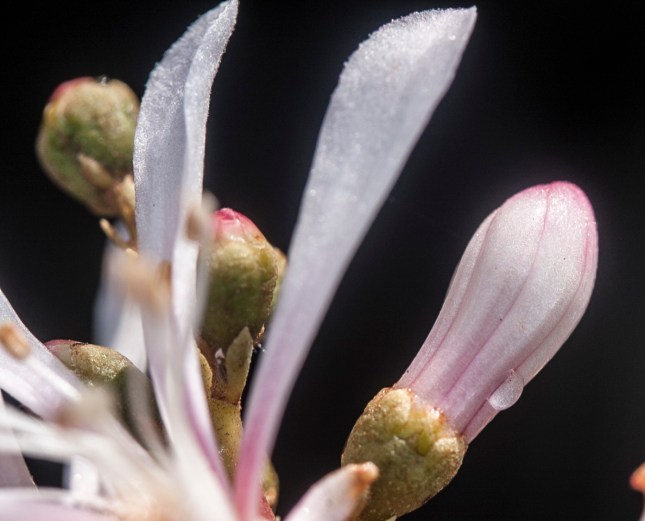
The plant makes a lot of the sticky syrup. Here it is literally dripping from the flower today.
Possibility number 3. Tarbaby bugs pegged to the posies suggest a third explanation, put forth long ago by the late Cornell University Professor Thomas Eisner, who has repeatedly suggested the shrub to be a carnivore. That may seem unlikely if you start wondering how ephemeral flowers might ingest flesh before they drop away. That dropping is the clue. Suppose the petals with attached insects fall to the earth where the roots and symbiotic fungi snag the buggy booty. There is probably much flower-to-ground recycling in the plant world. If the flowers arrive at the root zone bearing protein bars, well that’s nifty, especially on the nutrient-starved sandy soils where Bejarias abide. What we need in order to to check it out are radioactive flies to determine if their scintillating nitrogenous components wind up in the roots, shoots, and fruits.
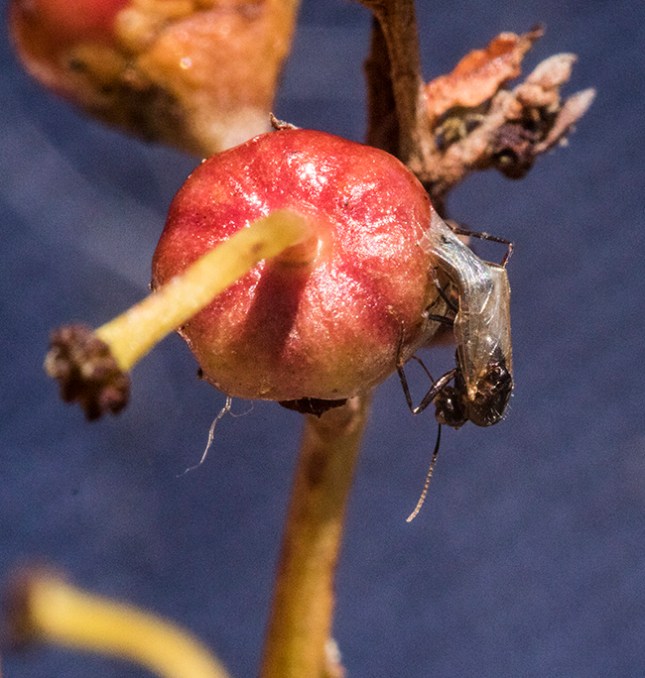
Glued to the fruit.
 John Bradford
 George Rogers
 George Rogers
 Dee Staley
 Treasure Coast Natives