(with many silly English names having to do with fogs, and frogs, turkeys, and tangled feet you see in books but never hear any real person use)
Phyla nodiflora (Lippia nodiflora)
Verbenaceae
Too hot and stormy for fieldtrips today, so John and I worked inside, where I learned a photo thing or two from the Master.
If you live in a warm region anywhere from West Palm Beach to India, chances are you can go outside and within a few minutes find Match Weed. There’s one near you. This pantropical weed grows anywhere it is warmish and not too dry, including sun, shade, lousy turf, canal banks, mud flats, and on and on. Some see it as a lawn replacement. Many see Phyla as a medicinal plant. It is related to the natural sweetener Lippia dulcis. To others it is an invasive exotic menace. Some sell it. Some sell herbicides to destroy it. And speaking of toxic herbicides, this plant makes its own to suppress the competition. Is the species native to Florida? Well, “native” is tough to pin down with worldwide weeds.
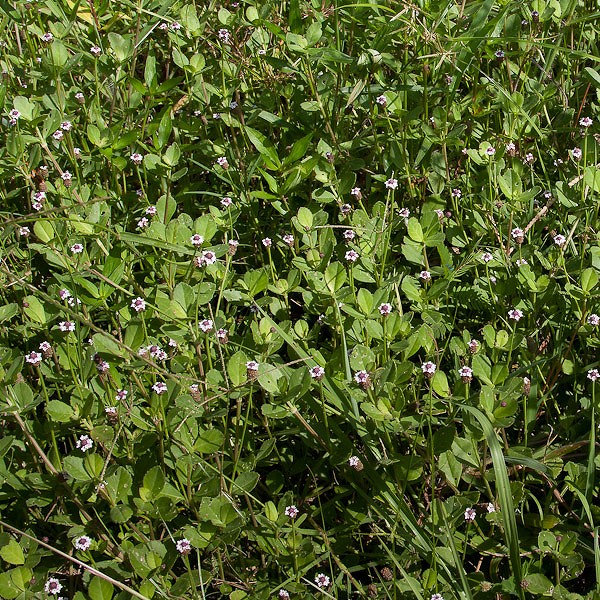
Photos, except microscope view, by John Bradford
This pretty plant is a mighty weed. A horizontal running stem scoots across the ground like a road seen from a helicopter, every few inches producing nodes (nodiflora) bearing a tuft of leaves, a cluster of roots, and a stalk a few inches tall with a compact flowering spike. Each node can “stand alone” if the sprawling plant fragments, or the interlaced runners can carpet the ground as a single genetic individual. Immortal.
If the weed decides to reproduce in a fashion besides fragmenting its stems, there is a plan B, plus a plan C to make baby Phylas. Fog Fruits. Frog Fruits. Turkey Tanglefoots.
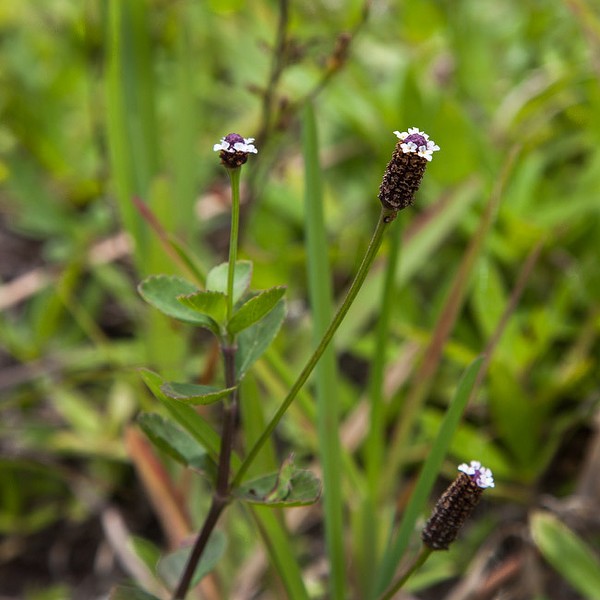
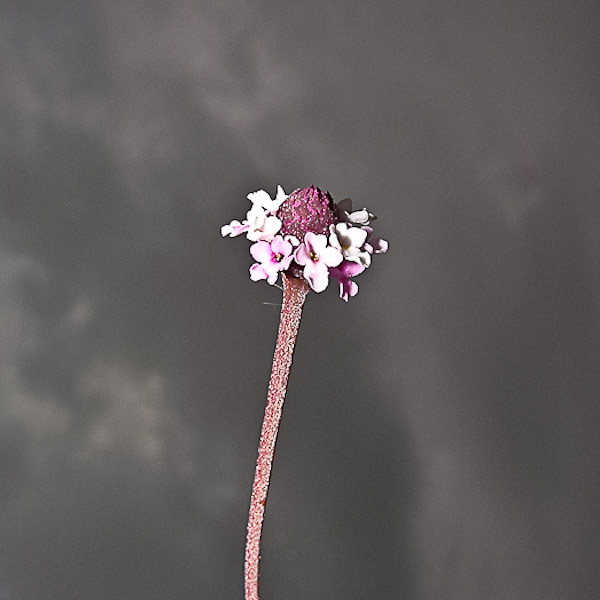
Plan B is good old-fashioned pollination. This is a “textbook” butterfly-pollination species, supplemented by reported suspected pollination by bees and even by ants. The anthers at the entrances to the teensie flowers near the ground are ant-accessible. The spikes mature slowly from base to top, having old spent flowers below and unopened young buds above. The flowers change color, as many blossoms do, first sporting a yellow eye, later transitioning to a purplish eye indicating altered nectar-availability status.
Plan C covers the contingency of no pollinators. A handy skill for a mobile weed, the flowers can pollinate themselves without help, thank you very much, and make seeds independently.
Matchweed has matchless eco-superpowers. It inhabits a sandy meadow behind my house, and yet you could find some far away in a seasonal lake bottom, or on nasty gypsum, or most remarkably in salty wetlands subject to occasional maritime flooding. A study from California found Phyla exuberance enhanced by increasing salinity to a point. The leaves have tiny salt-secretion glands. Pass the salt! No worries.
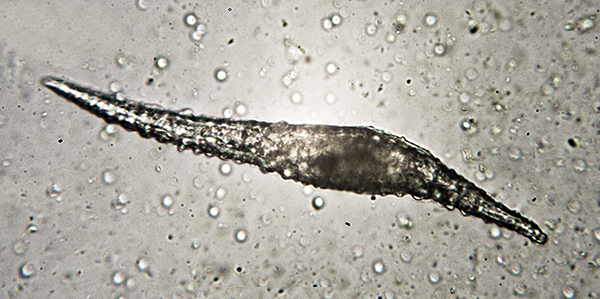
All aligned the same way, these bumpy anklebiters cover the underside of the leaf. I am not sure, but the scattered small dots might (might) be the salt secretion glands. Highly magnified microscope view.
Match Weed is not just a butterfly nectar plant, but also larval nursery for multiple species of lepidopterans, including the Common Buckeye Butterfly. Maybe all those caterpillars help solve a mini-mystery. On the undersides of the leaves are of specialized “hairs” all lined up in the same direction. The hairs are roughly T-shaped, broad at the center, and tapering to a sharp point at each end. Attached at the center they look much like the cleats used to secure a rope to the deck of a boat, if nautical cleats had wicked sharp ends. Or maybe that twirly spinning sprayer thing on the floor of a dish washer. Weird, and scary looking. Similar deterrents occur in other plant families, and are called “malpighiaceous hairs.” In any case, a caterpillar cruising the leaf and munchin’ the free salad might get the point.
 John Bradford
 George Rogers
 George Rogers
 Dee Staley
 Treasure Coast Natives