Juncus megacephalus
(Juncus is an ancient name for rushes. Megacephalus means big head.)
Juncaceae, the Rush Family
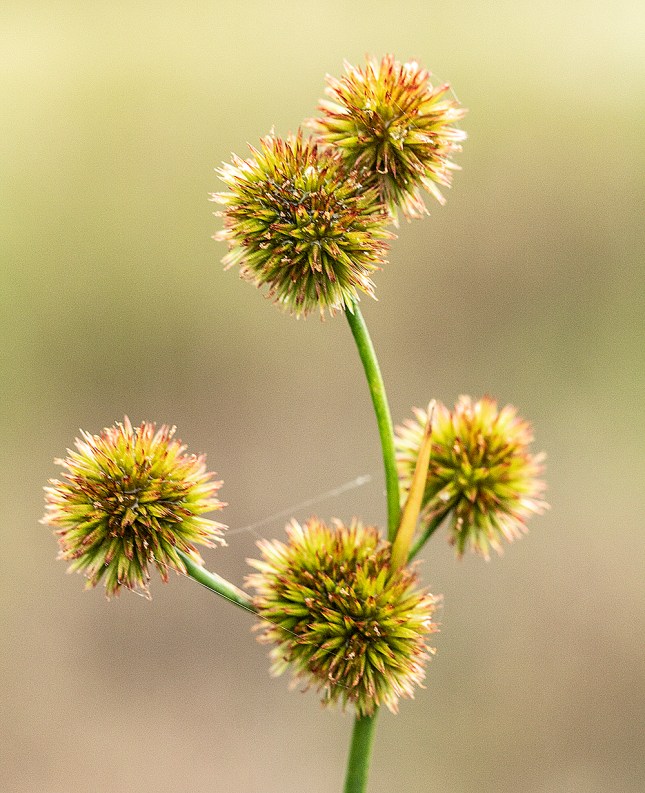
Sometimes a plant deserves attention for merely being a curiosity. Somewhat mysteriously, a number of marshy wetland species pack their flowers and fruits into spherical heads on wands that bend and blow in the wind, conking the ball-shaped heads into each other. Examples include Tracy’s Beaksedge, Sparganium, and today’s Bighead Rush. There must be something good in the marshy environment about globes. Gets the imagination going, although the benefit might be mutual protection of the flowers and fruits, circling the wagons, blocking pests, maybe holding water, or buffering temperature extremes. Does knocking together as the wind blows help with cross-pollination? Later, do the impacts help knock the balls apart and disperse the seeds?
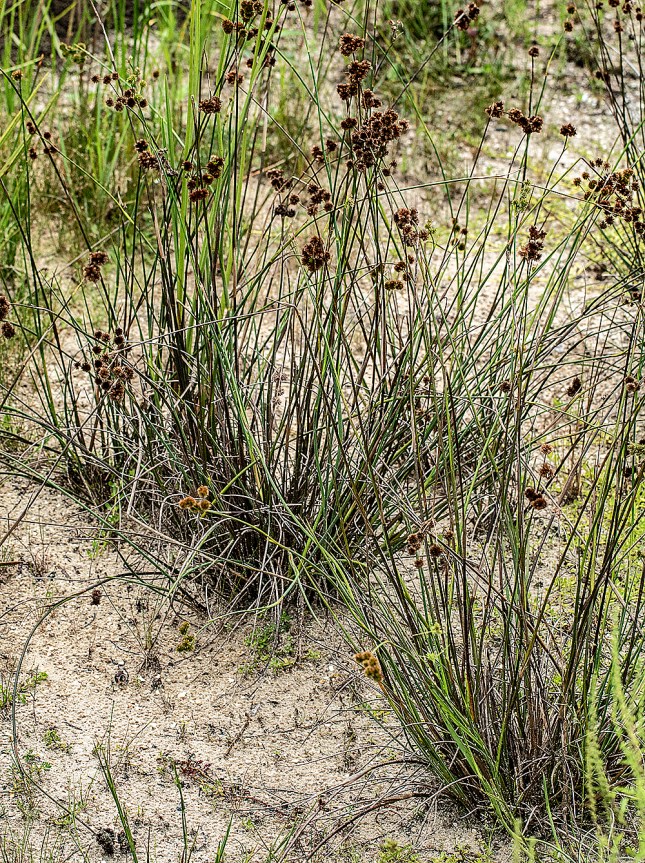
In any case, the well-named Big Head Rush is a prime example. The rushes dominate sandy/muddy shores inundated part of the year and exposed the rest of the year. In short, sometimes very very wet and other times in the miniature desert of a dried sandy shore.
The heads are not the only curiosity. Like many aquatic (and additional) plants, the base where the plant meets the earth is bright red. This phenomenon is better-known in more- prominent plants, for example, sugar canes, dyes coming from the leaf sheaths in some sorghums CLICK, , or red leaf bases helping to distinguish cultivars of rice. The red comes from pigments known as anthocyanins, familiar in red petals or in red fruits as attractants to pollinators and to seed-dispersers. Familiar also as “sunscreen” in young or stressed foliage. Recent research has shown anthocyanins to be also anti-fungal, so maybe reddish, or purplish, or blackish fruits are fighting fungi instead of just attracting birds..
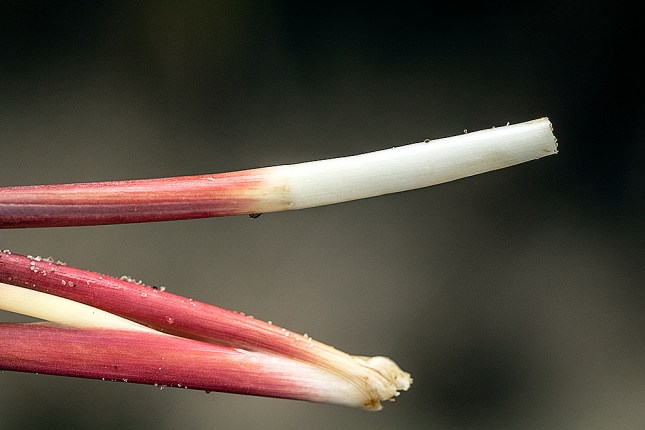
Bright red at the base.
Fungal protection makes sense where the plant meets the ground, perhaps especially so in species with wet bases for long spells. It isn’t just Bighead Rush. Similar red bases appear in the marsh in Xyris, Sagittaria, Alligator-Flags, and varied grasses and sedges.
Bighead Rush leaves look like knitting needles, technically called terete (teh-REET) leaves. That shape is often associated with hot, sunny, dry habitats where a normal leaf blade is vulnerable to drying and exposure. Actually it serves a purpose at both extremes…standing up to hot and dry when necessary, and during the wet season acting like an air-pipe being filled with soft porous material between reinforcing dividers, as in bamboo.
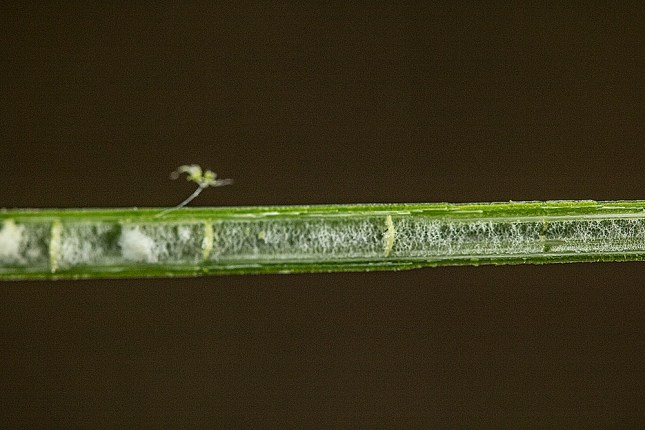
On the inside the knitting needle leaf is a reinforced air pipe.
 John Bradford
 George Rogers
 George Rogers
 Dee Staley
 Treasure Coast Natives
#/media/File:Sorghum_bicolor_14_DSCN0382.jpg)