Rainbows, Butterflies, and a Few Poisons
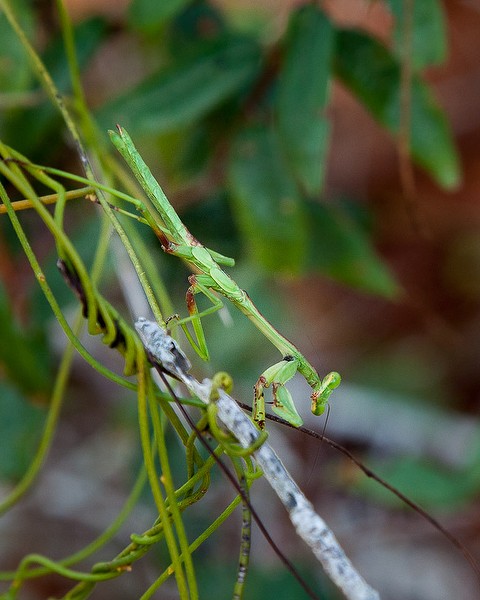
Praying Mantis
John and George today wandered Seabranch State Park the party-colored autumn wildflowers under heavenly heavens. Funny what you ponder while playing in Mother Nature’s sandbox. Today’s niggling thought was, “the flowers are spectaculous, but where are all the birds, bees, and butterflies?” Now this may just be imagination or merely rosy historical re-creation, but compared with earlier life experience, butterflies and bees seem sparser. Of course, “Silent Spring” documented Rachel Carson’s similar perception way back in 1962. The Eagles were dying in ‘62, yet John and I think maybe we saw one far yonder today. “Situation turned around,” we gloat. Not so fast there Polyanna.
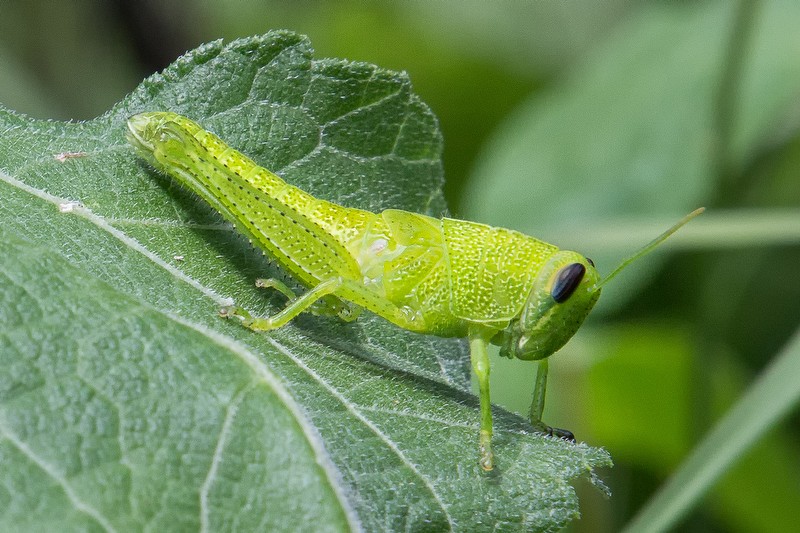
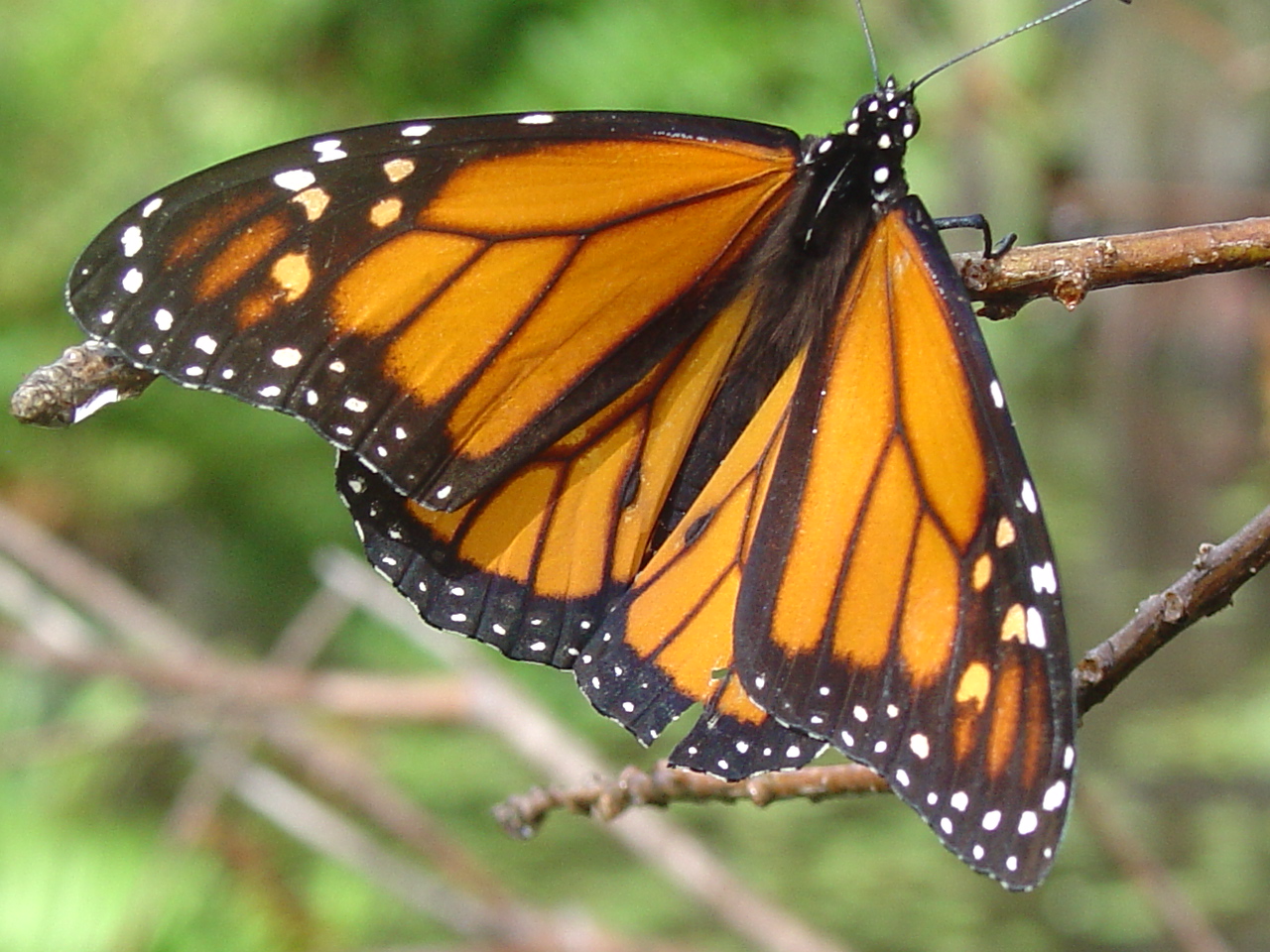
Katydid. Today’s photos by John Bradford (except maybe the butterfly. Forgot who took that picture.)
Pretend there really has been decimation in the Hundred Acre Wood. Who’d be surprised? Assaults to wildlife are beyond obvious: habitat loss, pesticides, climate change, and bioinvasion leap to mind. The mounting evidence against the popular neonicotinoid insecticides such as imidacloprid (Merit) in bee Colony Collapse Disorder is getting harder to sweep under the carpet. You don’t tug on Superman’s cape, you don’t spit into the wind, and you don’t dismiss lightly Harvard University research. But today it’s herbicides, not insecticides.
Don’t weed-killing herbicides kill just plants?
Not necessarily. Many herbicides have links to mammalian cancers, developmental deformities, endocrine disruptions, and more. Many to this day are chlorinated hydrocarbons, the very chemical class Rachel Carson indicted convincingly before we shot a man to the moon. The nation’s most-used weed killer, Atrazine, is a chlorinated pesticide in the water water everywhere. This billion dollar baby is implicated in amphibian decline, not to mention data indicating human toxicity. Even in the drinking water? You bet: Right here in the Sunshine State: CLICK. And I take little comfort in the notion of, “well, concentrations are low, so don’t sweat it. Let the BRITA snag it and don’t tell the Tourism Bureau.”
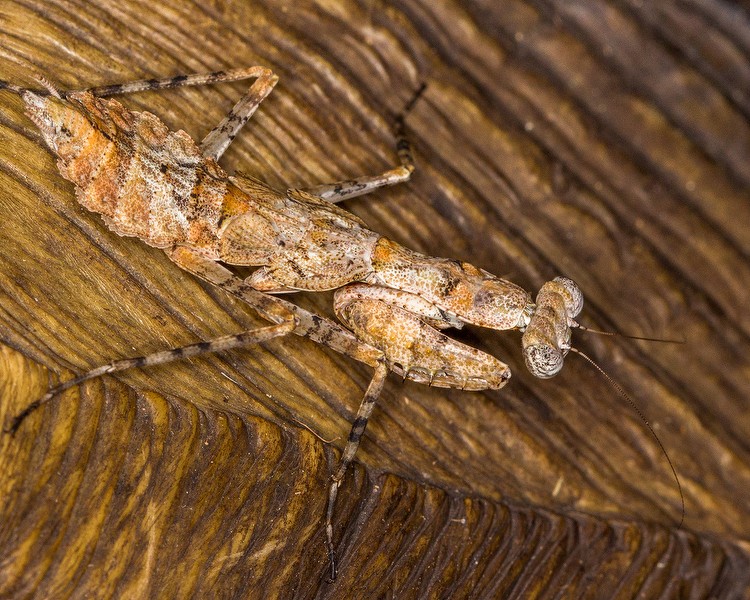
Grizzled Mantid
Continuing with the big question, don’t weed killers murder just plants? Answer 2. Plants are the salad bar at the bottom of the food chain. In that connection, a whole new herbicide familycalled sulfonylureas has crept up on us, although they are not widely known among the hoi polloi. Examples include Manage, Manner, the cutely named Sedge Hammer, and many more with active ingredients ending in –sulfuron, such as halosulfuron. These are touted as environmentally compatible, and may be the best of the SOB’s. Sulfonylurea herbicides have two potentially troublesome attributes: they are extremely water soluble, and they are jaw-droppingly deadly at snuffing plants. Agricultural doses can be as low as grams per acre. A little dab’ll do-ya.
So here’s the worry. Super-water soluble suggests slippage into canals and aquifers, although breakdown is probably rapid, usually. In the water AND lethal in minute quantities hand-in-hand wink at undermining microscopic plankton at the base of aquatic food chains. I am not saying this is happening on a Chicken Little scale. Just the opposite, you have to search under stones to find kindred neurotics. Yet we fret.
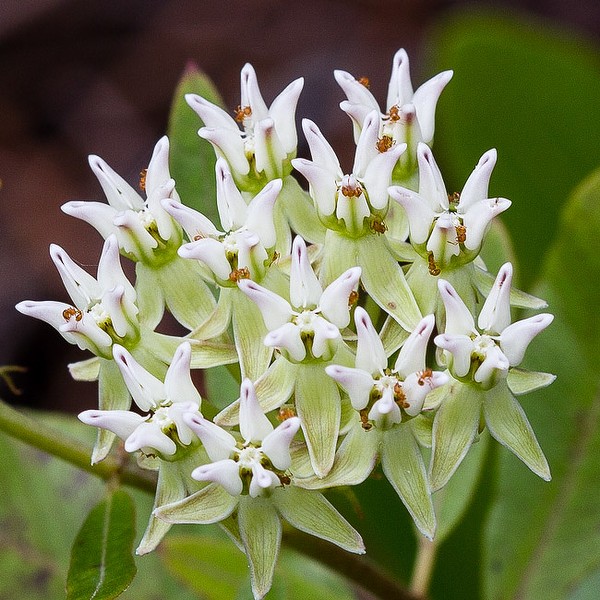
This Milkweed likes scrub. Do Monarchs like it?
Even if the watery ecological pyramids have rock-solid bases, here’s a parting gift. Monarch Butterflies are in decline. Have you noticed? Have you shrugged and muttered, “insecticides”? An article in Scientific American this summer (online June 2014) collared a different suspect: the weed-killer Round-Up (glyphosate). Monarchs breed on Milkweeds, predominantly in the U.S. Corn Belt.
The Corn Belt has been de-weeding itself with showers of Round-Up applied to crops Round-Up resistant GMO crops. The regional weed purge has spared too few Milkweeds to sustain Monarchs as we knew them.
What a freakin’ pity. Maybe it’s not just our imagination.
Where did the Milkweeds go?
 John Bradford
 George Rogers
 George Rogers
 Dee Staley
 Treasure Coast Natives