Answer: Capers
Jamaica Caper Capparis jamaicensis
(Caper nomenclature is a jungle. Even the family assignment is unstable. Good luck on “the” definitive names to use for capers. Jamaica Caper goes also as Quadraella jamaicensis, and is widely mis-dubbed Capparis cyanophallophora— a similar but separate species in the Caribbean and Bahamas.Those who mine the books and Internet will find even more names. The taxonomy has been mildly “unsettled.”)
Limber Caper Cynophalla flexuosa (aka Capparis flexuosa)
Spiny Caper Capparis flexuosa
John and George were unable today to undertake our usual Friday wilderness encounter, so, staying home, I spy Jamaica Caper in the front yard. It is a popular local landscape species, usually encountered as a shrub around here. In our former carefree lives in the Caribbean John and George, who lived simultaneously on separate heavenly islands known for offshore banking, enjoyed the species as a front yard shade tree up to 15-20 feet tall having a trunk 6 inches or more in diameter. Anything able to flourish on a limestone outcrop in the middle of the Caribbean is tough, which is one of the selling points of this species in landscaping: sun yep, shade ok to a point, drought-tolerant, hurricane-adapted, pruning-tolerant, fertilizer-free, pest-shunning, low maintenance, and yet always pretty and with color-changing blossoms in spring or early summer.
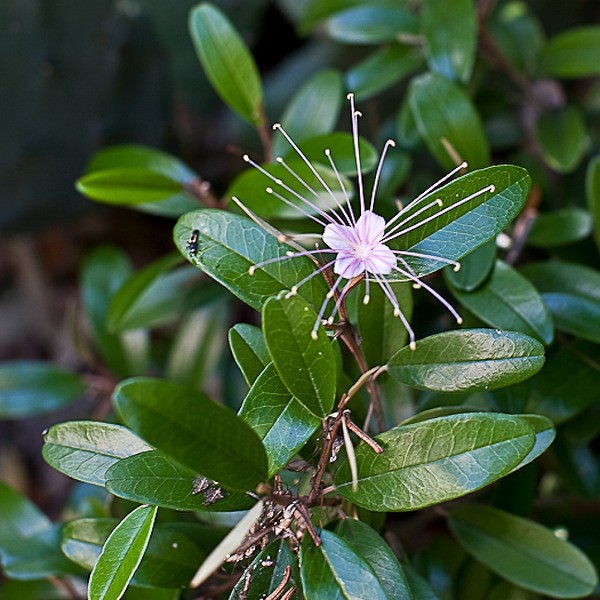
All of today’s photos are Jamaica Caper, by John Bradford.
Changes in flower color are common in the floral world. The changes are generally interpretable as signals to pollinators concerning nectar availability.
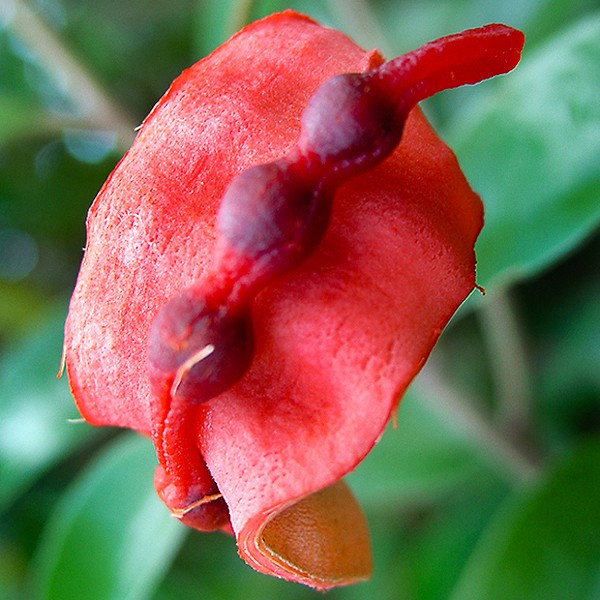
Few shrubs are easier to recognize: The leaves have a brownish-silverish scaly sheen beneath, the leaf buds resemble butter knives, the flowers are pretty big, bowl-shaped, wiskery with long stamens, and transition from white to pale pinky-purple. The pod looks like a bean, opening to reveal a red interior with blackish seeds. Hey, that came up recently in this blog. An added bonus of this species and Limber Caper is hosting the Florida White Butterfly. But this is not a how-to-garden blog, horto-info is available in spades by Google, so to avoid reinventing the caper let’s move on to other stuff, after a little geography.
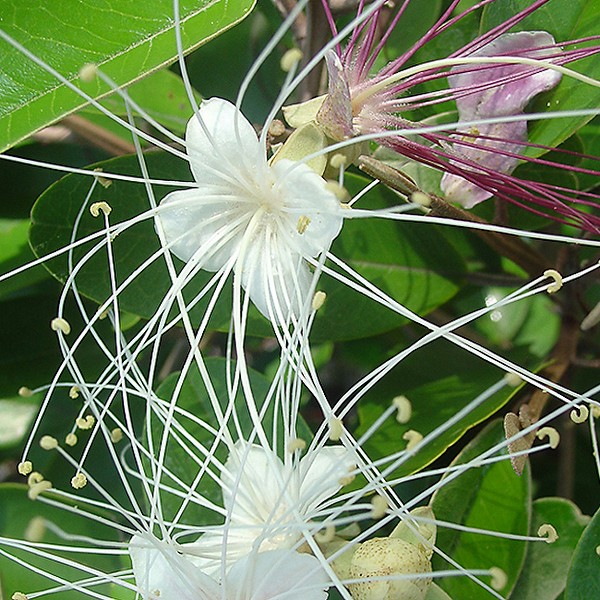
Jamaica Caper grows naturally from coastal central Florida through the Caribbean and Mexico to Central America. Limber Caper has a similar distribution, including in Florida. Limber Caper is, yep, limber-er, sort of a vine-shrub, and its leaves lack that silvery sheen beneath.
What’s that about the Western Wall? Plants sprouting from unlikely places are always fun, and the Western Wall in Jerusalem hosts a vertical flora of roughly half a dozen indestructible crack-dwellers. The prettiest is Spiny Caper, with flowers remarkably similar to our own Florida species, including the color change, and pod with that trademark red lining. Spiny Caper is the main pickled caper so heavenly on chicken picatta and salmon with lemon and caper sauce. My second-favorite food on earth after microwaved tofu is an anchovy wrapped around a caper.
Capers are flower buds, although the Capparis spinosa pod has a culinary life of its own. You can see similar buds on our own Jamaica Caper, but please when whipping up Pasta Puttanesca, visit the Piggly Wiggly and buy a jar of the real McCoy.
Spiny Caper has the confused taxonomy and unclear original distribution standard for plants with histories in prehistoric human commerce, dating back in archaeology, in ancient records, and in the Bible at least to varied ancient Mediterranean and Mesopotamian civilizations. It grows from the Mediterranean all the way to Australia and Pacific Islands. No doubt the earliest boats to criss-cross the Mediterranean had capers aboard.
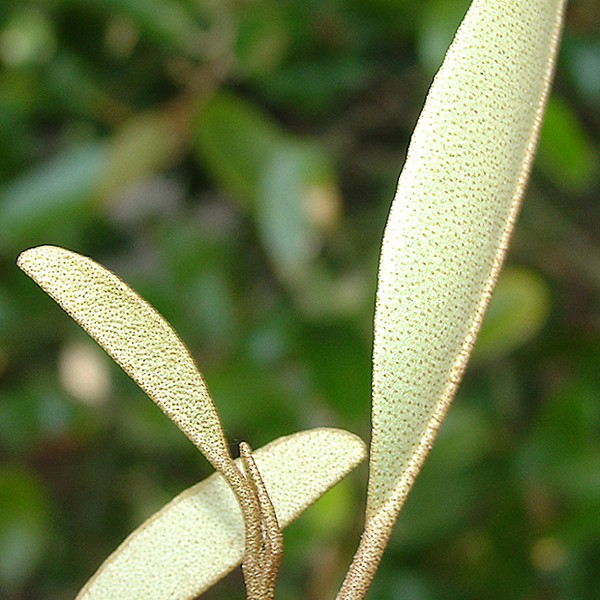
Butter knife buds ans silvery-browny under-leaf scales on Jamaica Caper
 John Bradford
 George Rogers
 George Rogers
 Dee Staley
 Treasure Coast Natives