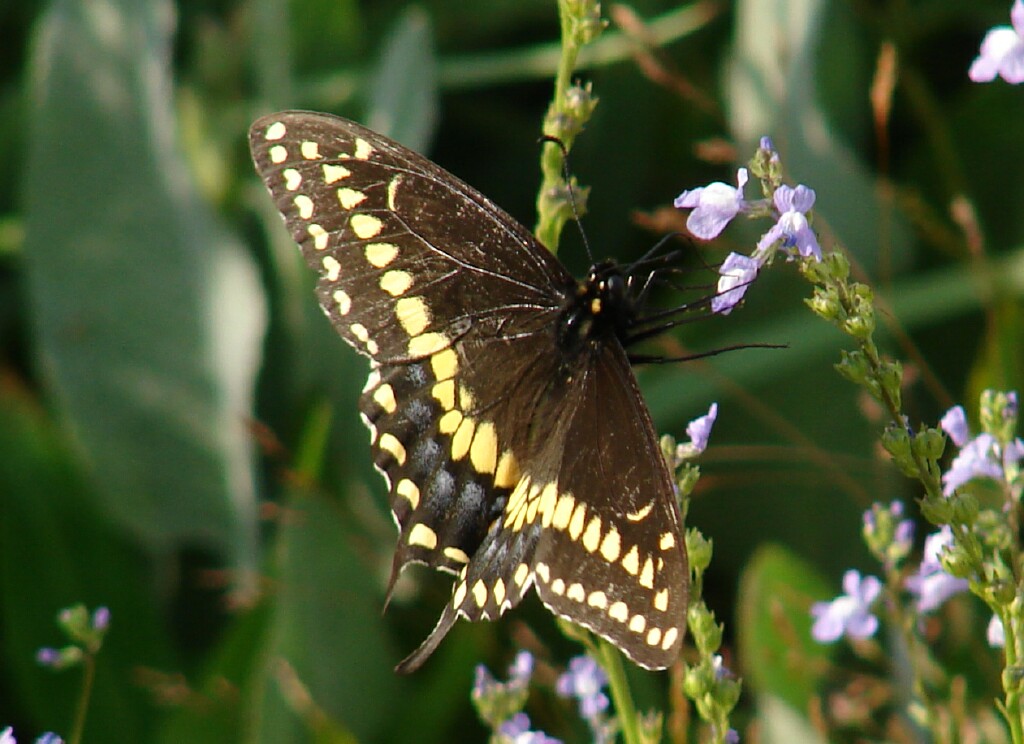
Linaria canadensis
(Linaria comes from Linum, for flax, with similar leaves. Canadensis means lives in Canada)
Plantaginaceae (traditionally Scrophulariaceae)
Blue skys and fragrant breeze like paradise today, so John and I tackled new swampland with a disapproving Osprey complaining from a branch above. There’s a babbling brook (cynics might say “drainage canal”) leading through the jungle to the St. Lucie River, and on its shore waving in the breeze is a svelte blue wildflower, Canada Toadflax. Pretty as a picture.
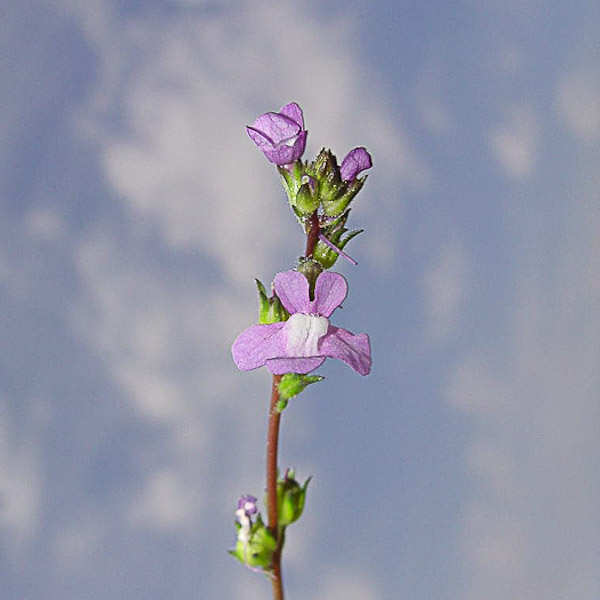
Canada Toadflax by John Bradford
This short-lived annual or biennial native likes open sandy habitats across the eastern and central North America and Canada. One of its habitats is lakeside dunes around Lake Michigan. Looking farther west, the flower is absent or nearly so from the Great Plains and desert regions, and then oddly reappears toward the West Coast, either naturally or by the hand of humans.
Lounge Lizard
The Toadflax blossom sports a long skinny tube (spur) dangling behind like a ponytail. The spur is longer than the rest of the flower, and has the diameter of a needle. Somehow the flower sequesters its nectar deep in the spur. It is lock and key: only the insect with the right “drinking straw” can reach down to the secret nectar cache. Others—scram!
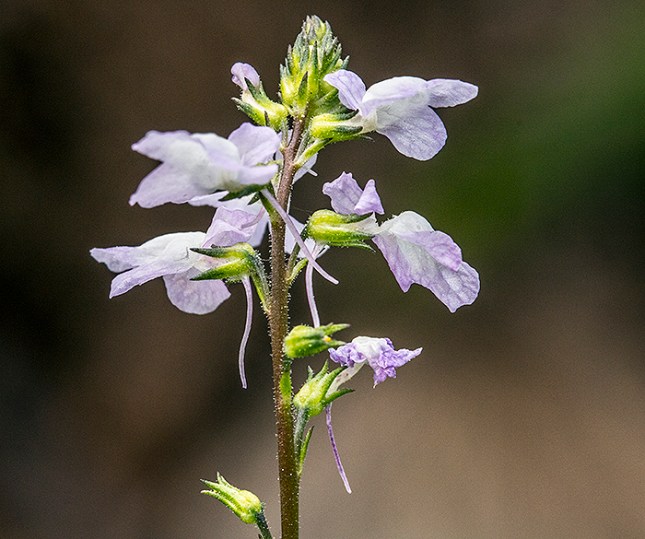
Who’s “straw” reaches deep into those spurs?
We all cry out in curiosity, find the foot that fits the glass slipper! Who get’s the sweet reward?
Like my safe deposit box, there are layers of security before inserting the key. The front door to the flower is closed, so not only must the customer have the right long skinny key, access to the spur requires pushing the outer door open. The floral portal resembles a snapdragon…snapped shut.
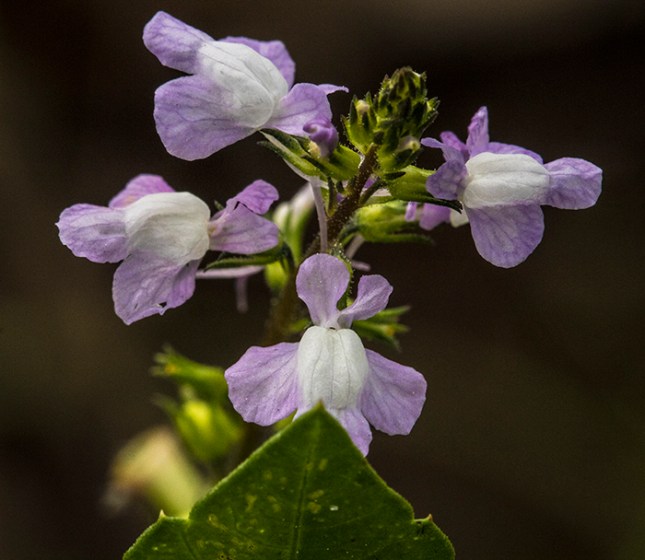
You gotta get the door open in order to probe the spur.
The flower “wants” the door opened by the correct visitor because the well guarded route to the nectar passes by the pollen-making anthers and the pollen-receiving stigma. The authorized pollinator must be able to get in the door, and then drop off and pick up pollen, and then nail the tasty treat in the spur.
The native insect with the tongue long enough for the spur, and muscular enough for the door is the bumblebee.
However….butterflies participate too. They can plumb the nectar slipping their needlelike proboscis under the door. If the probing proboscis effects pollen exchange is anybody’s guess. They seem to cheat a bit.
Not every flower needs a buggy helper. Botanists long ago realized that Canada Toadflax makes some perpetually closed flowers never to say hello to bee nor butterfly, yet able to form seeds and fruits. Why possess such non-conformist flowers?
To counter a conundrum. On one hand, the showy blue “normal” bug-visited flowers are delicate yet costly. On the other hand, the nasty sandy habitats dry out in hot weather, cutting the resources to make normal flowers, and resulting in decline to death.
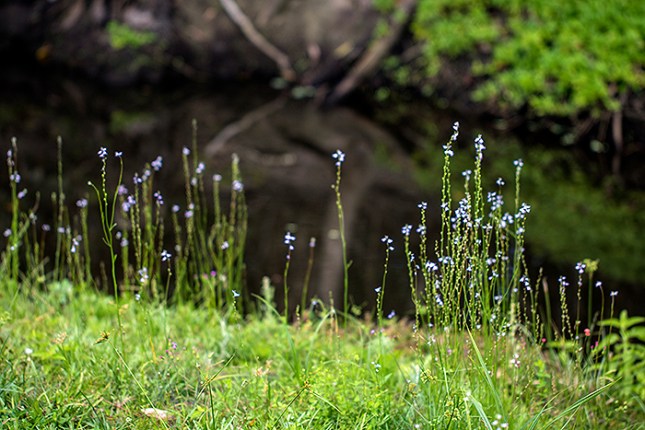
Living on the streamside sand…getting dry.
No problem.
Declining branches during drought, smaller than those made in good times, continue flower-making. But they go to cheap quick tough little non-opening colorless flowers. These back-up blooms pollinate themselves, short-circuiting the time, expense, and growth required to attract bees and butterflies. (They are called cleistogamous, kliste-OG-ah-muss flowers, closed, as in “cloistered.”)
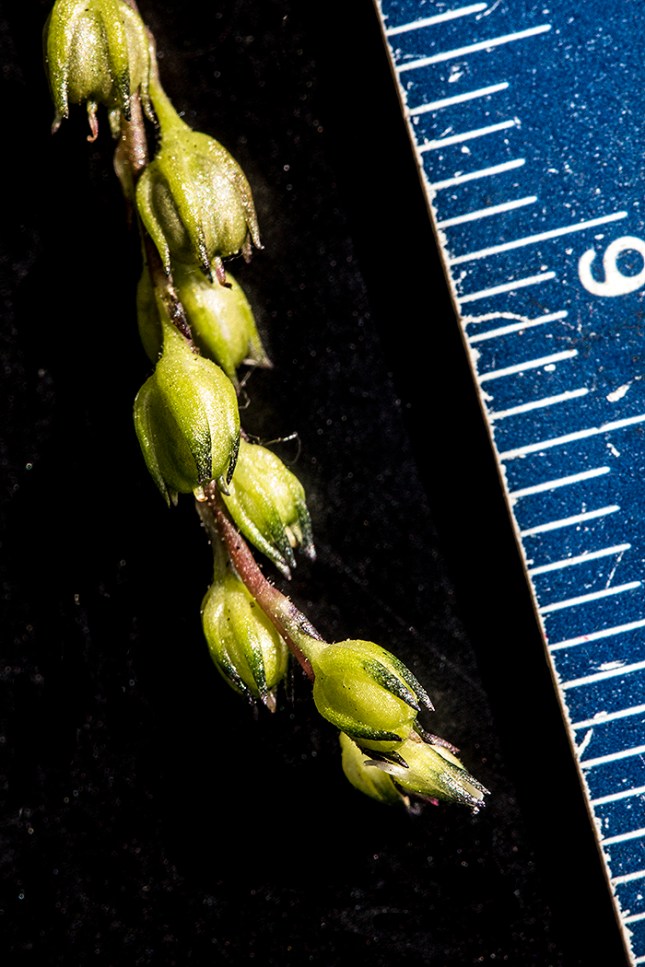
Cleistogamous flowers. On this stunted spike note the decadent progression from the buds at the tip (lower right) to maturing fruits (upper left) bypassing the blue “normal” flower phase, thus skipping insect pollination.
Cleistogamy is not an either-or situation. As conditions dry out and as stems decline, the flowers diminish progressively through what one botanist called “decadent” stages, with pure insect-pollination at one end of a spectrum and pure cleistogamy at the other. There are tweeners. It would be interesting to alter the balance by adjusting growth conditions.
Such a back-up system when times get tough is handy for an annual or biennial living on borrowed time, dreading the drought.
——————————————————-
 John Bradford
 George Rogers
 George Rogers
 Dee Staley
 Treasure Coast Natives