Polygala balduinii
(Polygala means much milk, from the belief that these plants promote lactation. William Baldwin was a physician and botanist active in Florida and in other states.)
Polygalaceae
Today John and I continued to fuss and fume over mangroves and soil salinity in Hobe Sound. Adding to the experience, at this moment in flower all about the wet meadows are pretty and smelly Baldwin’s Milkwort. Smelly because the plants upon bruising perfume the air with essence of wintergreen.
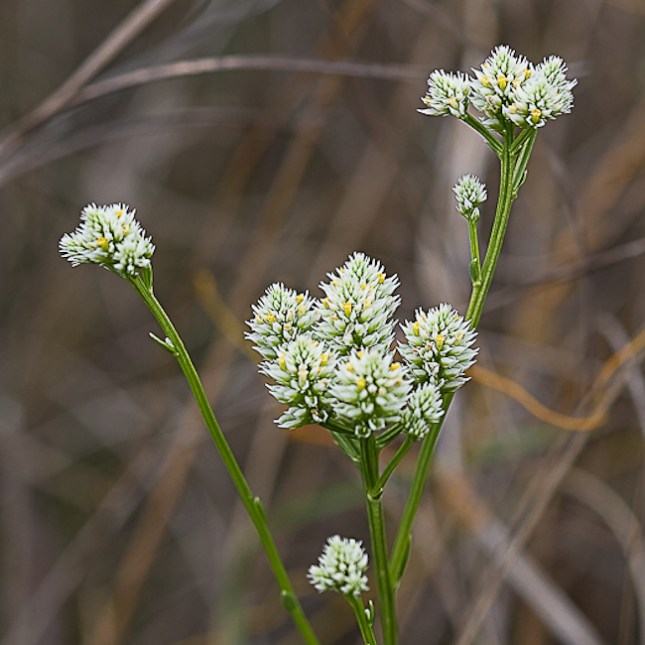
Polygala balduinii by John Bradford
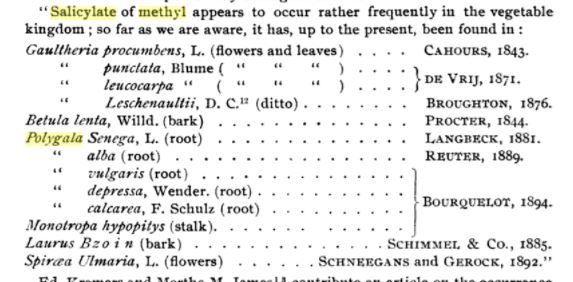
Wintergreen oil is methyl salicylate. We buy the stuff to relieve discomforts, such as by rubbing it on the skin. Big surprise…chemically the oil is essentially aspirin, likewise a derivative of salicylate, aka salicylic acid. The methyl salicylate is bound in the intact plant to sugar, and in that condition remains in odorless reserve, until physical injury unleashes an enzyme able to separate the wintergreen from the sugar, setting the fragrance free.
Salicylic acid is not merely a human pain reliever, it is also an air-borne hormone alerting the rest of the plant to prepare its “immune system” for attack. Not sure, but probably that’s what the wintergreen fragrance release upon injury is all about. Wintergreen and Polygala are not the only plants to bear methyl salicylate. Here is the state of the art in 1898:
The Polygala balduinii today was so pretty, having heads of bright white flowers, each with a tiny yellow center, we had to wonder what pollinates it. No answers on Google.
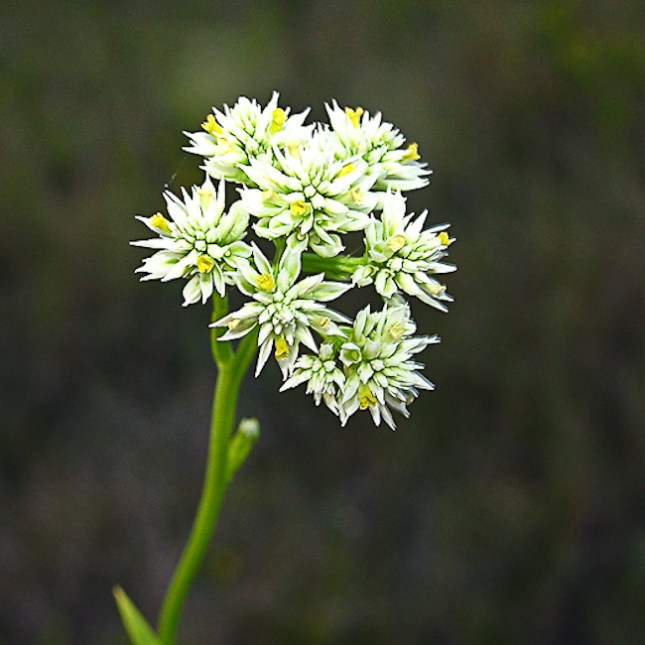
By JB
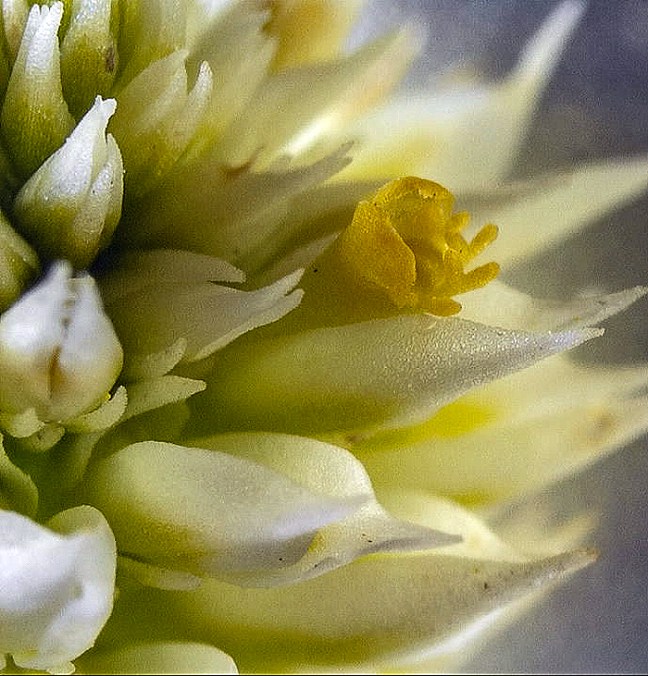
We hung around awhile to try to spot pollinator action. Although we saw no pollinators, we did encounter somebody else likewise waiting for a floral visitor…an Ambush Bug loitering among the flower heads.
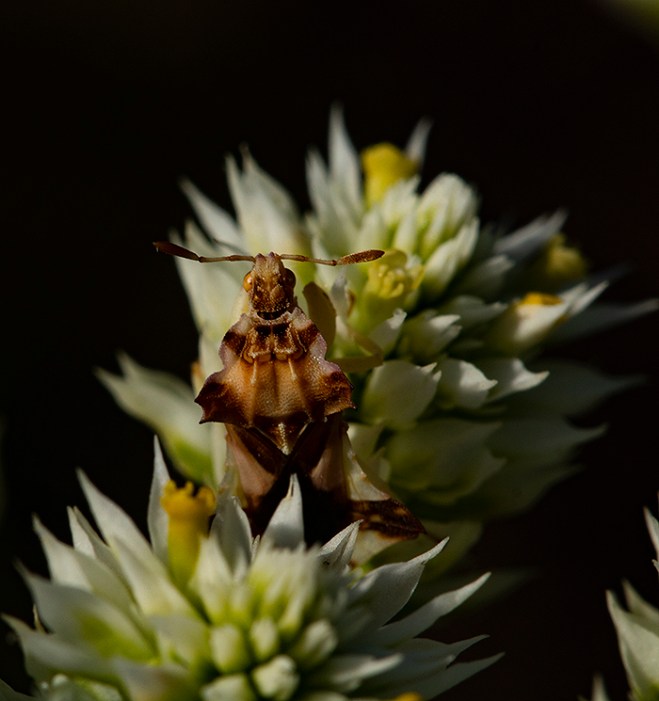
Ambush Bugs live up to their name, waiting among the attractive flowers to waylay an innocent pollinator who comes a’visiting. These ambitious little ner-do-wells grab prey vastly larger than themselves, including honeybees, small butterflies, and roosters.

 John Bradford
 George Rogers
 George Rogers
 Dee Staley
 Treasure Coast Natives