Osmunda spectabilis (and additional species)
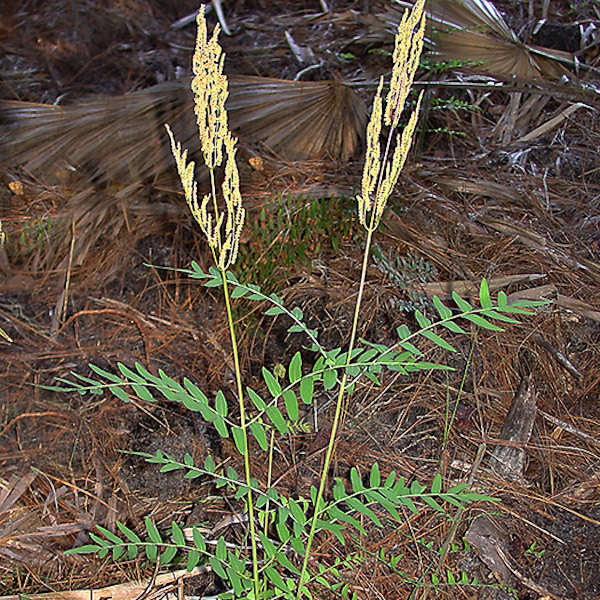
The genus Osmunda, containing Royal Fern and Cinnamon Fern, both native locally in swamps, dates back to the Triassic Period and probably before. How long ago was that? Oh, roughly 250 million years, underfoot with dinosaurs and almost twice as far back as flowering plants. Depending on how you define “humans,” very roughly 100 times older, gve or take a few eons. Turtles first appeared during the Triassic. Florida was separating from Africa. Been awhile.
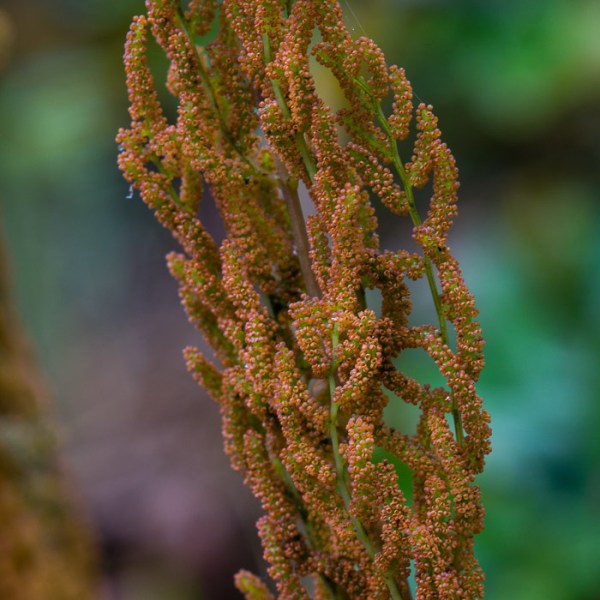
Spore-producing portion, John Bradford
Given that they predate the full separation of the continents, and given that dust-sized fern spores fly on the wind, no surprise Osmundas are almost worldwide, although mostly in the Northern Hemisphere.
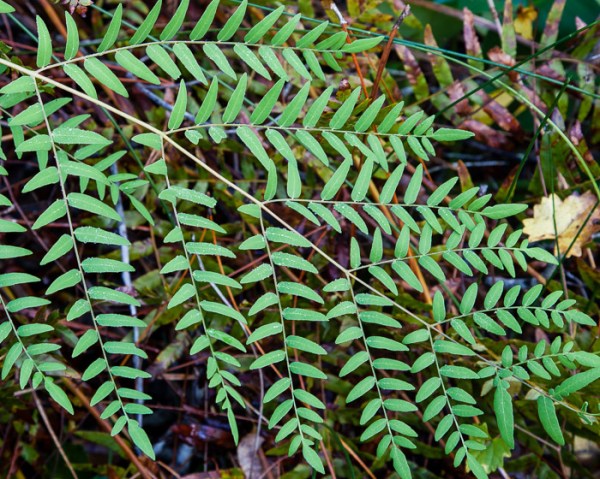
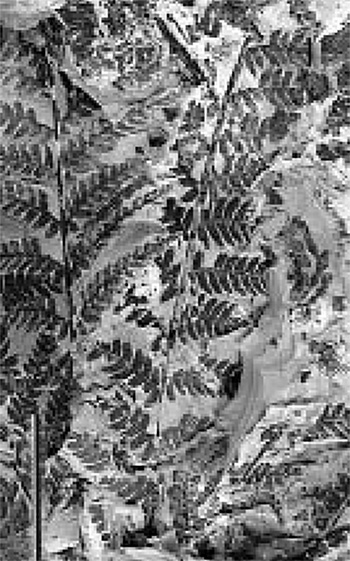
Top: Modern Osmunda by John Bradford. Bottom: Mesozoic Osmunda by Carlie Phipps, Am. Journal of Botany 1998
Being a living fossil is marvelous, sure, but what fascinates me more are extinct Osmunda tree ferns. Among modern ferns, not in Florida, there are tree ferns as large as palms. These modern tree ferns are not related to Osmundas. But…..long ago and far away Osmunda ancestors were themselves tree ferns, having evolved tree-ness on their own.
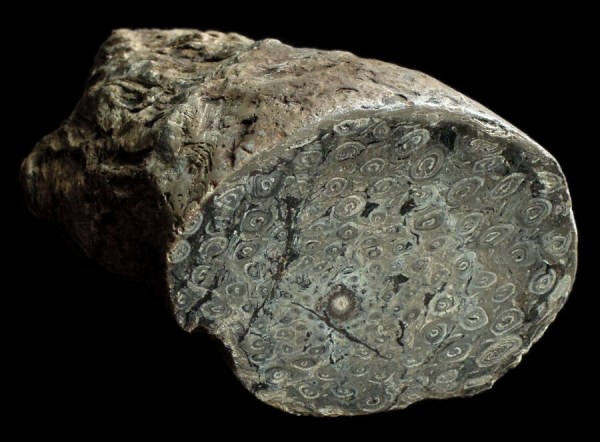
Then they lost their trunks. (Almost.) The thumbnail history probably goes somewhat like this:
- Ferns, including Osmunda ancestors evolved dismayingly before flowering plants. Having no flowering plant competitors, in suitable habitats they assumed the role of trees.
- As the Flowering Plants took over, somewhat over 60 million years ago, they competed ferns into narrower, non-tree niches.
- In fact, the meteor strike some 66 million years ago might have been the nail in the coffin of big tall Osmundas.
- In very rough terms, the demise of the tree-sized Osmundas kinda coincided with the rise of the unrelated modern unrelated Tree Ferns, limited to moist tropics.
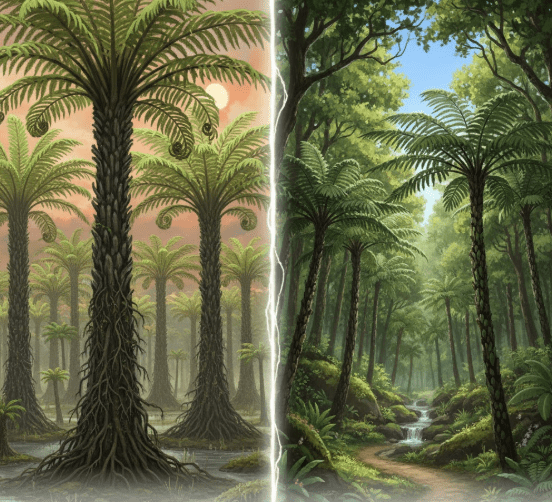
Thank you AI. On the left, Mesozoic Osmunda (compare the trunk roots with the bottom photo below—nothing changes in 250 million years). On the right, modern unrelated Tree Ferns. (Generated by Nano Banana).
And now to get to the good stuff! Osmundas still yearn to be trees, even of just a bit stumpy. They haven’t given up. Now in the Florida “dry” season you can see in dried swamps Royal Ferns with broad trunks, usually hidden the rest of the year by water, mud, debris, herbaceous growth, and sullen cottonmouths. When the view becomes unobstructed the trunks can well over a foot in diameter and up to 2-3 feet tall . The photos below were taken today in the Jupiter Ridge Natural Area. These trunks are not cut open, and they are not covered with mud. That is their natural black surface color. They are in the middle of a temporarily dry marshy pond. The covering is a mantle of dead (or some living) roots and leafy scales. Diehard throwbacks to continental drift and soaring Pterosaurs!
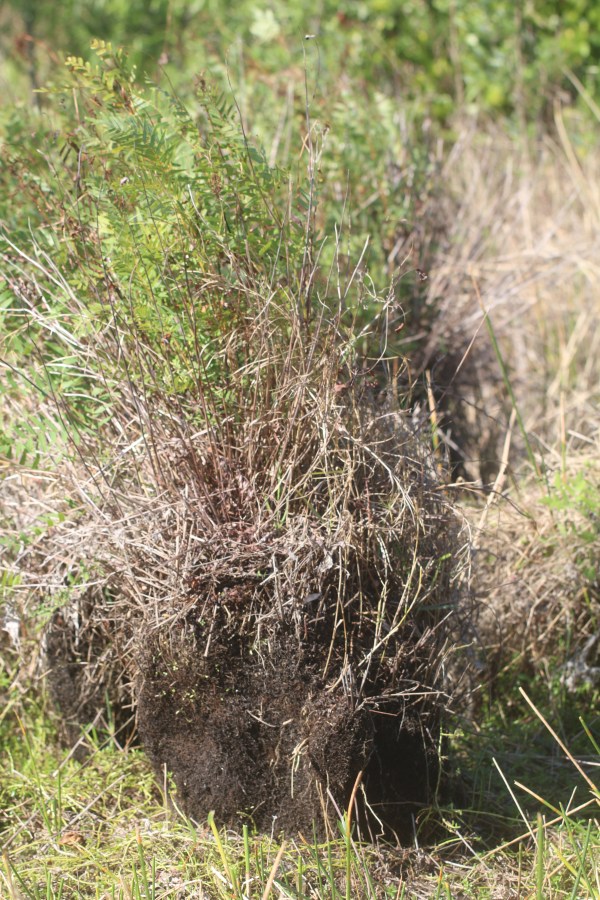
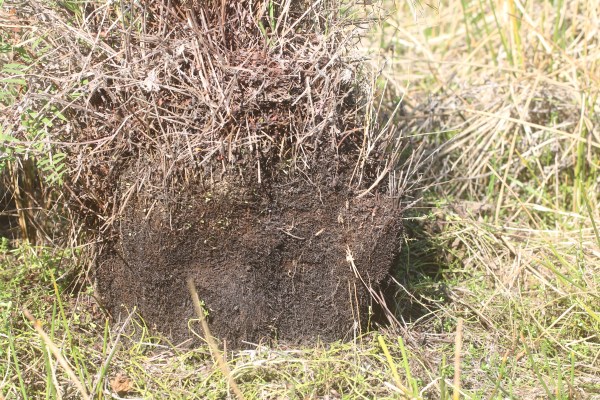
They can even branch in a stubby way, as seen to the right above.
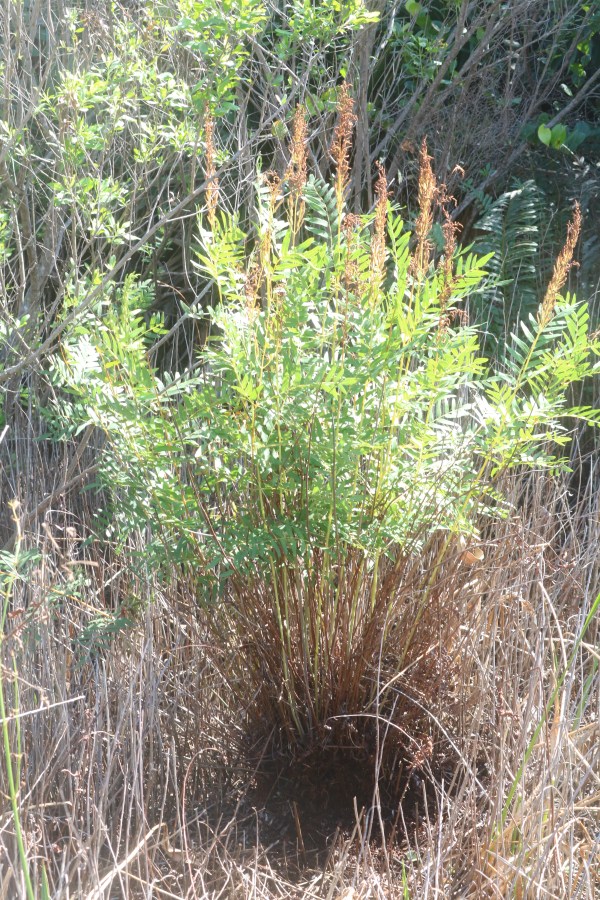
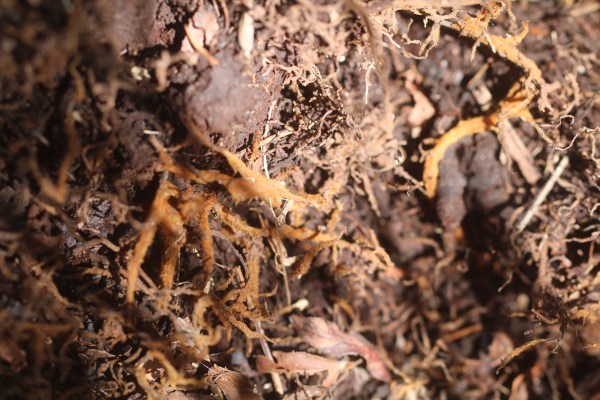
Living roots on trunk
 John Bradford
 George Rogers
 George Rogers
 Dee Staley
 Treasure Coast Natives
Sarah Davis Dean
January 29, 2026 at 2:31 pm
I always enjoy your articles! Please note thay MY EMA
George Rogers
January 29, 2026 at 9:26 pm
Thanks Sarah