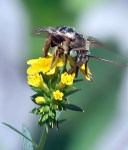
I have a “thing” for depression seasonal marshes populated with the shrubs Peelbark St. Johnswort (Hypericum fasciculatum) and Water Toothleaf (Stillingia aquatica). Such marshes are beautiful and extensive systems around here, and well beyond.
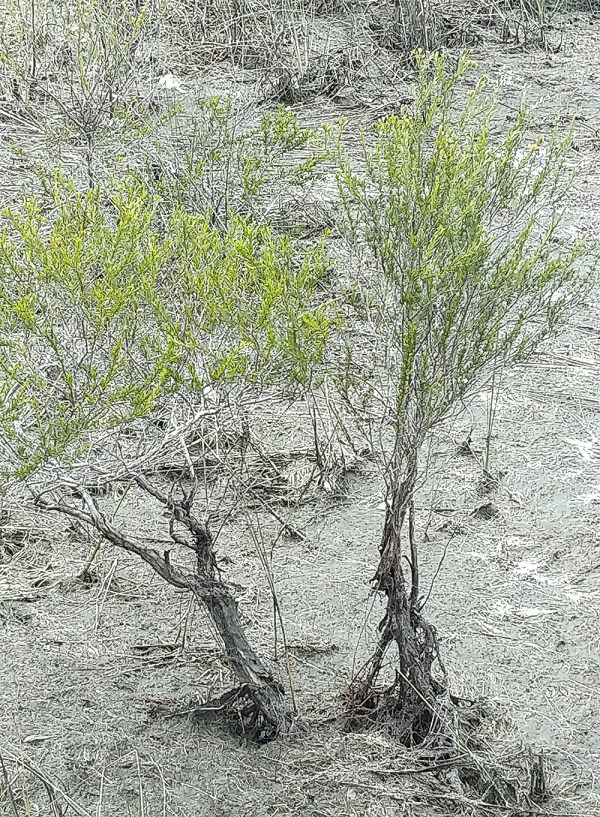
Gnarly ol’ Peelbark SJW. Most of today’s pictures (the good ones) by John Bradford.
And, unlike scrub or hammock, Hypericum marshes remain virtually unstudied despite being extreme ecosystems with extreme occupants, some species largely confined to that habitat, such as , Small’s Xyris (Xyris smalliana) and Harper’s Beaksedge (Rhynchospora harperi).
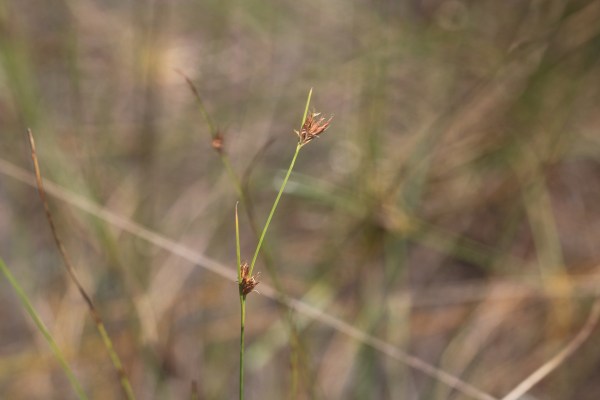
Harper’s Beaksedge
They’re a good place to look for the unusual and hard-to-spot Southern Bluethread (Burmannia capitata), and several local carnivorous plants, including right now while the soil remains unflooded Sundews (Drosera capillaris).
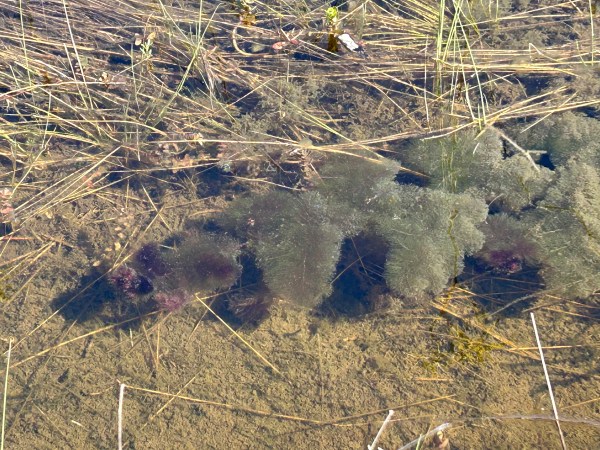
Flesh-eater Utricularia frondosa
Animals live there we don’t often see, such as Roundtail Muskrats, Marsh Ricerats (I think), Crayfish, Otters, and delightful little fish when there’s water. Nobody knows much about the ecology of it all.
We all can plainly see everything growing in this part of Florida rests on white sand, exposed in the scrub, under a layer of duff in a pinewoods, close below the dark layer in a Cypress Swamp, and under a variable but usually strikingly thin layer of periphyton either floating or settled and decaying on the marsh bottom. That layer in most local depression marshes is just a few cm thick, and sharply demarcated from the underlying sand, like chocolate frosting on a vanilla cake. This dark material catches and accumulates in masses among the prop roots of the Peelbark SJW.
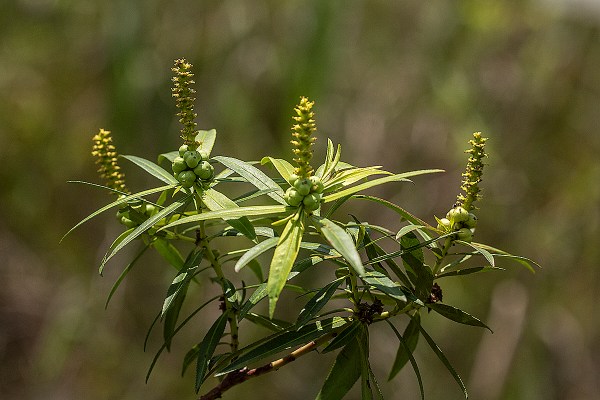
Water Toothleaf, aka Stillingia
Now here’s the thing. Every year the marsh is flooded maybe a foot or so deep, killing much of the marsh floor vegetation, with an annual rooting and regrowth next time the marsh drains. Every seed that sprouts, and every young plant that results begins life in that thin organic layer. In my warped brain, the thin periphyton-ish organic frosting holds the key to understanding the marsh.
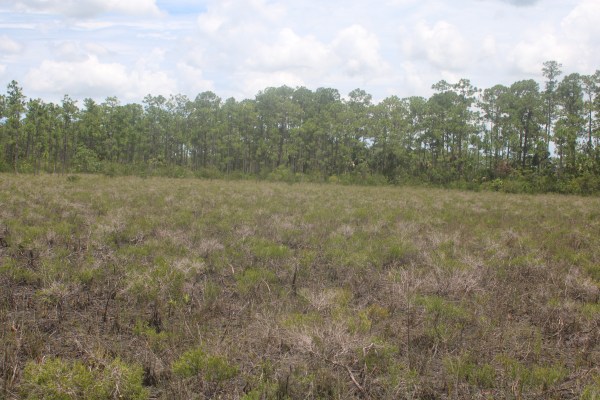
We don’t know much intimate detail about its full relationship with the plants in terms of nutrient exchange, gas exchange, microbes and so forth. Most periphyton study has had to do with rice, or the Everglades. It is known that bluegreen algae.
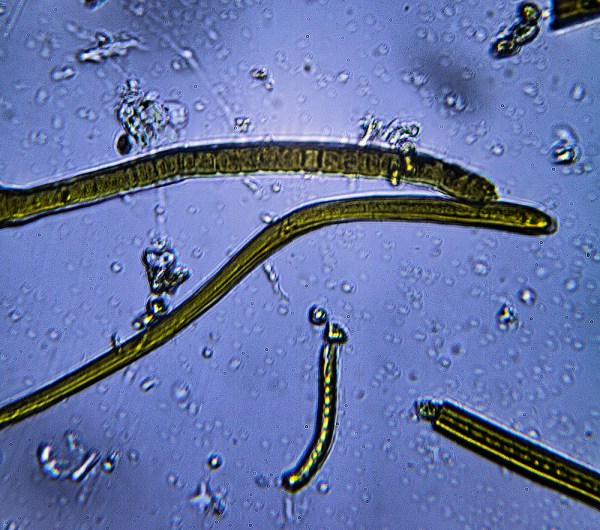
Bluegreen “algae” (“cyanobacteria”) in the marsh periphyton. Microscope view duh.
Periphyton decay releases nitrogen, and that periphyton sequesters phosphorus, and any gardener can see it is a natural mulch holding moisture and probably suppressing competing plants during the dry season.
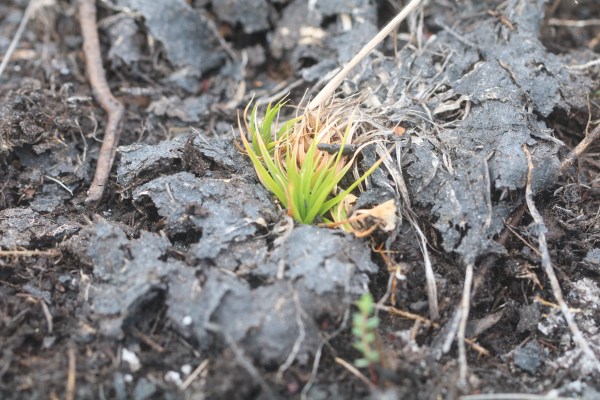
Eriocaulon compressum rising from crusty periphyton mulch.
I’ll bet if you took away that thin frosting the whole system would change a bunch.
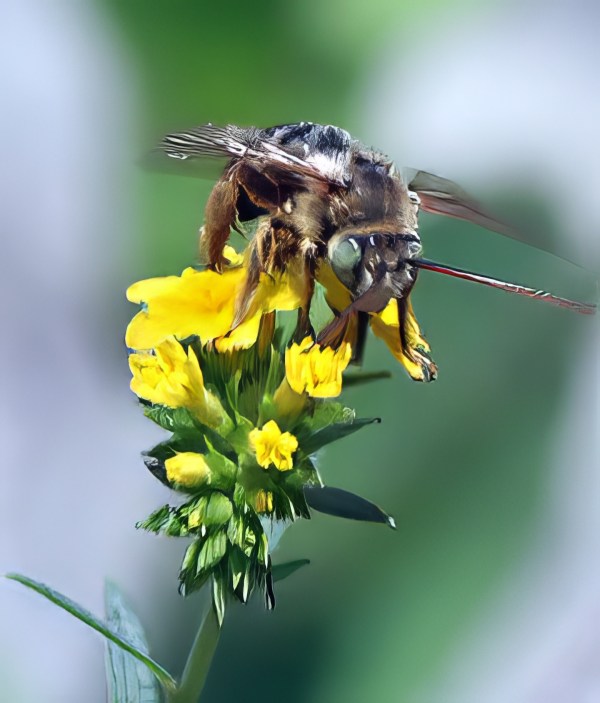
Marsh dweller at the marsh margin today
What got me thinking about periphyton is that today I walked in the still-dry (!) Hypericum Marsh off of Mack Dairy Rd. in Jupiter. In addition to the year round shrubs, the ground was salted with three main herbaceous species: young Smalls Xyris (some of which will grow large and tolerate flooding), little red sundews (will never grow large nor often survive flooding), and, mostly, flattened pipewort (Eriocaulon compressum), zillions of them. These can survive flooded, as I described in a blog past. https://treasurecoastnatives.wordpress.com/?s=eriocaulon
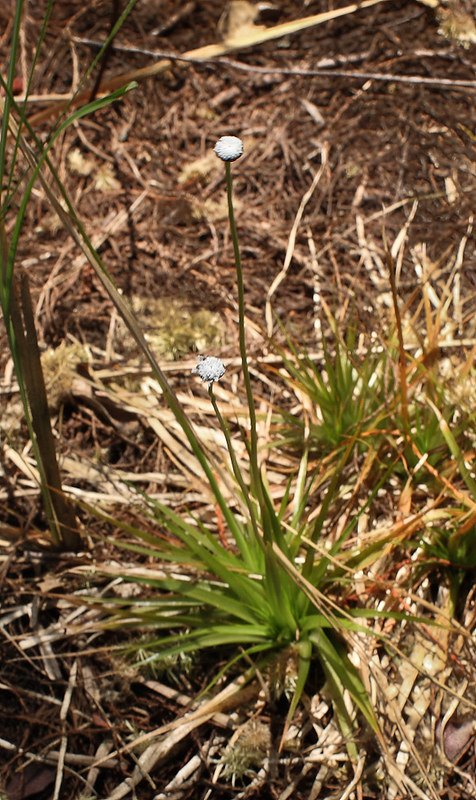
Eriocaulon by JB
Decided to look at the relationship between the establishing pipeworts, being one of the the marsh dominant herbaceous species, and here the role of the thin organic layer shows up. The roots of the young individuals are restricted almost entirely to the organic layer, even spreading sideways to stay in that lane. As the rosettes enlarge, eventually some large-diameter roots with hollow ventilation tissue do enter the sand.
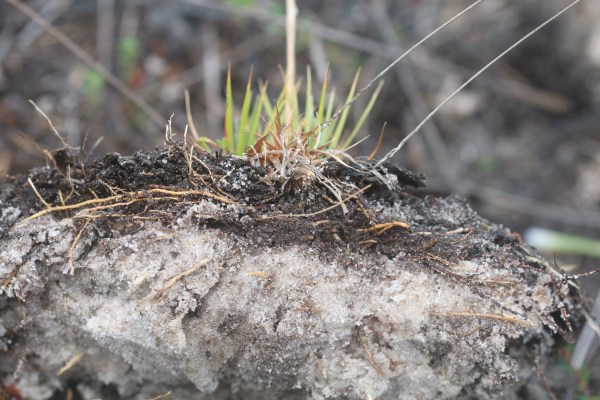
The most important photo of the day. Look how those young Eriocaulon roots prefer the organic periphyton-ish layer. It is about an inch thick. That’s where the good stuff (organic fertilizer) is cached. As the plant enlarged some large thick roots will enter the sand, probably to guarantee water during dry times, as you can see starting now.
If I’m correct that that skimpy organic layer is a BMD (Big Marsh Deal), that notion raises questions about Hypericum marsh conservation. What if the layer becomes too thick or too thin, changes or disappears? What if fertilizers, manure, herbicides and other stuff wash in from farms, runoff, gold courses, lawns, septic systems? A large Hypericum marsh near my home is enclosed in suburban sprawl, complete with water draining in from large adjacent parking lots. That marsh has an dark mucky layer far thicker (say 7 inches) than any I’ve seen out in wilder areas, and the species composition seems to differ, for example, no Xyris smalliana. Wonder if those differences are a result of merely being a “different” marsh naturally, or of “new anthropogenic ingredients.” My unsubstantiated grouchy hunch tilts toward the latter, but nobody knows. Hope not, cuz if an ignored habitat transforms and nobody is there to hear, is it still habitat destruction?
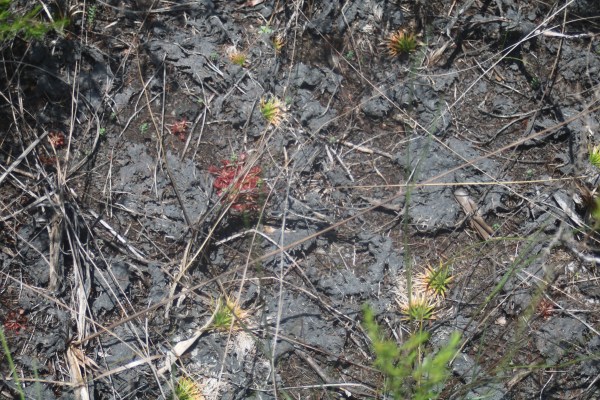
Sundew (red), Eriocaulon rosettes, and our new friend Perry Phyton.
 John Bradford
 George Rogers
 George Rogers
 Dee Staley
 Treasure Coast Natives
theshrubqueen
July 15, 2025 at 10:16 pm
There is a Hypericum Marsh near my house. I just never knew what it was until now!
htpetrie
July 16, 2025 at 9:10 am
I always enjoy reading your perspectives. It’s hard to believe there is so little known about environments that cover so much area, but on the other hand very few people would care… Best wishes, Howard
George Rogers
July 16, 2025 at 9:14 am
Thanks Howard!