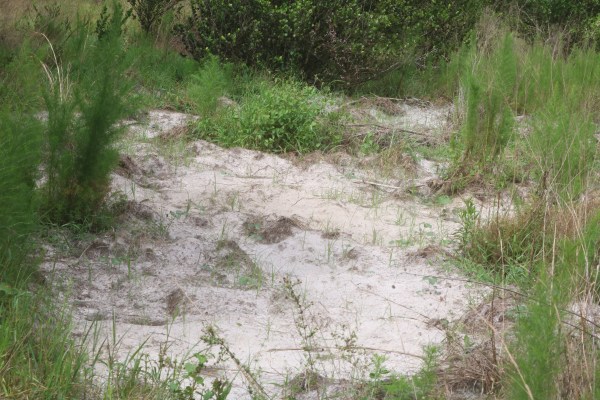
Ground zero after the h-bomb. (hog bomb that is)
Walking in Cypress Creek today I came upon the most torn-up feral hog excavations I’ve ever stumbled into. Wetland meadows nuked down to bare white sand! (Bring your own beach chair and Modelo. Ever wonder what comes back after the nuking?
Take a look at the short-term recovery:
Does the surrounding vegetation heal the scar by growing in from the sides? No, at least not initially.
Dog Fennel is dominant in the surrounding undisturbed meadows. Does it spread into the earth wound? No, at least not initially.
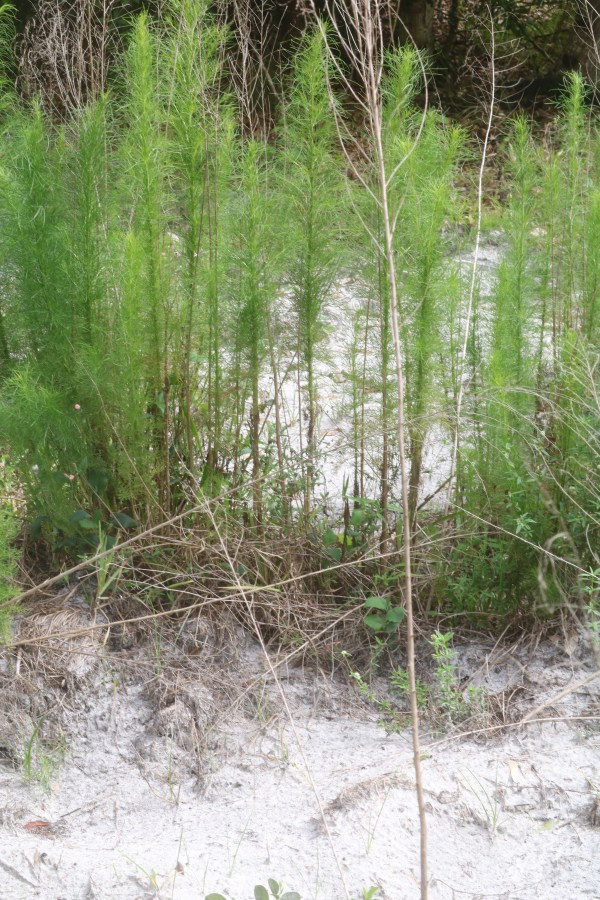
Dog-fennel (tall plant) at the edge, but no affinity for the land-scar.
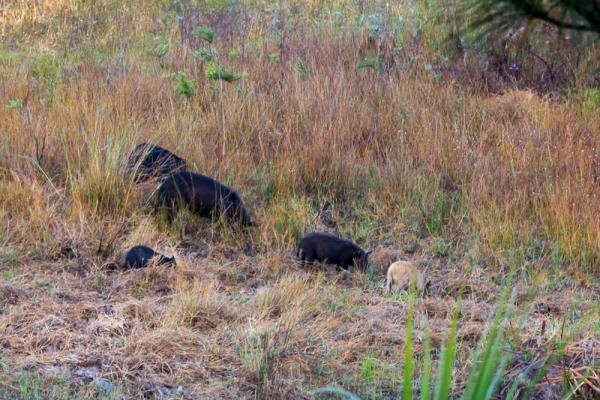
oink oink by John Bradford
Today in the fresh digs, just recovered enough to find early re-greening, there were four main species, each interesting in its own way.
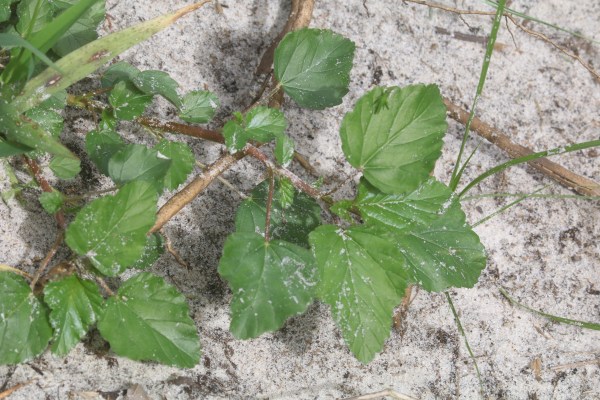
1. Baby Caesarweeds (Urena lobata), tons of them. The dominant newcomers. Caesarweed is an invasive nonnative in the Hibiscus Family brought to Florida initially as a fiber crop. It is an aggressive weed in moist places and makes millions of VELCRO-cling seed-containing burrs. I’ll bet as the hogs crash through the brush they pick up a bunch, and shed them at feeding time in the tilled “garden bed” they create , helping to “restore” their damage, like reclaiming a strip mine in West Virginia. I wonder if your tear up an adjacent area without hogs, do you get as many Caesar babies from dormancy in the soil seed bank? The reason I think not, is that the soil and its seed bank are GONE in today’s damage zones.
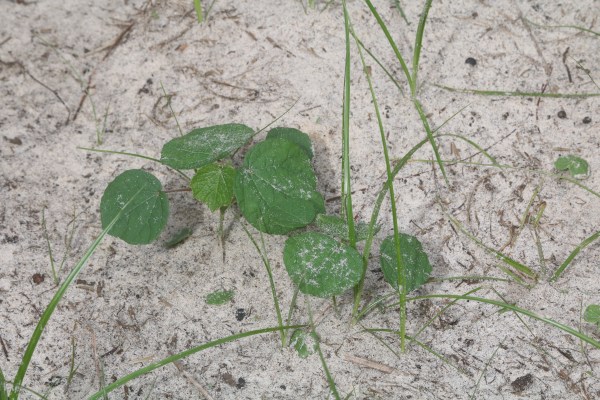
Baby Caesarweeds yesterday in Hogaritaville
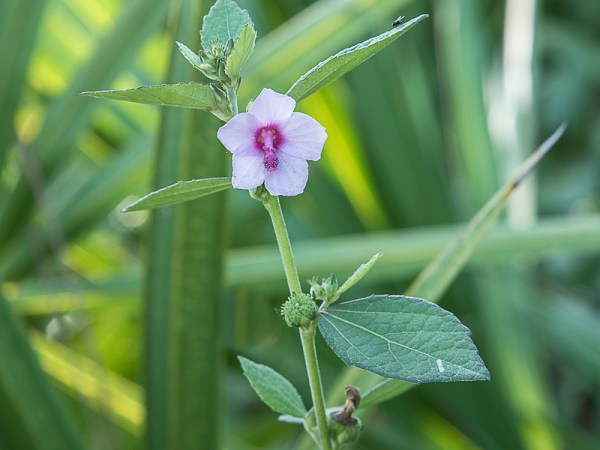
Caesarweed by John Bradford.
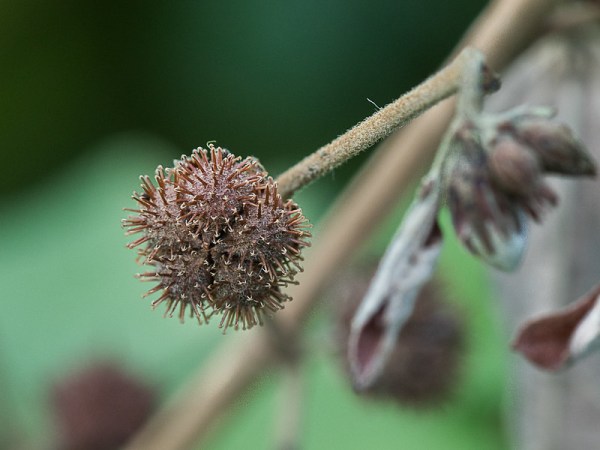
Bet that clings to a pig. By John Bradford.
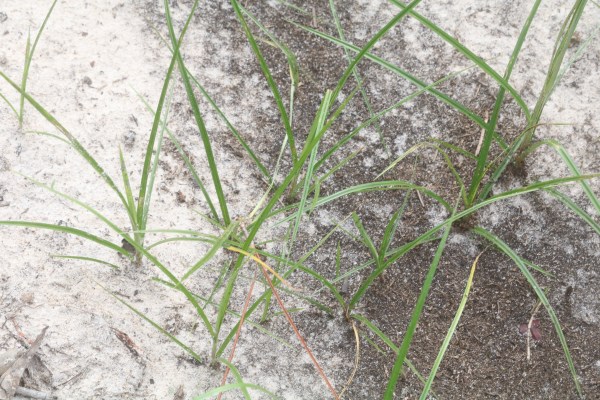
2. Erectleaf Witchgrass (Dichanthelium erectifolium). This durable grass native to seasonal wetlands is common locally, surviving fires, droughts, flooding, and apparently hogs. This species was clearly originally there before the digging, and how it survives the scalped earth as a fun little mystery. Deep roots?
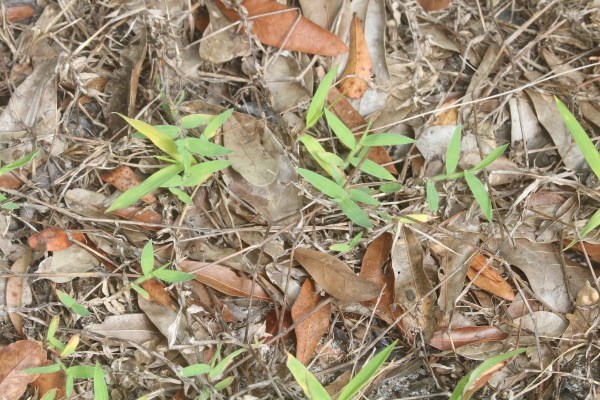
This is an older more-recovered hog scar.
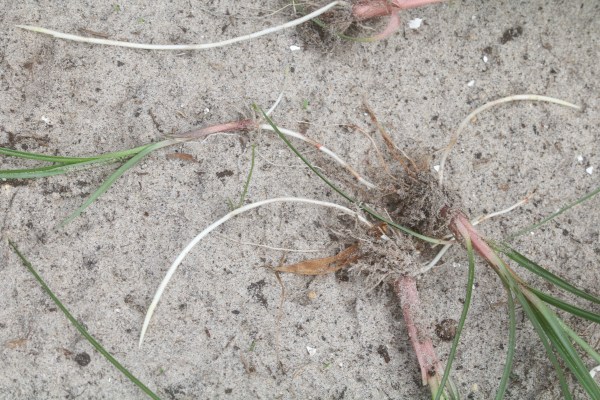
3. Yellow Nutgrass (Cyperus esculentus) is a common round-the-world weedy sedge with rhizomes and tubers. As “chufa,” it is in places an agricultural tuber crop. Somebody say “rhizomes and tubers”? Hog food! Were these possibly the main attractions at pig party time? Wonder if the sedge seeds move from site to site inside the feral porkers? Ever wonder what foods those hogs actually root for? Here are some answers. Click the link:
Broad palettes!
Acalypha
 John Bradford
 George Rogers
 George Rogers
 Dee Staley
 Treasure Coast Natives
theshrubqueen
June 7, 2025 at 8:27 am
I never thought of hogs as a weed vector! Though the same seeds are spread by my dog’s nose.
George Rogers
June 7, 2025 at 10:02 am
and my socks
Greg Braun
July 3, 2025 at 9:15 am
George: Members of the Martin County Chapter of FNPS are working on a project to collect voucher specimens of plants that are not currently in the Florida Virtual Plant Atlas as having been vouchered in Martin and/or St. Lucie County. So far, we’ve added about 50 species to the database – mostly “low-hanging fruit” of common species that no one has just ever taken the time and expended the effort to collect. We’ve rec’d approvals from MC, SLC, FDEP – State Parks, TJI to collect on their properties.
We’re wondering if you’d be interested in assisting in this endeavor. If you, please give me a call sometime so that we can discuss some options for collaboration.
Thanks,
Greg Braun (561)-758-3417