Erigeron quercifolius
(Erigeron is Latin for early woolly old man, probably in reference to the white parachute on the seedlike fruit. Quercifolius means oak leaf.)
Asteraceae, the Daisy Family
Erigeron is a large genus, having around 170 species in North America, 11 in Florida. Chromosomal abnormalities and cloning tend to make species definitions difficult. A glance at museum specimens often shows individual specimens to have been identified differently by different botanists, true of today’s species. So then I’m going to refer to Fleabanes in a general sense without much concern with individual species.
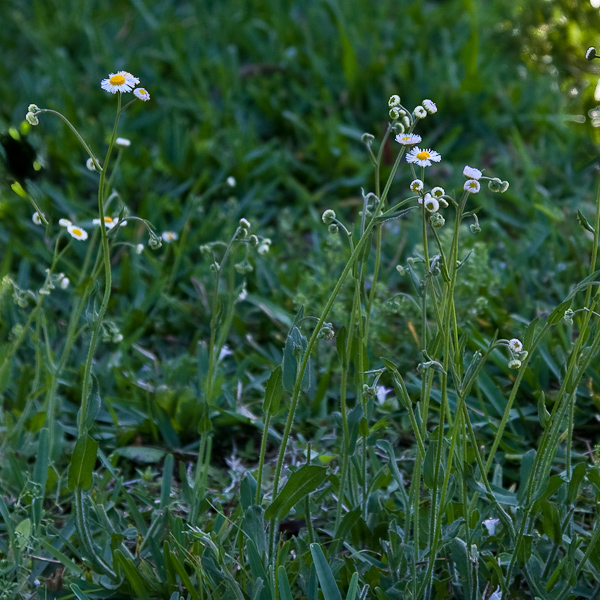
Oakleaf Fleabane by John Bradford
The heck with plant manuals and research projects, what I really really like is standing in a meadow with a fragrant breeze and watching the flowers sway and the butterflies flutter. Not much better meadow flower than Oakleaf Fleabane with its sunny-side-up flowers. It beautifies the gritty places like roadsides.
Working on this blog yesterday, I read how it decorates the stone walls of the Castillo de San Marcos in St. Augustine, described by one observer as having, “blooms like a thousand small lights in the afternoon, highlighting the earth tone colors of the fort’s stone walls.” Only trouble is, the roots penetrate the castle walls better than enemy gunfire, making it necessary for the castle-keepers to extinguish those delightful lights with herbicides.
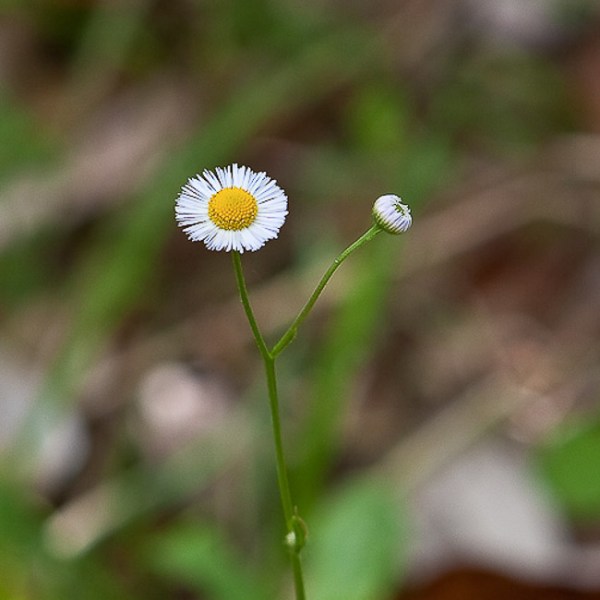
By JB
That’s the basic trouble with being a Fleabane…pretty but durable enough to be pesky. The pesky part in other places has led to a lot of herbicide application to a lot of Fleabanes, until guess what, some have become a poster child of herbicide resistance. Ya just can’t keep a good daisy down.
So why the name “Fleabane”? These plants naturally have more insecticides than the Orkin Man. Folks historically stuffed pillows with Erigerons to suppress fleas. It is always interesting when different cultures in different regions jointly discover the same uses for plants. Even better: different species jointly discovering the same uses. Humans drive fleas from their nests, and starlings drive mites from their nests. In a 1988 study ecologists Larry Clark and J.R. Mason found starlings to use Wild Carrot and Fleabane preferentially in nest building. Turned out parasitic mites cause anemia in the nestlings, except when the two preferred plant species suppress the bloodthirsty little varmints.
 John Bradford
 George Rogers
 George Rogers
 Dee Staley
 Treasure Coast Natives
Michael Kohner
March 20, 2023 at 10:54 am
What you are saying is that more folks should plant Erigeron quercifolius in the back yards to add beauty and reduce fleas on their dogs rather than spaying and santizing their soil.