Generally it would be nice to think that native species in their natural habitats are mostly free from invasive pests, but it happens. One such happening seems widespread, sometimes severe, and unreported. I try to avoid plant ailments in the blog, but the present case seems noteworthy. In recent years I’ve spent a lot of time working in depression marshes, and have developed a special fondness for the two main woody species there: Peelbark St. Johnswort (Hypericum fasciculatum) and Corkwood (Stillingia aquatica). That’s very nice, but there’s a fly in the ointment. Corkwood often is infested with Cottony Cushion Scale. Cottony Cushion Scale is most easily recognized by its female with striking white fluted egg masses. It has been an exotic pest in Florida for at least a century, most famous as a Citrus scourge, also happy to parasitize many additional species.
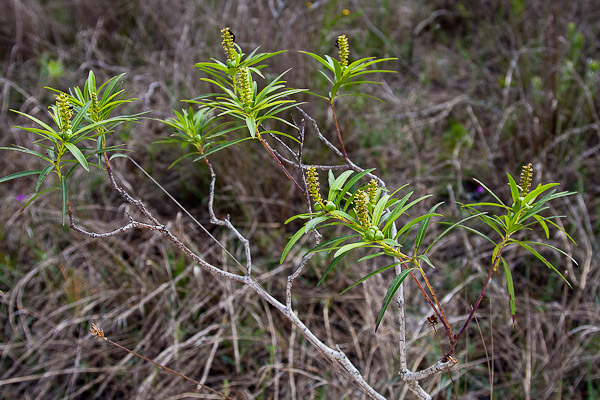
Stillingia by John Bradford
The number of insects on a Stillingia can range from one to many. That they can kill the plant is obvious from many observations of dead and dying Stillingias peppered with the pests and their decaying remains. A skeptic might mumble, “maybe the Stillingias were otherwise ill, and the insects are taking advantage of their weakness.” Possible, but my gut doesn’t agree, and even if my gut is wrong, the poofy pests are not helping.
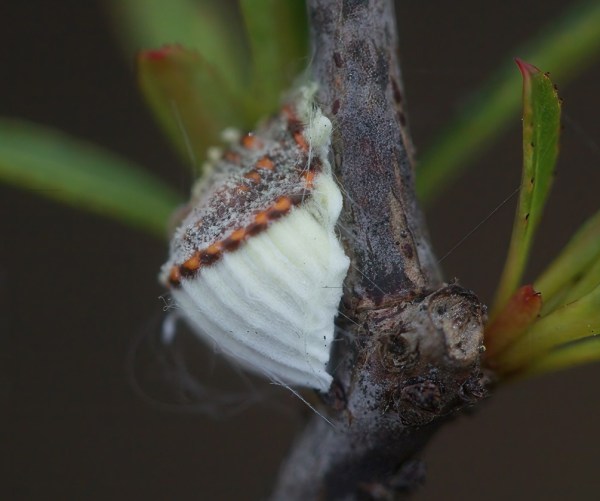
Cottony Cushion Scale on Stillingia
Although Cotton Cushion Scale has broad range of hosts, it seems to have a special taste for Corkwood. How widespread is the problem? I don’t know. On inaturalist you can sometimes spot the Cottony Cushion Scale on photos of Stillingia far beyond Martin and Palm Beach counties, such as near Punta Gorda and near Naples.
 John Bradford
 George Rogers
 George Rogers
 Dee Staley
 Treasure Coast Natives
Diane Goldberg
January 27, 2023 at 5:45 pm
I don’t know if this is the same scale I had on some Partridge Pea, Chamaecrista fasciculata. When you squish it the insides are red. I remember seeing a story many years ago about the scale on cactus was used to make red dye.
George Rogers
January 28, 2023 at 8:56 am
Yes…the cochineal insects squish purple-red. Usually on prickly pear cacti. https://treasurecoastnatives.wordpress.com/?s=cochineal
theshrubqueen
January 28, 2023 at 4:52 pm
yuck, my intelligent comment for the day. I think my Salvias get that.