Thelypteris kunthii
Thelypteridaceae
Something that bugged the Native Plants class I taught for 20 years is the observation that in our immediate area Kunth’s Marsh Fern, one of the most common and prettiest ferns hereabouts, thrives best on 45-degree slopes, in other words on the banks of streams, ditches, and ponds.
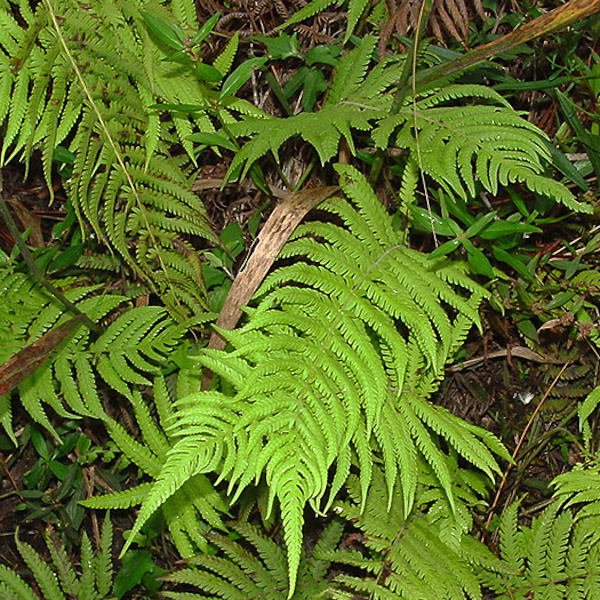
Photo by John Bradford
What’s bothersome is that ferns generally get around by wind-blown spores, but this particular fern is mostly on wet banks. Okay, sure, the spores blow all over the land, and a certain percentage land in a suitable habitat, stream bank or wherever, with the vast majority going to waste landing elsewhere. Duh. As true as that has to be, and obviously is for many plants (such as bromeliads on tree branches), there remains a gut feeling of , “smart ferns on streambanks should use water dispersal.” I’ve long wondered if the spores have some specialization for water-dispersal. Perhaps, but if so, never documented to my knowledge. Then today, Eureka!, stumbled upon a 2013 article by Dutch botanist J. Sarneel featuring wetland species dispersal in the Netherlands. The info there just plain “feels” right for the problem at hand.
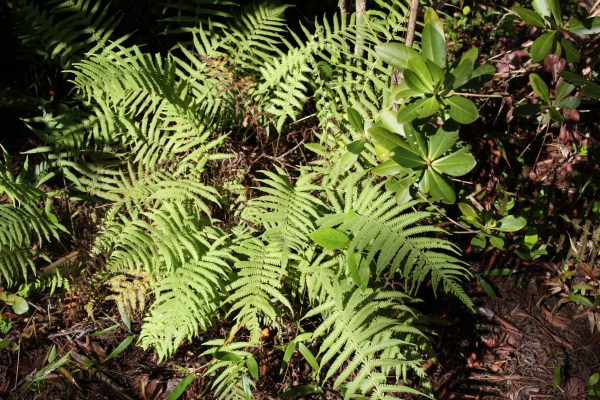
Thelypteris kunthii, so far as I know, does not grow in Europe but the very (very!) similar related Thelypteris palustris does, and guess how it gets around?
Dr. Sarneel and associates set up giant sieves to capture water-borne seeds and other dispersal-organs in a stream flowing out of a swampy area. (Palustris means “lives in swamps.”) They captured the diverse floating dispersal-units of many aquatic species, and gathered data on their suitability for water dispersal. Out of 252 units from 10 species recovered were 20 rhizome growth tips from Thelypteris palustris, which apparently sheds the tips as the banks erode or as the rhizomes extend into an exposed position. The rhizome tips took several days to sink fully, and over 57% of them resprouted when tested.
That’s gotta be how our Kunth’s Marsh Fern manages to own so many stream and ditch banks. Maybe.
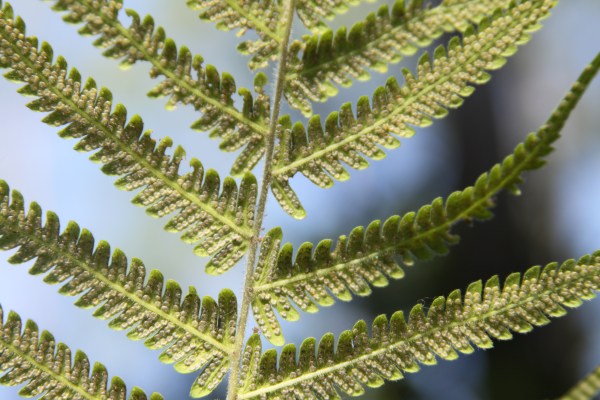
 John Bradford
 George Rogers
 George Rogers
 Dee Staley
 Treasure Coast Natives