Jacquemontia reclinata
Convolvulaceae
So often you go looking for one thing, strike out and find something else. While walking the local sandy coastline for other plants, I stumbled upon a beach dunes treat: Jacquemontia reclinata, a federally listed endangered species with no known footsteps outside of a few SE Florida counties, including Palm Beach County. Land management authorities don’t like reveals of where you can see endangered species, so suffice it to say Beach Clustervine has been previously reported where encountered in flower today, although “believed to be extirpated.”
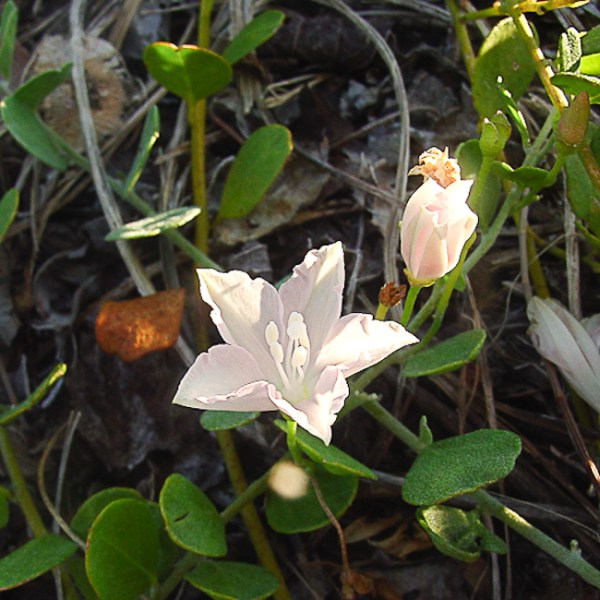
The disappearance doesn’t surprise me, because the species inhabits disturbed seaside sand where everything disappears. All kinds of things come and go where the waves crash, the sand drifts, and the briny breezes bluster. So I suspect that if all truth were known, Beach Clustervine may often be a “pop up species,” here today, gone tomorrow, back next year, or decade, or century. A quick look at occurrences on iNaturalist around SE Florida buttresses the notion. Incidentally, there have been reintroduction efforts, but I don’t know where.
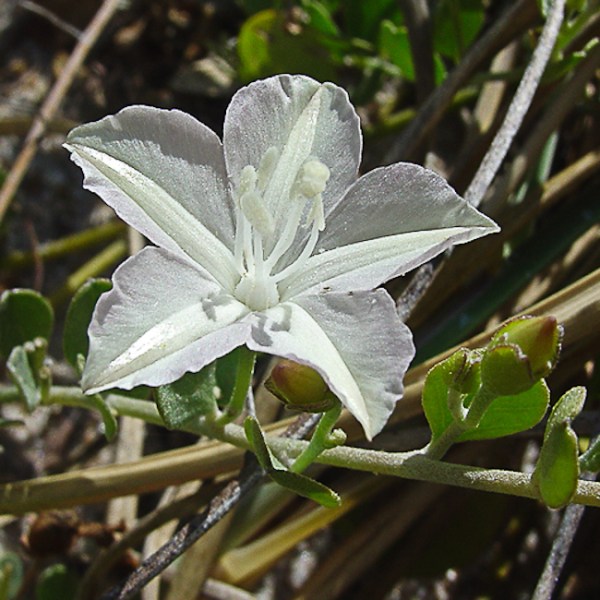
That all leads to the main point. A creeping vine on seashore sand must have fantastic powers. First off, pollination could be a problem for a spotty species widely scattered in small patches in strong winds. But no worries, a wide array of insects visit. And as you might expect in a beach pioneer, the vine does not require pollinators, self-pollination providing reproductive assurance.
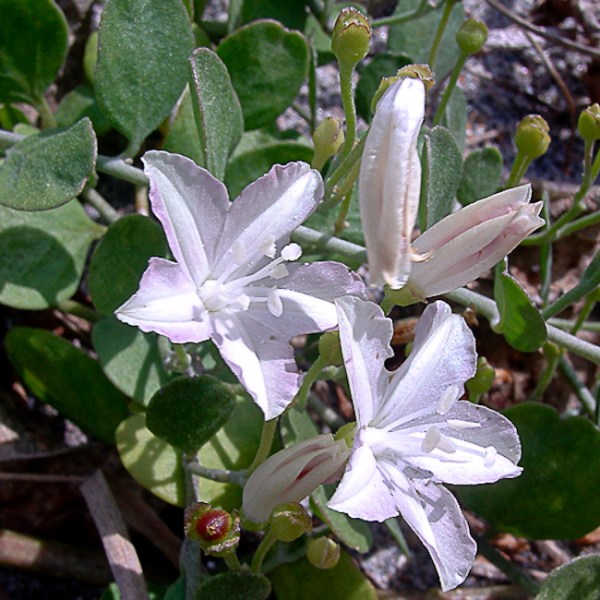
What I find intriguing is the poorly known unknown, the seeds. They obviously must float in the drink before washing up on a new beach and taking hold. Those must be some tough little seeds, and why Floirda but not the Bahamas? (Or is it lurking on one of many many beaches there awaiting discovery?) After washing up to be buried under shifting sand, the seeds must “lie low” until some moment of disturbance exposes them to their germination cues, perhaps some combination of air, light, and freshwater. Biologist John Pascarella and collaborators investigated the seed biology over the years 2001-2007. Soil cores revealed buried seeds waiting patiently in the seashore sand. Chemical testing showed a whopping 100% of year-old buried seeds to be alive. An interesting kink in that study was that even when buried seeds are all viable, not all germinate when presented with a set of seemingly favorable circumstances. Seems that different seeds have different triggers, some always in reserve for the many moods of the sea.
 John Bradford
 George Rogers
 George Rogers
 Dee Staley
 Treasure Coast Natives
Nicola Jones
October 21, 2022 at 2:36 pm
Fascinating and beautiful thank you!
HARVEY BERNSTEIN
October 24, 2022 at 9:20 am
And so, even as sea levels rise, perhaps a new suite of natives will grow on land that will be abandoned by us.