Rhizophora mangle
(Rhizophora means root bearing. Mangle is Spanish for mangrove.)
Rhizophoraceae
Red Mangroves astound in many ways. One of the is the embryo. The Red Mangrove embryo bobbing in the sea looks like a purposeful eel swimming vertically with its head above water. Before getting far into the swimming, a few words on the embryo’s nuts and bolts.
A normal fruit on any other plant contains one or more seeds, and each seed in that normal plant houses a tiny embryo destined to grow into a new oak tree or orchid. But Red Mangrove is not normal. It makes a small rusty-leather fruit the size of a strawberry containing two seeds., one of them surviving. So far so good, but now it gets weird. The seed sprouts while the fruit still dangles from the parent tree. The resulting embryo, resembling a large green bean, grows forth from and eventually dwarfs its fruit and may reach about a foot long and a half-inch in diameter dangling from the tree, the original fruit forming a brown cap around the green embryo’s attached upper end.
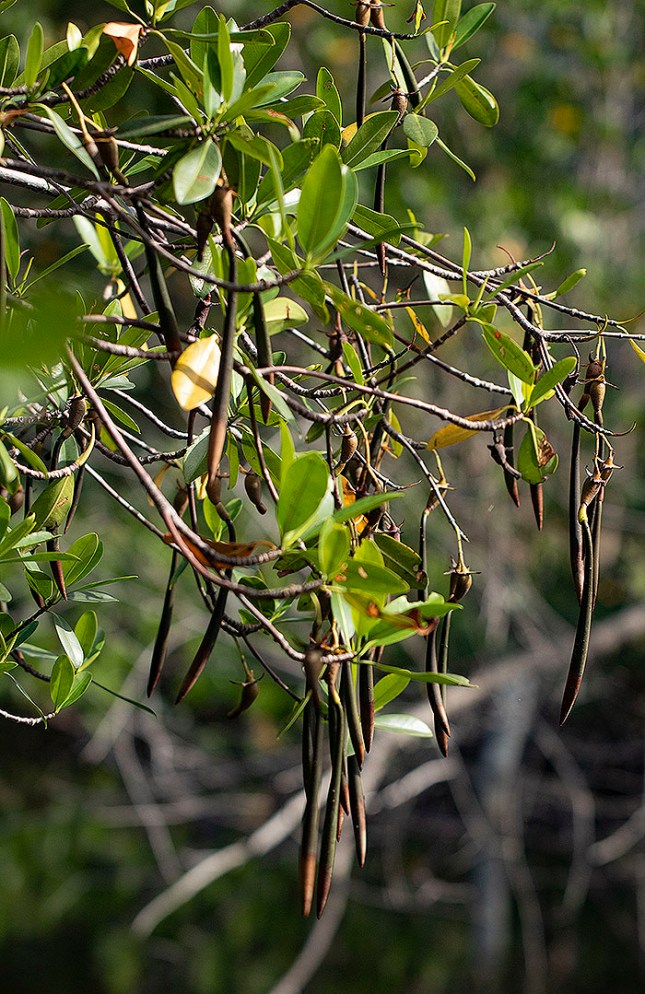
Embryos looking like green beans hanging on the parent tree. The fruits are the brown caps at the upper ends of the embryos, which will soon drop free leaving the fruits behind on the tree.
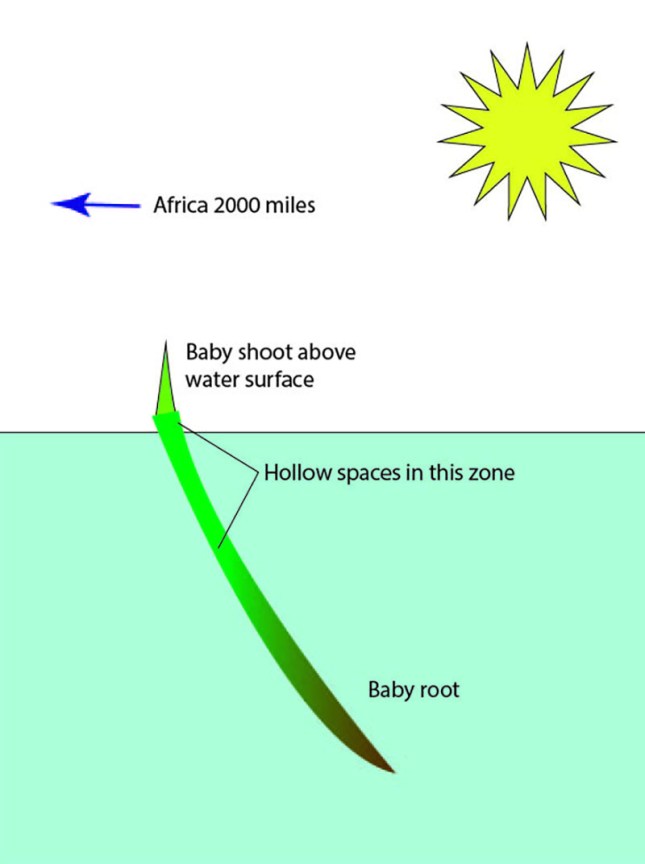
When it finally comes time to go float to a new beach, the embryo breaks free, leaving its topmost parts (the cotyledons) behind within the fruit. The part that falls into the sea then is an enormous root (hypocotyl) vertical below the water line with a little pointy tip exposed above the surface. The pointy tip is the beginning of the top part of the future tree, the embryonic leaves, stems, and trunk.
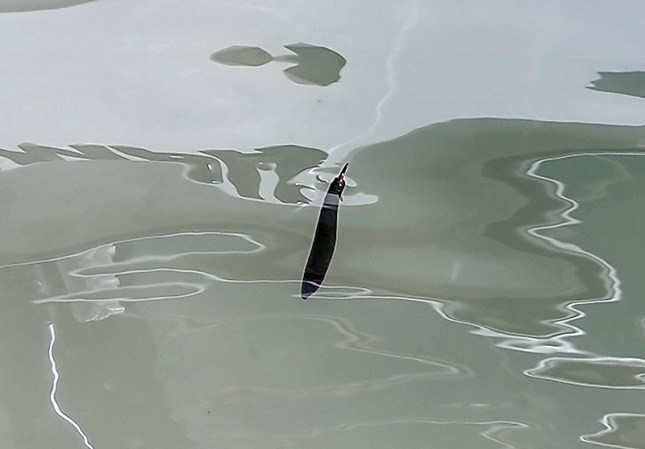
Embryo floating in the Atlantic Ocean.
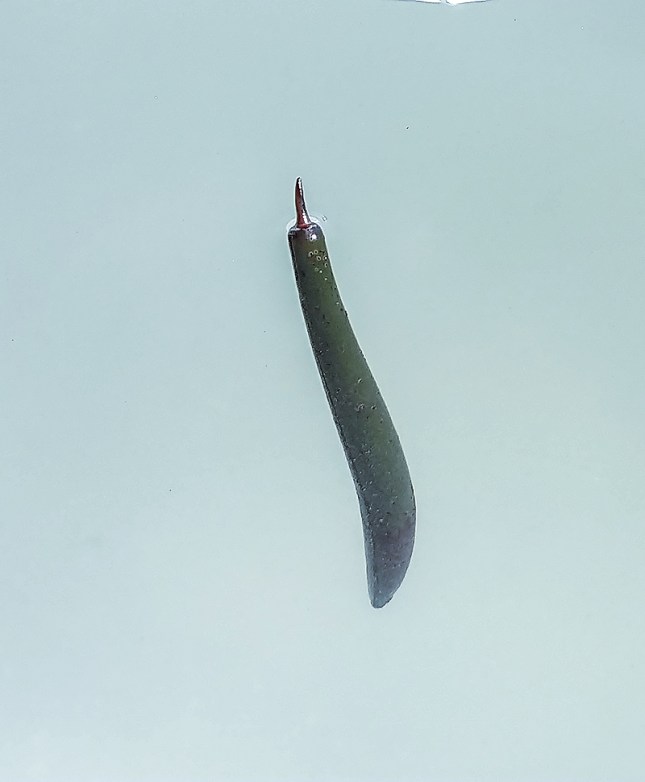
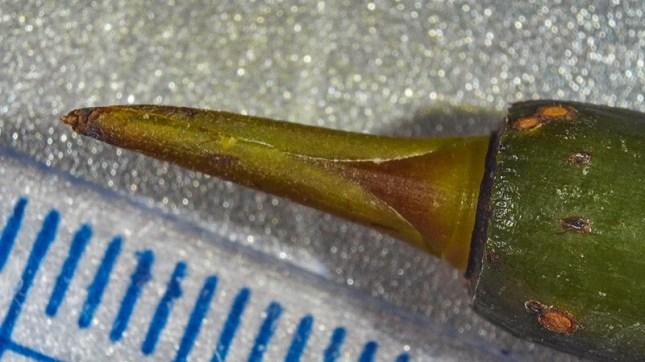
The pointy tippy top.
Why does the bottom end stay down while the top end stays up? Not only is the bottom thicker, it also fails to have something the top possesses…open hollow airspaces. The spaces clearly give the top end buoyancy, and perhaps have an additional role in gas storage and exchange.

Hollow spaces seen when the top part of the embryo is sliced open.
Here is the kicker. The floating embryos cross oceans. Their cruise can reportedly last a year. For all those months the sojourners do not merely dormant and sleep their way across a thousand miles. Rather, it looks like they live and breathe along the way. Even when the root end down in the water turns brown, the upper end remains green and has chloroplasts. There must be a reason the little swimmer keeps its head above water, no doubt the same reason I do…life support, gas exchange. Those little submarines have circled the earth bobbing along with their snorkel tops peeping above the waves.
 John Bradford
 George Rogers
 George Rogers
 Dee Staley
 Treasure Coast Natives
theshrubqueen
November 9, 2019 at 9:10 am
Very intriguing, I guess that is evolution and survival. They look like they would be good sauteed with a little garlic..
George Rogers
November 9, 2019 at 10:48 am
okay you try that first
beth
November 10, 2019 at 10:38 am
Wow!!! (Beth)
Sent from Yahoo Mail on Android
beth
November 10, 2019 at 10:39 am
Wow!!
The Evolving Naturalist
November 20, 2019 at 12:25 pm
Fascinating! Such a unique reproductive strategy.