(They both contain Pale Smartweed)
Persicaria lapathifolia
(Persicaria reflects resemblance of the foliage to peachy leaves. Lapathifolia suggests the leaves resemble sorrel.)
Just like quiet tudents in a classroom, sometimes modest weeds have secret stories. True today of one you’d miss unless you really care…pale smartweed, one of the many species of smartweeds, Persicaria, in South Florida. The species turns up in archaeological deposits near the Bering Strait, so maybe it came to the Americas ages ago by the same Alaskan route as the first humans. Or maybe not. Who knows. Certainly not authors who state pseudoauthoritatively, “introduced from Europe.” In any case, the plant inhabits most of North America, Europe, and far beyond.
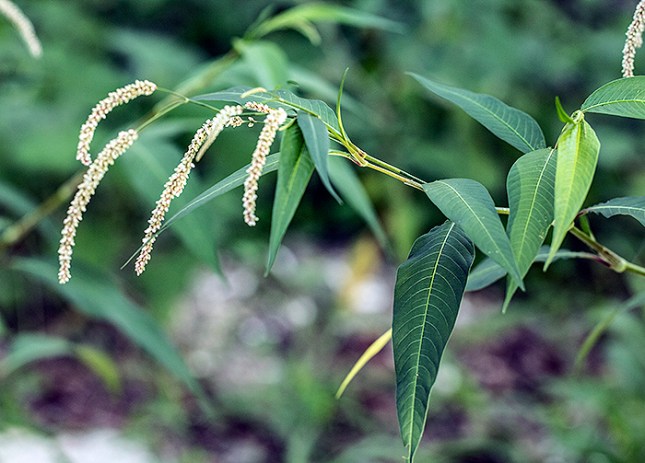
Another name for pale smartweed is nodding smartweed.
What’s more interesting than its span in space is its span in time. The time machine takes us to two persons of interest:
- Tollund Man was guest of honor at an Iron Age necktie party and got tossed wearing his noose into a Danish peat bog some 2400 years ago. Mr. Tollund was peat-pickled so well he looks freshly embalmed, so finely preserved you can determine his last meal. It included seeds (achenes) of today’s species.
- Grauballe Man wound up similarly, although with a slit throat. His tummy likewise contained pale smartweed seeds.
Pale smartweed has a presence in Danish Iron Age archaeology. One homesite contained a liter of the seeds. Was it an ancient crop? Probably. Not my original idea, the smartweed perhaps snuck into significance mixed with wheats, millets, or other grains. Observers note heterogeneous seed sizes, allowing the smartweed to winnow well among other grains. And it is a great producer…a single plant reportedly can make almost 20,000 seeds. That’s a lot of paleo porridge. You know, I’m going to have to try some when it gets ripe here in Jupiter.
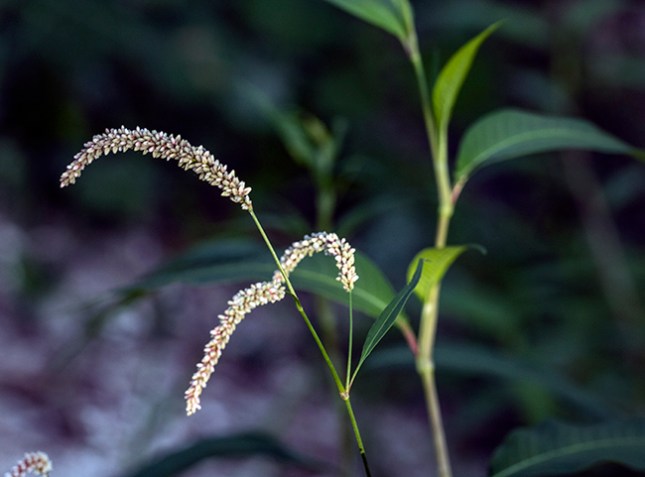
The species could have come to culinary attention via its medicinal history. Pale smartweed has a long association with humanity in traditional medicines. It is loaded with bioactive chemicals. (Please do not eat the weeds, even if I am going to try some smartweed seed gruel.) ((Famous last words.))
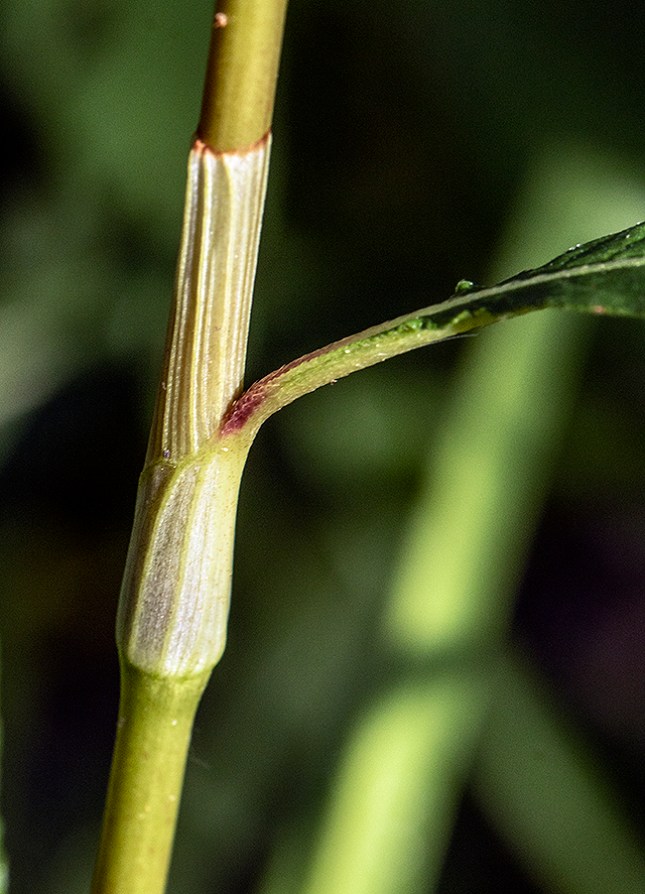
The species has a distinctive leaf base. (That wraparound sheath is called an ocrea.)
Listing old uses for prehistoric medicinal plants gets tiresome. Name a human ailment, and you have found a use for the plant. I like unusual and specific applications. Abusing pale smartweed releases a soapy slime. The sap contains sudsy compounds, often toxic, called saponins. Saponins sometimes are fish poisons, and yes, pale smartweed has helped harvest our finny friends. It has also lathered up the laundry. You could go down to the creek, wash your drawers, and enjoy the catch of the day. And if poison ivy made you itch, no problem, the soothing lather was a poison ivy salve before an ocean of calaedmine lotion.
 John Bradford
 George Rogers
 George Rogers
 Dee Staley
 Treasure Coast Natives
theshrubqueen
May 25, 2019 at 9:06 am
Hmm, there are a lot or ornamental Persicarias on the other side of the pond. I did not realize I had seen them here (and everywhere!) Maybe you’ll discover the next ancient grain for our cereal bowls.