Physalis walteri in bloom today
(Physalis comes from Greek for bladder. Thomas Walter was an 18th Century South Carolina botanist.)
Solanaceae
My first acquaintance with Physalis was long ago in my mother’s garden, Chinese Lanterns (P. alkekenji) named perfectly for the red papery husk around the berry, looking exactly like their namesake. Occasionally the soft portions of the husk rot away to leave a resistant vein net encaging the fruit. The husk protects its inner berry and threatens trespassers with poisons. The air it traps may concentrate volatile hormones to trigger ripening at the right moment. Consistent with that, Physalis fruits can produce high levels of the gaseous fruit-ripening hormone ethylene.
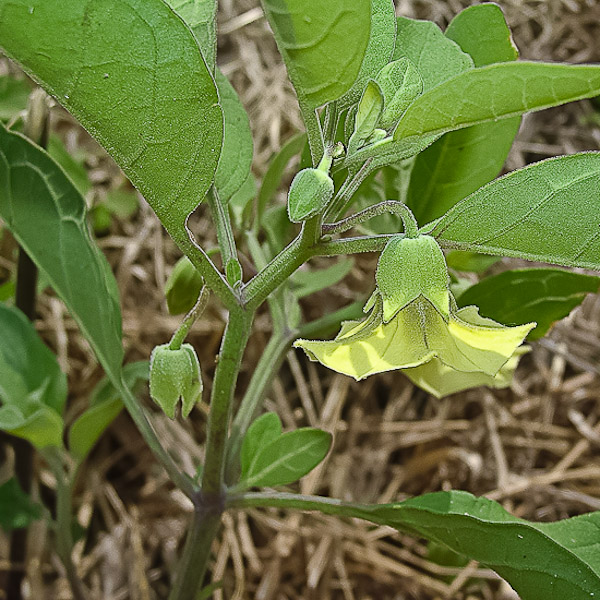
Walter’s Ground Cherry, by John Bradford.
They taste as good as the look, that is, as tomatillos, Physalis philadelphica, little tomatoes so to speak, and the two are related, jointly belonging to the potato-tomato family Solanaceae. Viva la salsa!
People have eaten Physalis fruits for centuries, the seeds turning up commonly in North American fossil human fecal matter dating back nearly 2000 years. The abundance of Physalis in American archeological remains suggests pre-European cultivation. Most Physalis fruits are probably more or less edible, but the plants make toxins, so best to restrict Physalis consumption to tomatillos and other horticultural culinary selections such as Cape “Gooseberries” as reader Pat Bowman linked in a Facebook comment. One species used to be illegal in Louisiana as a narcotic, probably based on misinformation. Eating wild Physalis fruits has reportedly caused dizziness, so not a good idea. To repeat, there are many species, not all of them tried and proven in the kitchen. That some are in the culinary world does not guarantee zero risk from unknowns.
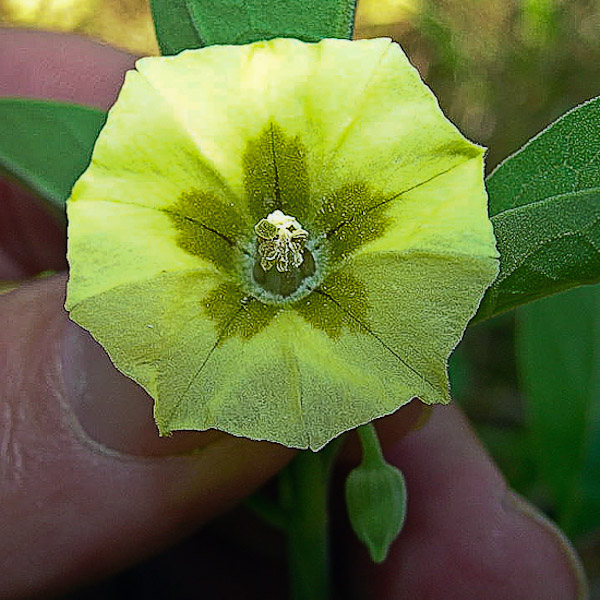
The flower, by JB.
Bioactivity gives Physalis another ancient avenue into human affairs, as remedies for a lot of ailments, including historically to treat wounds and lesions, which is interesting in a modern light as the poisons can snuff unwanted life from bacteria to human cancers. A widesread weedy species, Cutleaf Groundcherry Physalis angulata, has a rich ethnobotanical history sold now as mullaca powder, touted as good for what ails you.
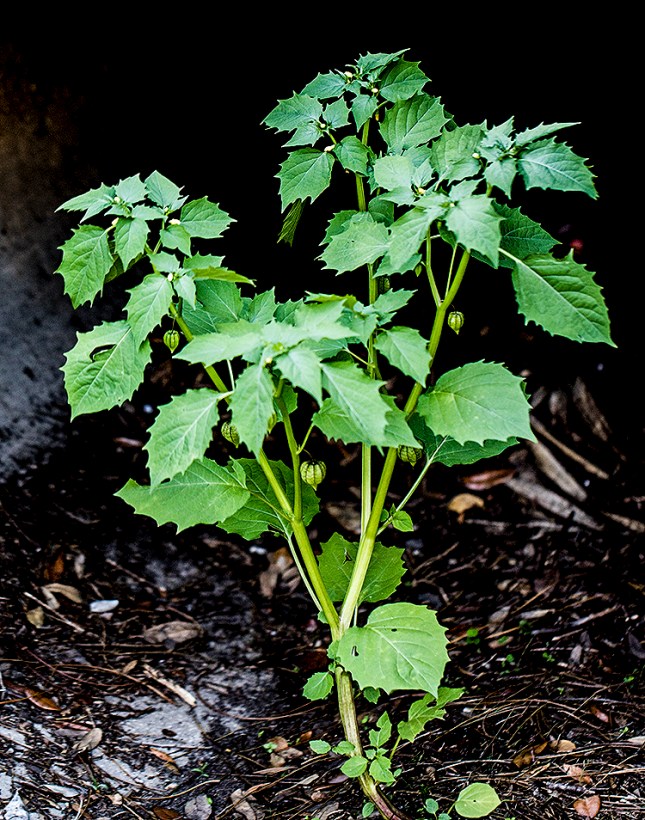
Mullaca
Who knows how useful Physalis drugs might be to humans in the future? One non-human species seems to apply them now. As biologist Andrea Barthel described, the Ground Cherry Moth, if I may call it that, Heliothis subflexa (aka Chloridea sublexa), breeds exclusively on Physalis. Guess where the moth larva grows up? Within that poisonous fruit husk, hidden from enemies and ingesting the fruit and its cell-killing steroids. Instead of destroying the moth, the plant toxins protect it from bacterial infection. Part of the moth’s new immunity is to Bacillus thuringiensis, the bacterium sold in bottles to control garden pests, and whose toxic protein is bioengineered into those GMO crops of such concern in techno-politics.
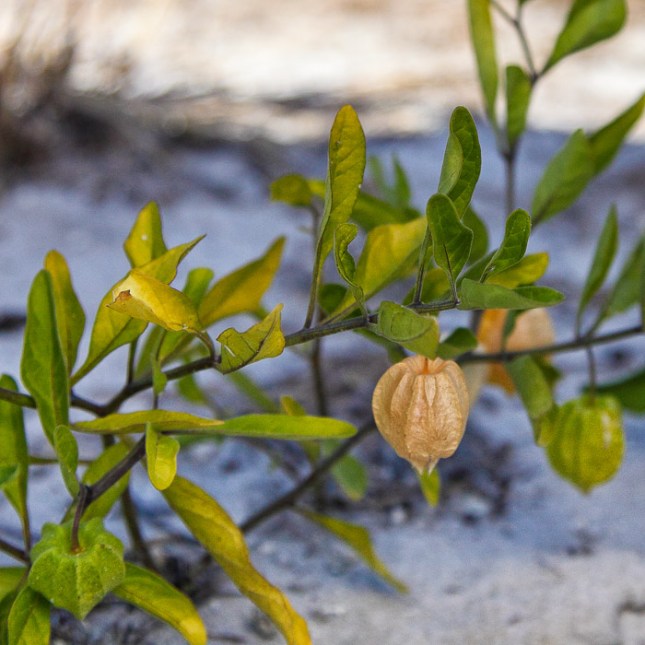
Walter’s G.C. by J.B.
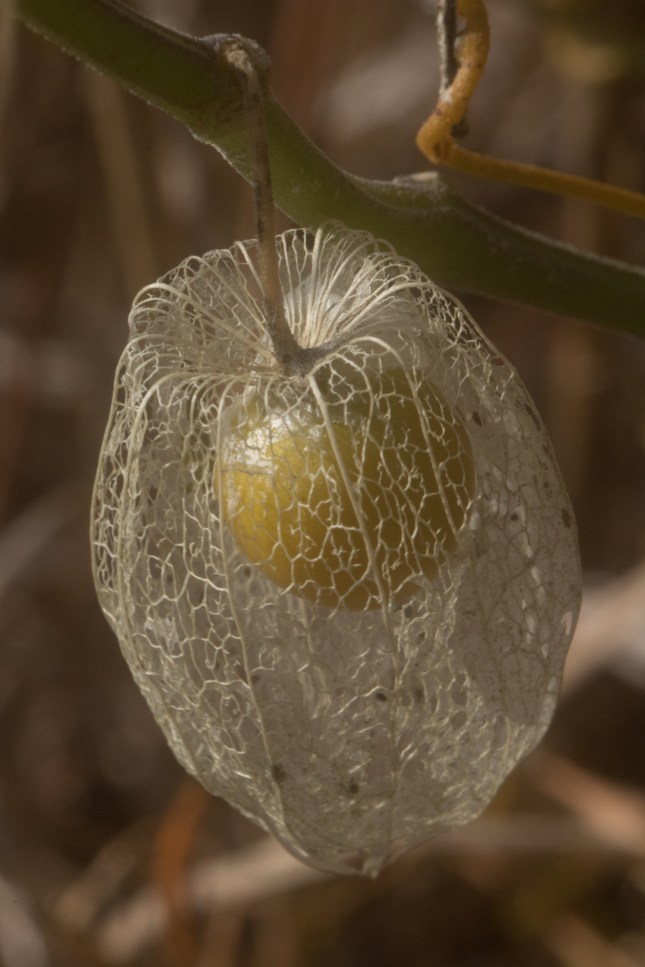
The fruit in a network of veins
 John Bradford
 George Rogers
 George Rogers
 Dee Staley
 Treasure Coast Natives
Steve
October 20, 2017 at 8:53 pm
I’ve been eating Physalis walteri fruits for awhile now. They are very tasty, and rival for South Florida’s best tasting wild fruit. I hope someone does a study on this species and informs us that it isn’t too toxic.
George Rogers
October 20, 2017 at 9:24 pm
The party line seems to be that the fruits are generally ok…I just hate to suggest eating wild non-horticultural-culinary species in case of the big exception or personal point of ignorance…so many species out there and so many toxins in the plants. And cavalier “hey eat them all” could also lead to mis-ID, or consumption of dangerous unripe fruits. Pretty sure you know what you are doing!
Linda Grashoff
October 20, 2017 at 8:54 pm
So many fascinating facts in this post! Tried to pick a favorite but couldn’t.
George Rogers
October 20, 2017 at 9:57 pm
Thanks Linda…like that flyswatter!
Linda Grashoff
October 21, 2017 at 3:51 pm
Oh, good! Thanks for weighing in, George.
FlowerAlley
October 23, 2017 at 8:44 am
Great information. I love Physalis alkekenji pods.