Water Fern
Ceratopteris pteridoides
Pteridaceae
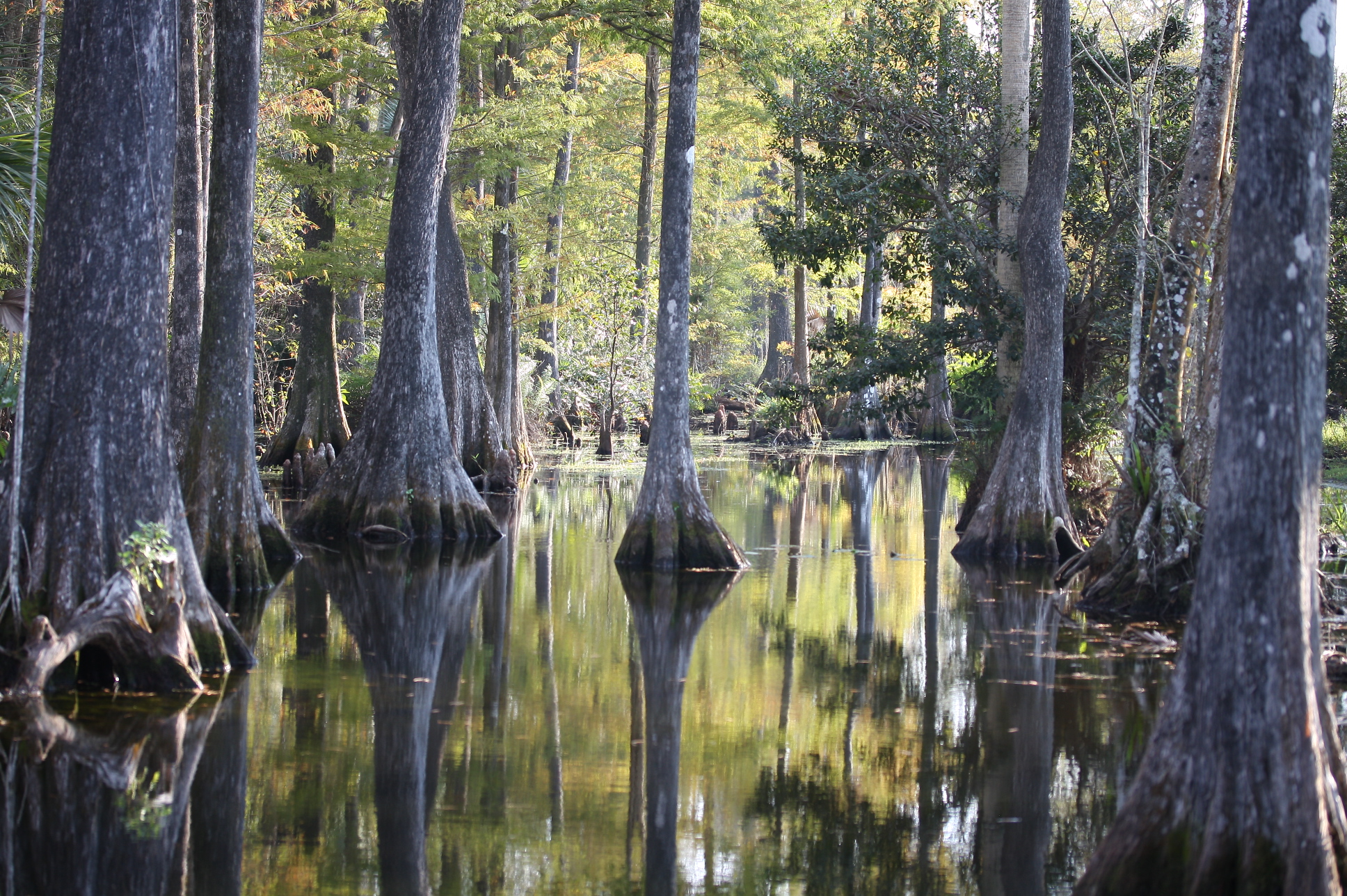
Riverbend Park, Water Fern is on the shore here. All of today’s photos, except the one by John Bradford, taken at the time of the class field trip.
John and I were unable to take a field trip today, Friday, due to the funeral of my wonderful plant-loving friend Arthur Leibovit. Today’s blog is dedicated to Arthur, and perhaps somebody reading this could have known him. He was the first agriculture graduate from the University of Florida and was a prominent local horticulturist. Arthur returned to college in his late 70s a decade ago and graced every botany and horticulture class Palm Beach State College offered. We’ve been friends in green ever since. He was living proof that the prime of life can extend to age 89.
So we’ll focus instead on a Thursday excursion. On that afternoon my Palm Beach State College field trip class enjoyed Riverbend Park in Jupiter, complete with a gator encounter. We noticed a curious fern in the creekside mud. My shoes are still soggy to prove it. Some of our oddest local ferns live in the water, although only one “full -sized” fern is amphibian, dubbed aptly “Water Fern” (or Horn Fern). (Our other aquatic ferns are diminutive and do not look “ferny.’)
We have two species of Water Ferns swimming in our waters. One is native (Certatopteris pteridoides) and the other, called Watersprite, is Asian (C. thalictroides), and is a popular aquarium plant available in plastic.
It is seldom my interest in this blog to sort out species. Even so, briefly, it is worth mentioning that these two species are enormously variable with the variations depending on whether they are floating or anchored in the mud and whether the fronds are sterile or spore-bearing. In the native species the non-sporing leaves are simple (not compound) although they can be plenty lobed. In the Asian species the non-sporing leaves are 2 to 3 times compound. If you wanted to teach a lesson on the breadth of variation to be found within a single species you might choose humans, or dogs, or Water Ferns. The difference between the spore-making vs. sterile leaves on the same individual is striking, almost like two different species rising from the same base.
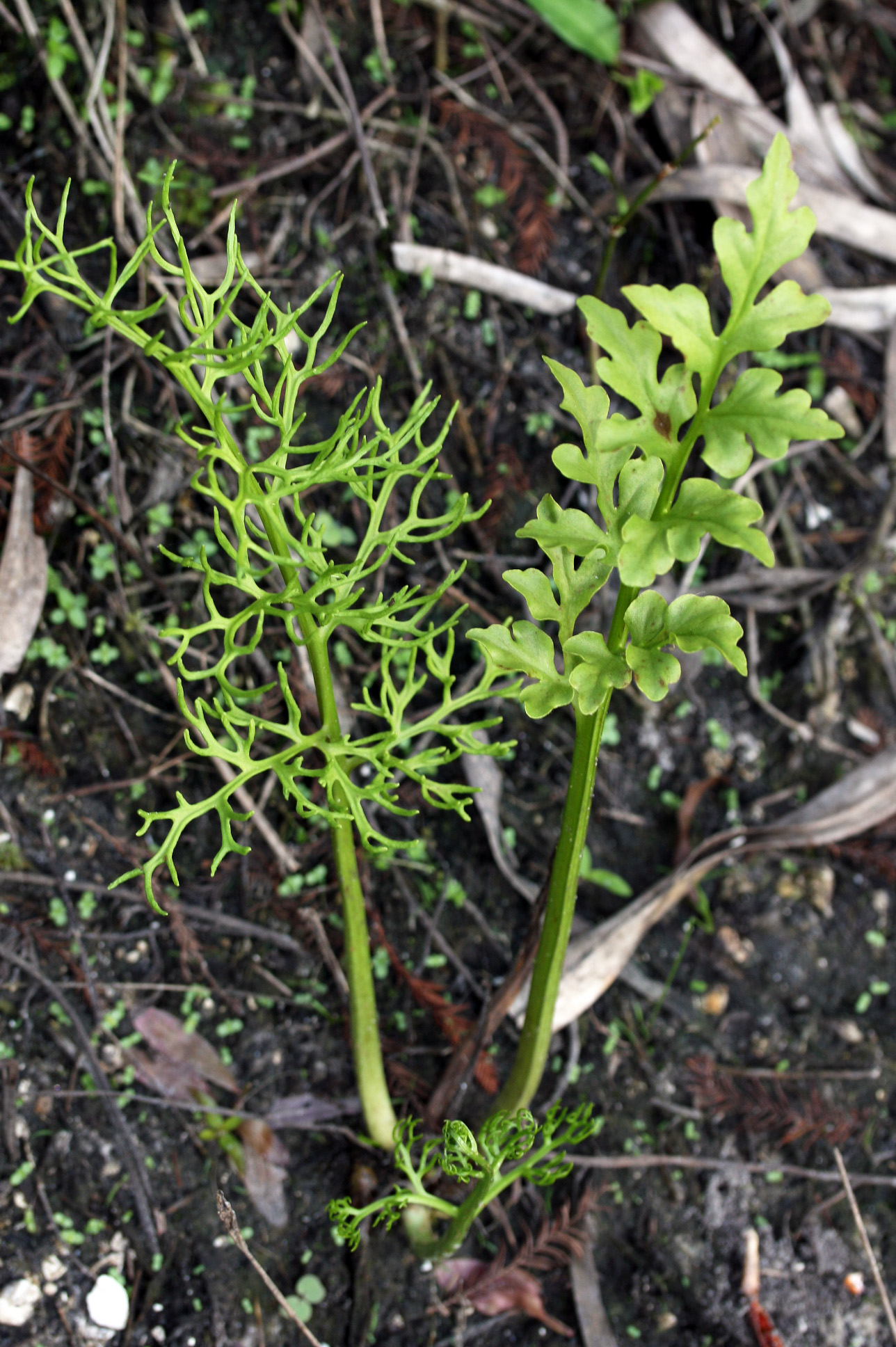
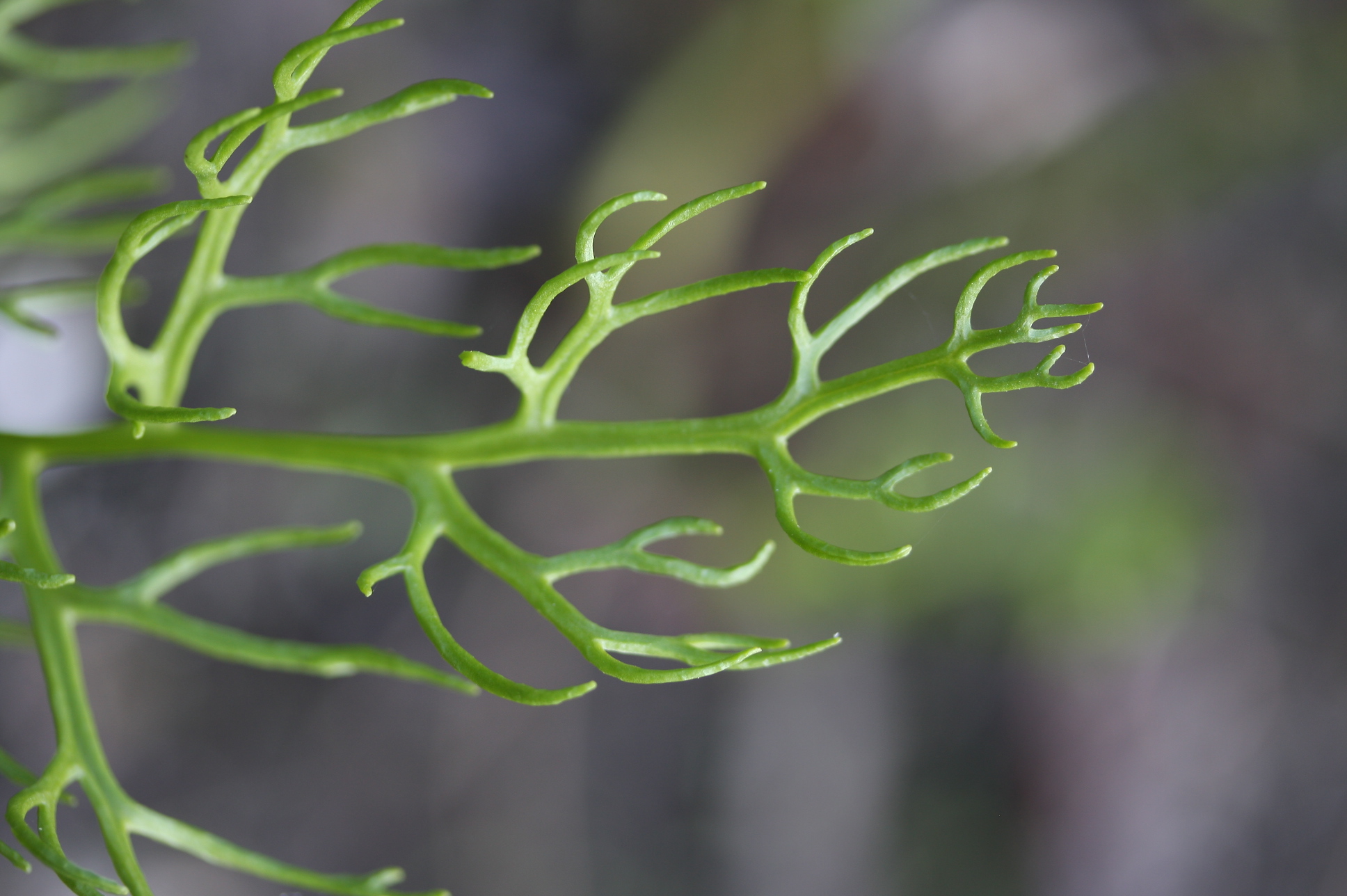
Two species? No, just one, with spore-bearing leaf on the left, and sterile leaf on the right.
The genus Ceratopteris is small, interpreted by contemporary botanists as just four arguably distinct species around the warm-climate world. Easy to cultivate, splintered into strains, and manipulated in the lab, these ferns have become standard guinea pigs for botanical genetic and developmental studies and for classroom projects, marketed as “C-Fern.”
But let’s get back to Riverbend Park, habitat for C-Fern. Whoever heard of an annual fern? Water Ferns have unusual features in their reproductive cycle, including going from spore to spore production in a scant three months. That’s warp speed in the Ferniverse.
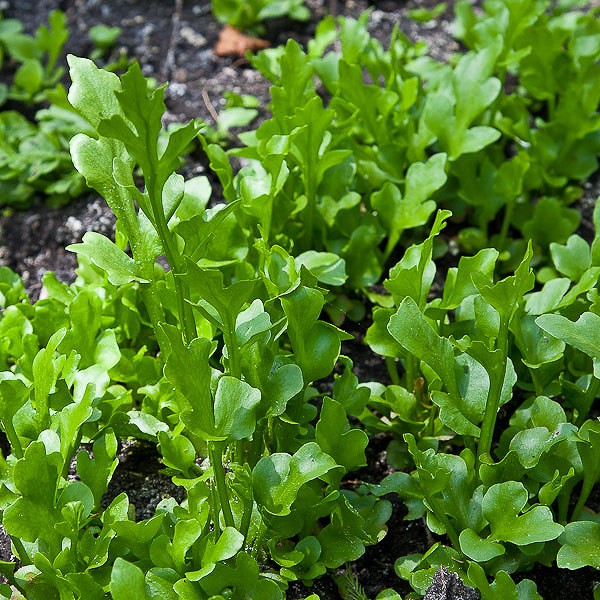
Mass of sterile leaves by John Bradford.
Like many other aquatic plants, these ferns can live floating and unattached, or they can take root in the mud. They can populate an area in a jiffy because they clone themselves from tiny buds on the leafy fronds. Each bud produces a new copy of the parent plant.
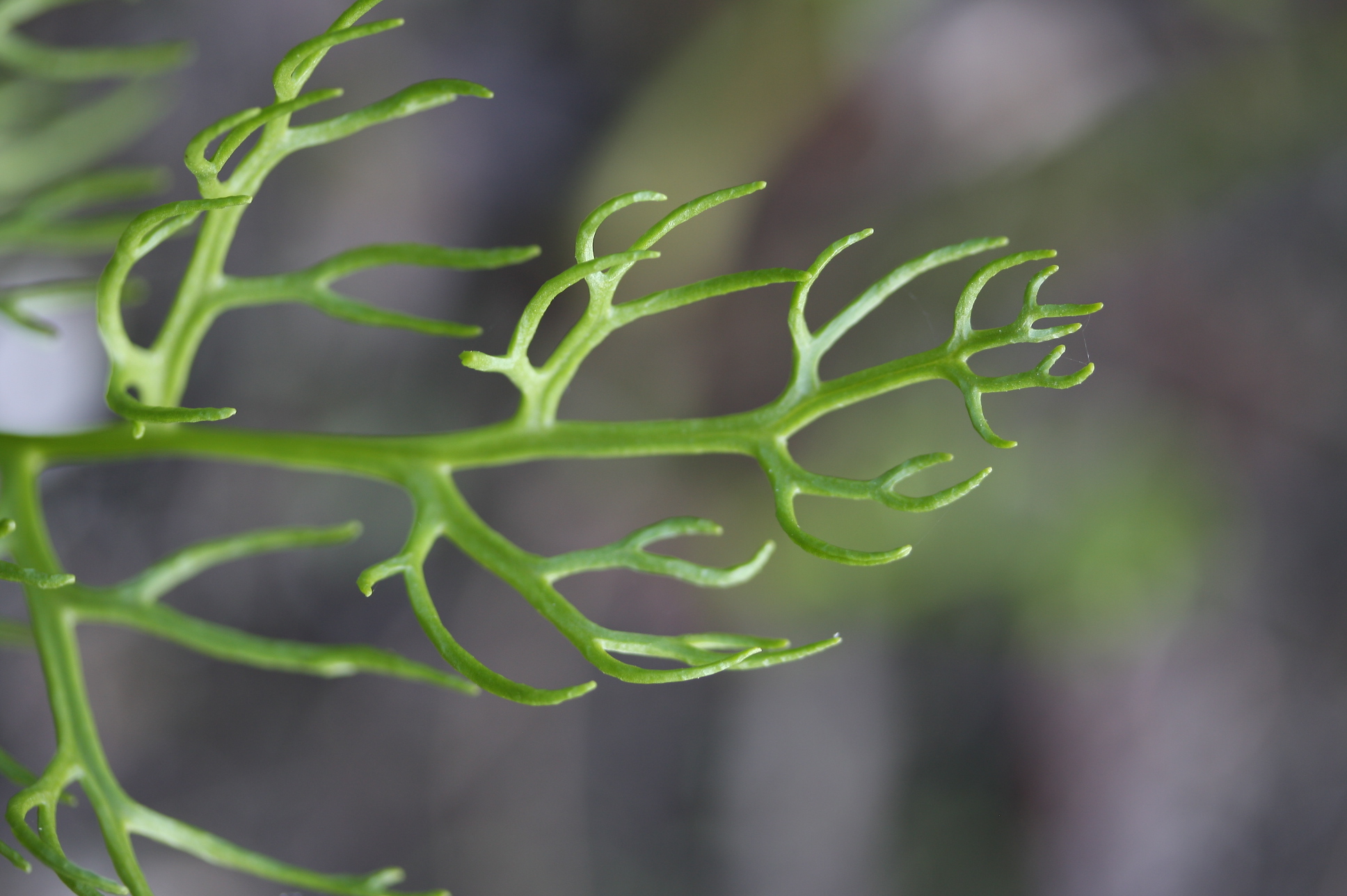
Spore bearing leaf, but you’ll never see the spores; they are hidden under the rolled leaf margin.
Any plant easy to propagate, happy to grow, and big, soft, and succulent sounds like food. Ceratopteris even looks like salad. The ferns do grow in rice patties and are on the vegi-menu in some places especially Asia and Madagascar. But don’t get out the Paul Newman’s Creamy Ranch Dressing quite yet. Water Ferns contain a compound called arbutin. This is an odd drug found to crop up sporadically in the plant kingdom among completely unrelated species. Cosmetologists know arbutin as a skin bleach. Toxicologists know it as a probable carcinogen.
 John Bradford
 George Rogers
 George Rogers
 Dee Staley
 Treasure Coast Natives
leonorealaniz
November 20, 2014 at 1:10 am
Your editorials make fun Reading! Thanks You!
George Rogers
November 20, 2014 at 12:49 pm
Soo nice to see you! how’s the weather way up there? Especially on a post with no comments!! So double thank you 🙂