Alligator Weed
Alternanthera philoxeroides (not native)
Amaranthaceae
Having a drainage ditch behind your hose can be entertaining and a chance for expanded vistas on nature right there in the (sub)urban yard. Thanks to my waterfront real estate I’ve seen all the big beautiful wading birds and their duck companions, a hawk snag a snake, jumbo catfish, darting minnows, and dragonflies. The frogs sing at night. I’ve learned that young cottonmouths go out to party with yellow tails, that kids still go fishing, and that dogs enjoy a swim off the leash. All the sedge species in town form a spontaneous garden along the banks. Much fun for a reviled “no trespassing” ditch.
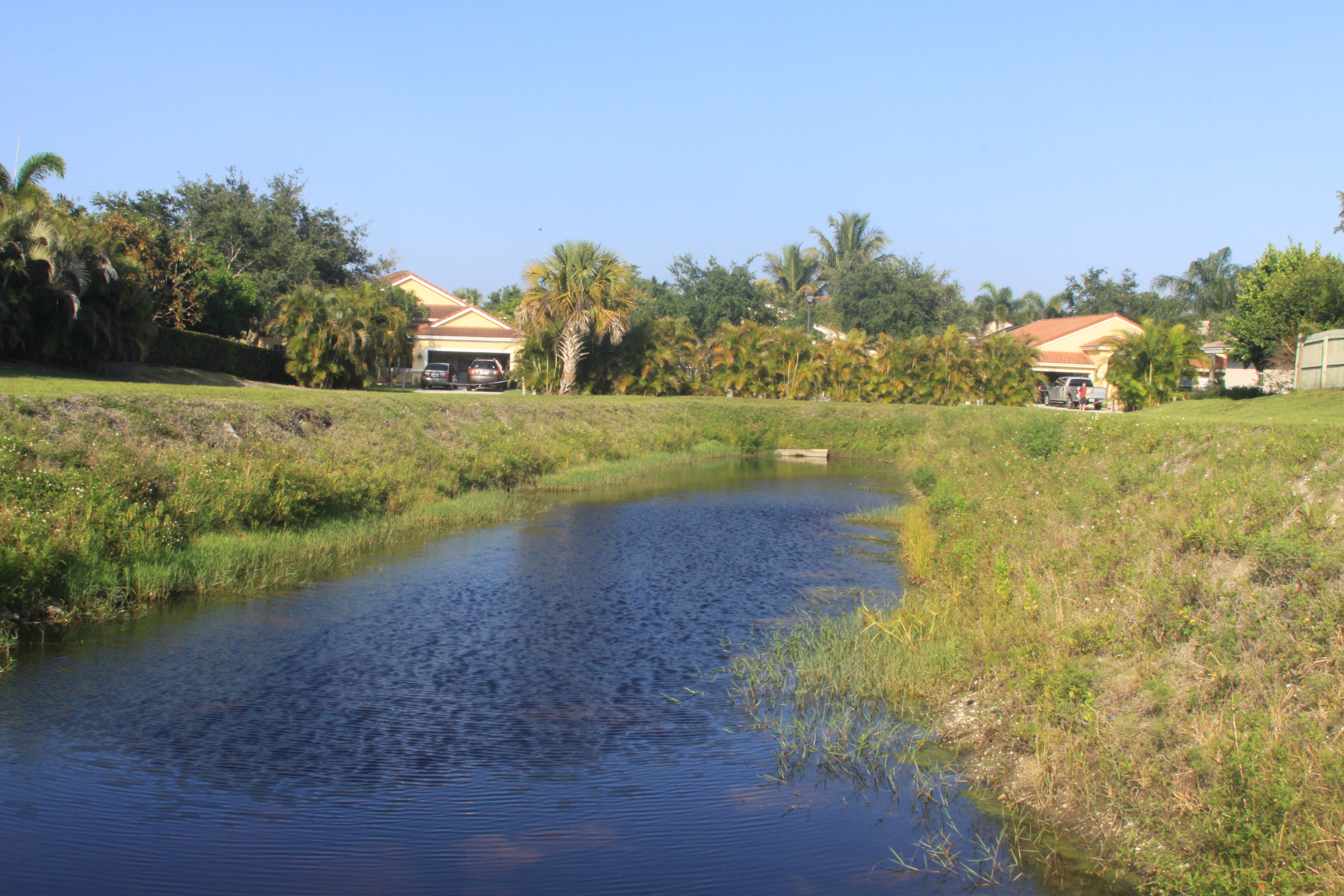
Which will fill the ditch? Alligator Weed or Torpedo Grass? The race is on.
The aquatic lifeform grabbing my attention now is a little taste of the Amazon: the invasive exotic South American Alligator Weed. Take my word for it—that weed grows like a weed! I feel like I can see a difference from day to day. The plant can take over big areas fast, as multiple published studies have affirmed and reaffirmed. That has prompted interest in biocontrol, with limited success, especially by a Brazilian Flea Beetle.
CLICK for biocontrol
Anyone who lives near warm eutrophic shores can attest to the fact that the species is not under control.
The rate of growth is interesting but where it grows is the good part. The stems spread out on the water surface like a swimming snake, and raise their growing tips or flowering tips a little above the water. To accomplish this the stem is hollow. The growing tip and first few nodes jutting out of the water are only a little swollen. Somewhere around 5 nodes back from the apex the stem expands abruptly to many times its original diameter; it looks puffy like it was inflated with gas. The nodes produce branches and wads of roots, allowing the sprawling branches to suck nutrients directly out of the water, and allowing the branches to root in the mud if the water level drops.
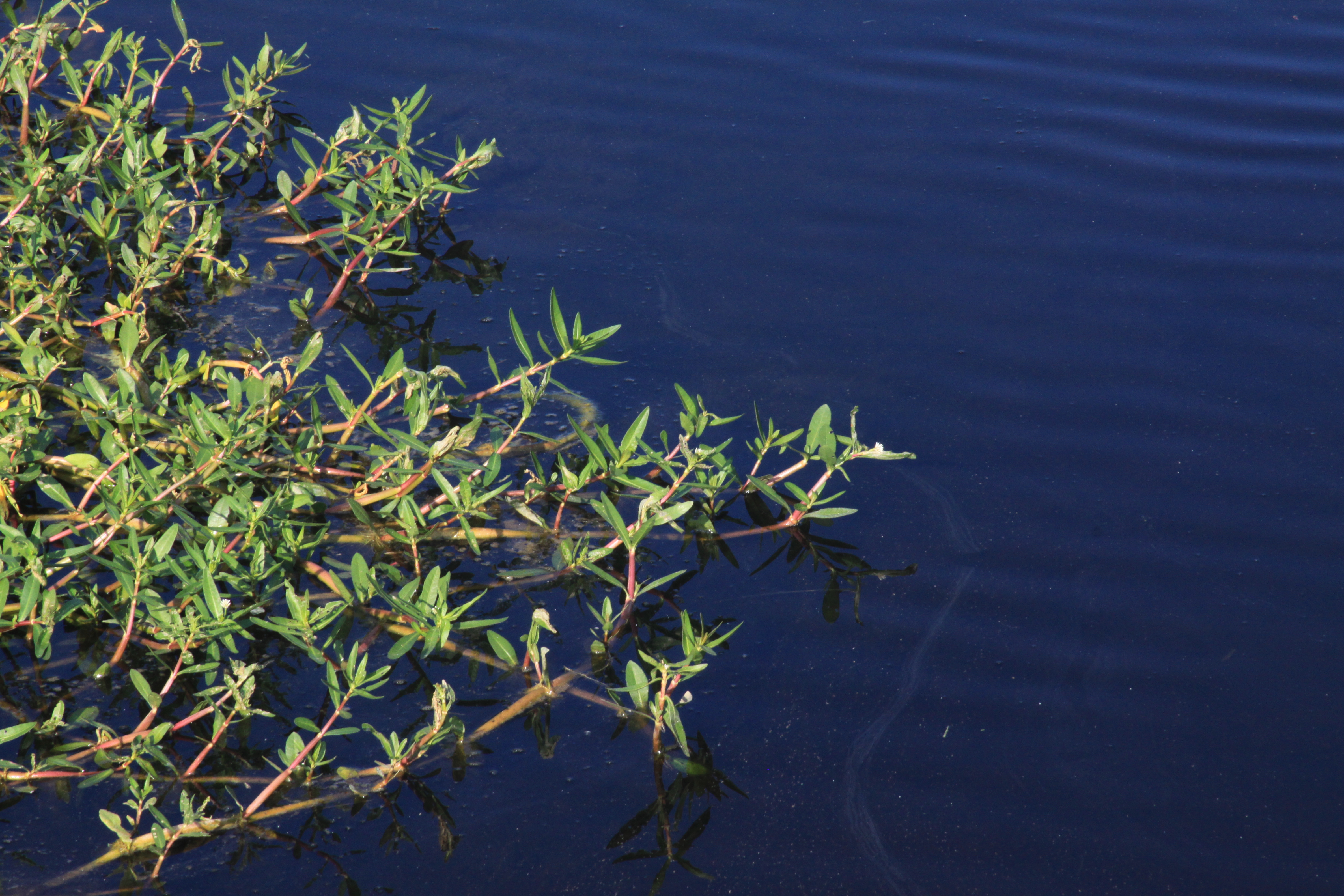
Although Alligator Weed can produce seed, there is a suspicion that its spread in Florida and other introduced areas is by cloning. What is easier to propagate than a species where the stem segments break off and float away pre-rooted and ready to invade?
The rampant growth, easy propagation, and nutrient-sucking power have suggested to multiple observers that this invader may not be 100% bad…that maybe it can be harnessed to pull polluting nutrients, including heavy metals, out of polluted waters. Also, people and livestock eat Alligator Weed, which helps explain its intercontinental spread.
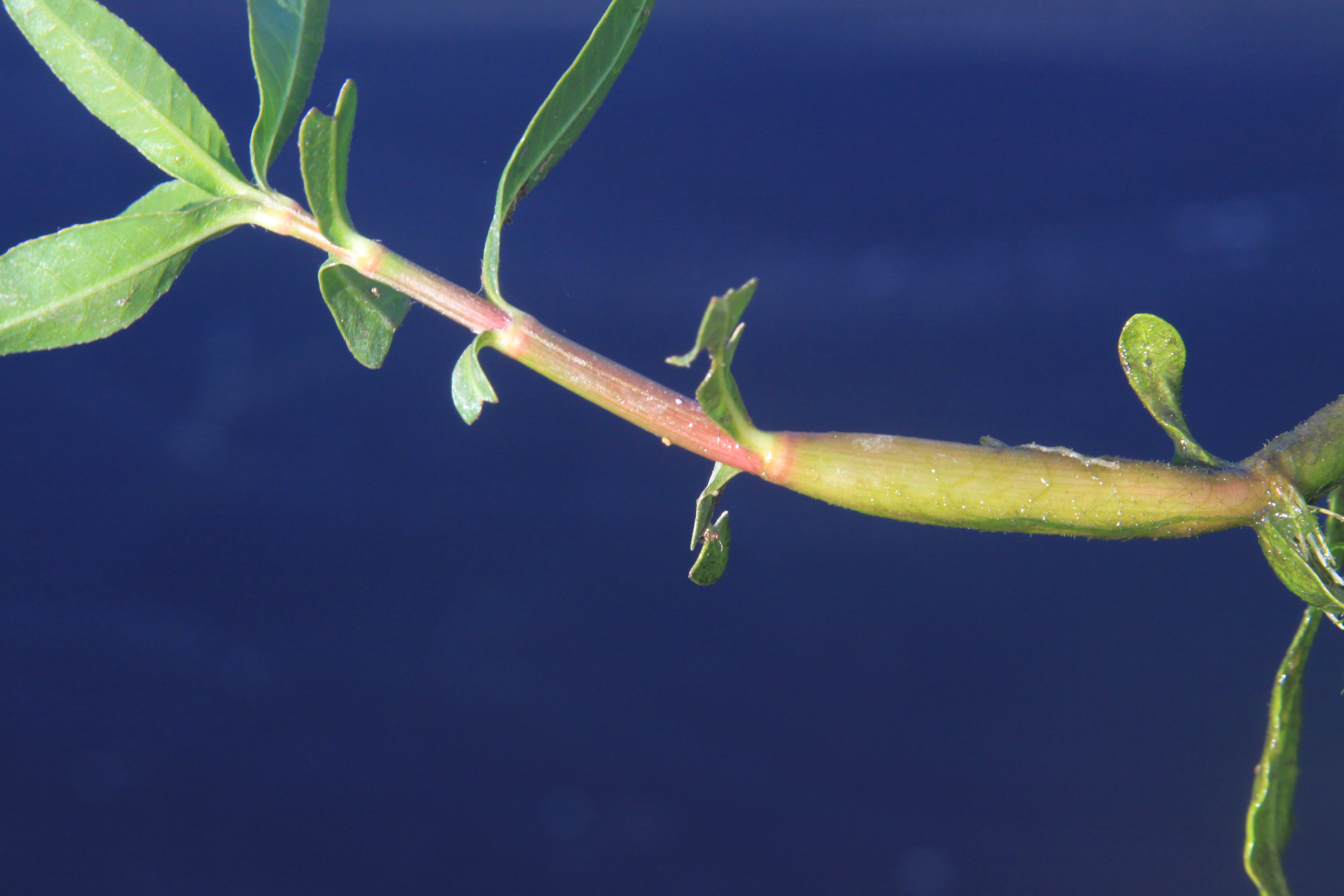
The stem puffs up a few nodes back from the tip.
The flower heads may remind some readers of Globe-Amaranths or Joyweeds. That’s because they all belong to the same family, the Amaranthaceae.
A lot of folks worry about some form of coming collapse of civilization. They stockpile sardines, bullets, and gold. I’m not worried—when the going gets rough I’ve got water-purification, biofuel, and unlimited salad right in my own back yard, with absolutely no effort.
 John Bradford
 George Rogers
 George Rogers
 Dee Staley
 Treasure Coast Natives
Mary Hart
May 10, 2013 at 4:01 am
I also live beside a canal with a rich diversity of plant and animal life. In this area we have no uncontrolllable invasive apecies. The worst problem is litter. Luckily in UK Amaranthaceae are confined to non-native garden plants, our worst invader is Japanese knotweed Fallopia japonica syn. Polygonum cuspidatum, which wreaks havoc along many rier banks and can even extend its rhizomes under walls and houses with dire results and eradication is difficult
George Rogers
May 10, 2013 at 7:09 am
Hello Mary, Having seen a photo of your canal with ice, it looks far more beautiful than my ditch. Directly behind my house there is a pump that adds freshwater as part of the broader well and water management system, so some days you might say it is almost a spring. We do not have Japanese Knotweed here, but I grew up with it. As kids we used to put messages in a bottle and toss them in a creek that fed the Ohio River. The Japanese Knotweed stem pieces made perfect bottle stopper “corks.”.